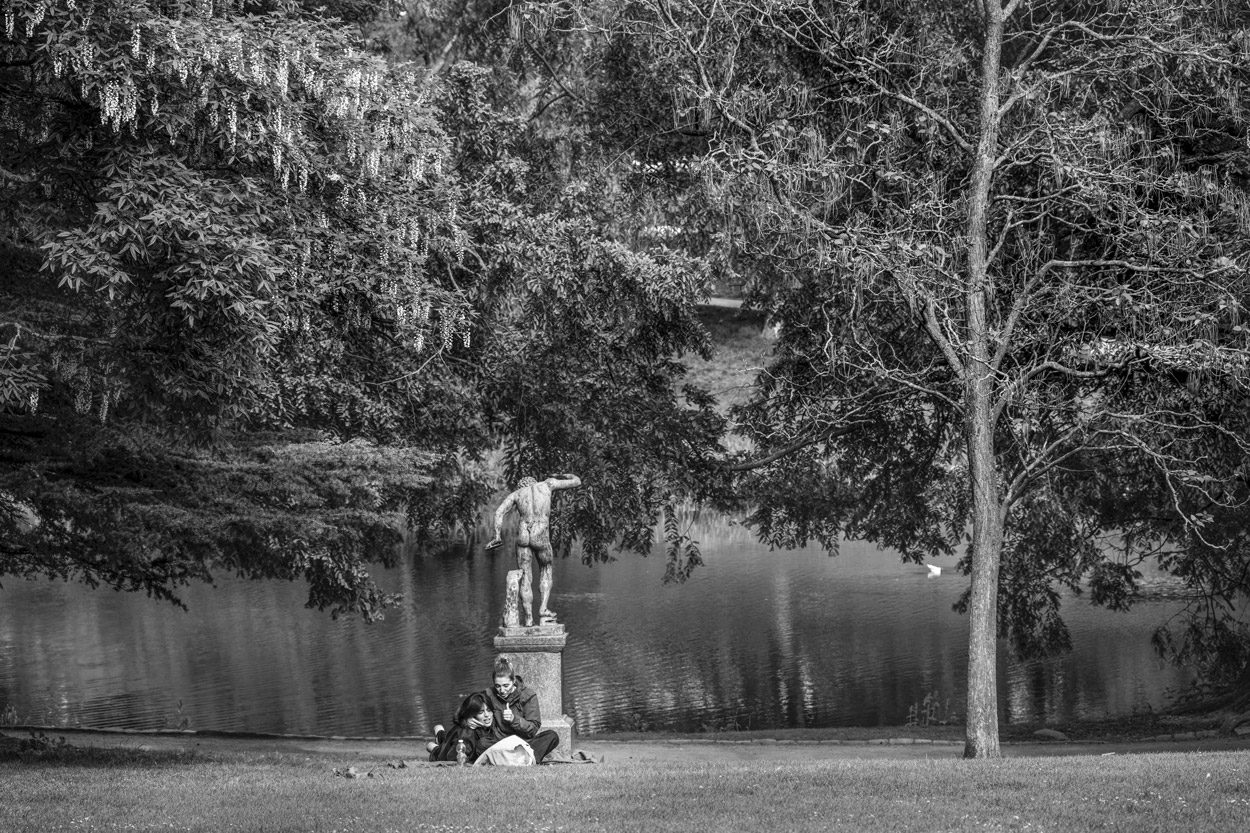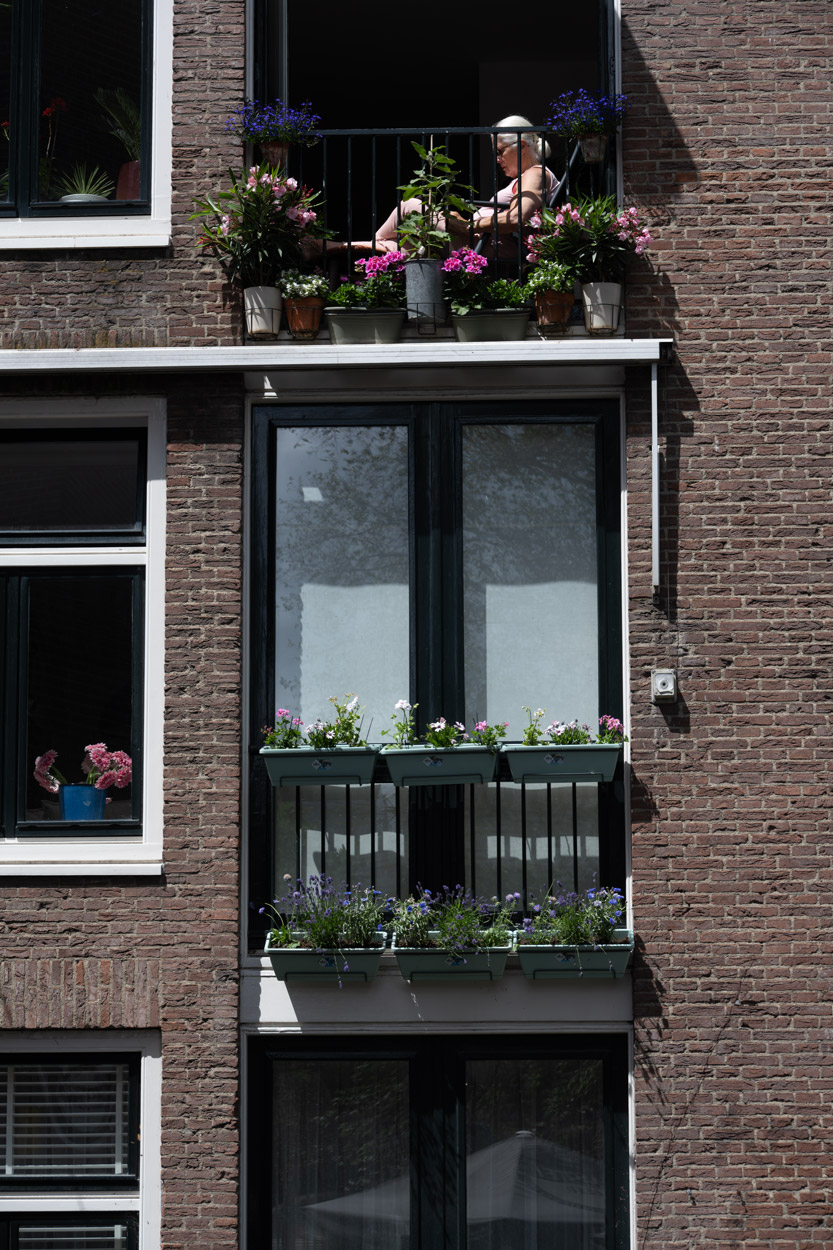
Sunny Reading Nook, Amsterdam
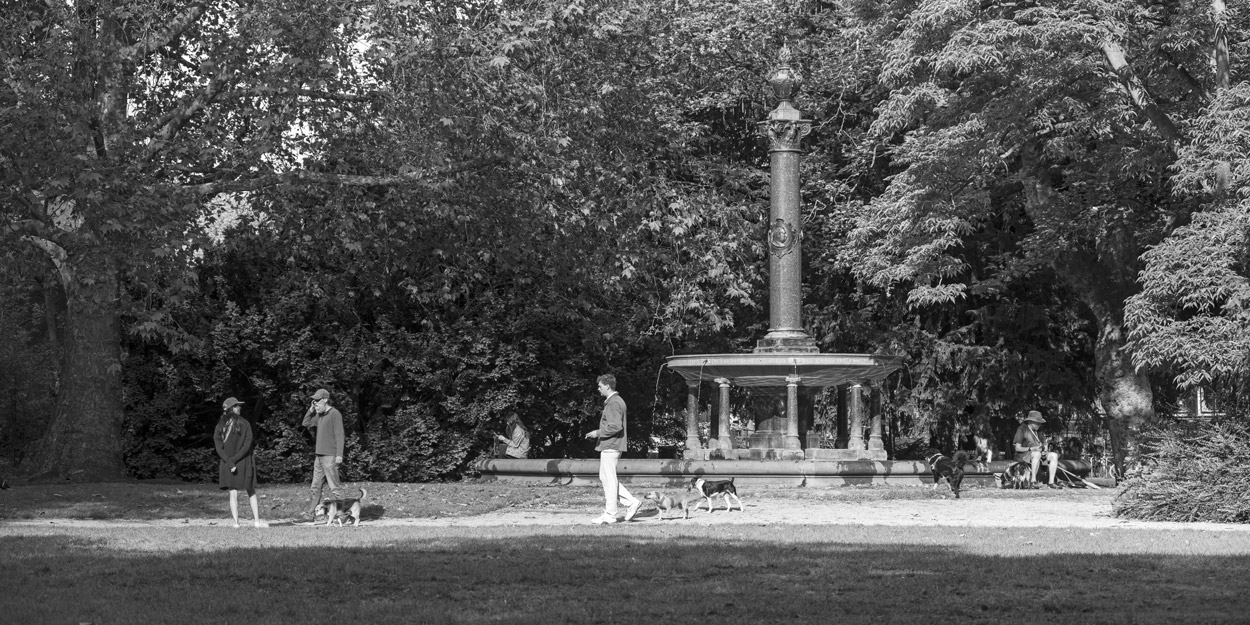
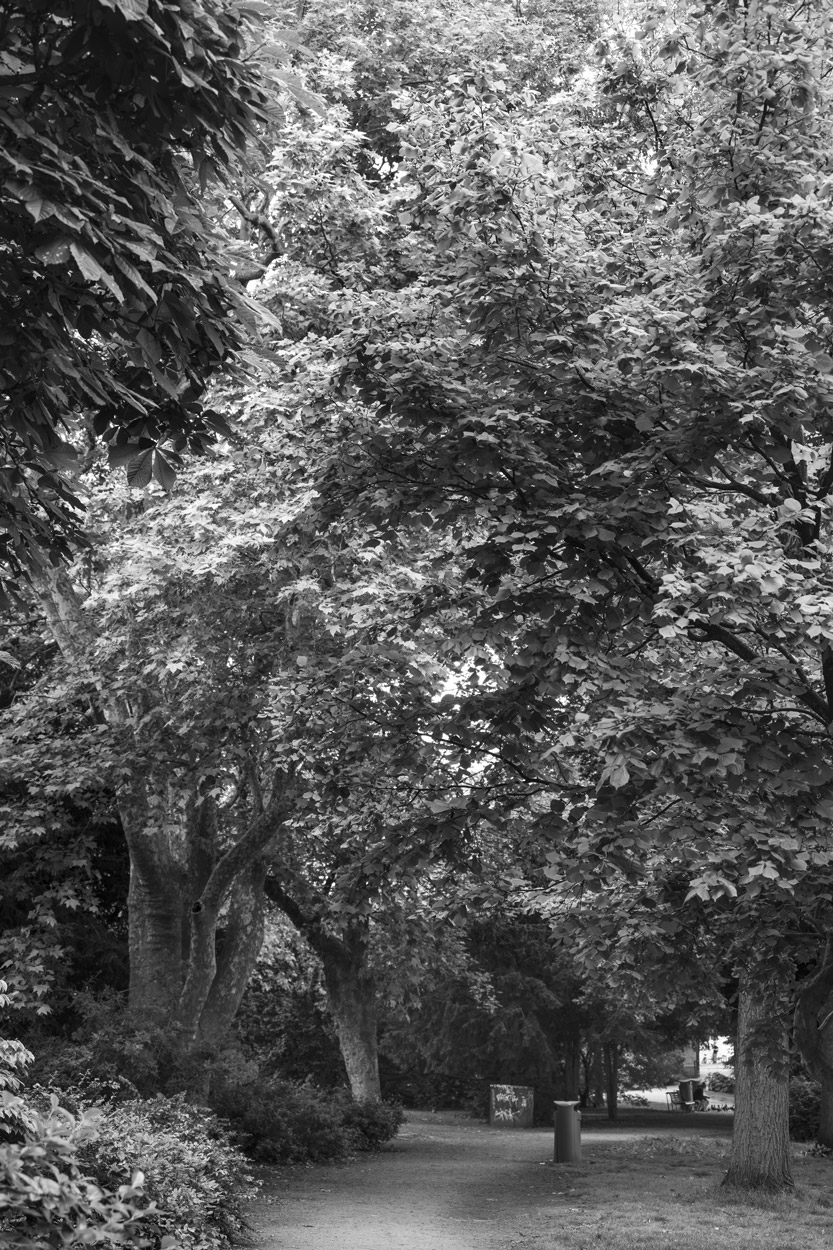
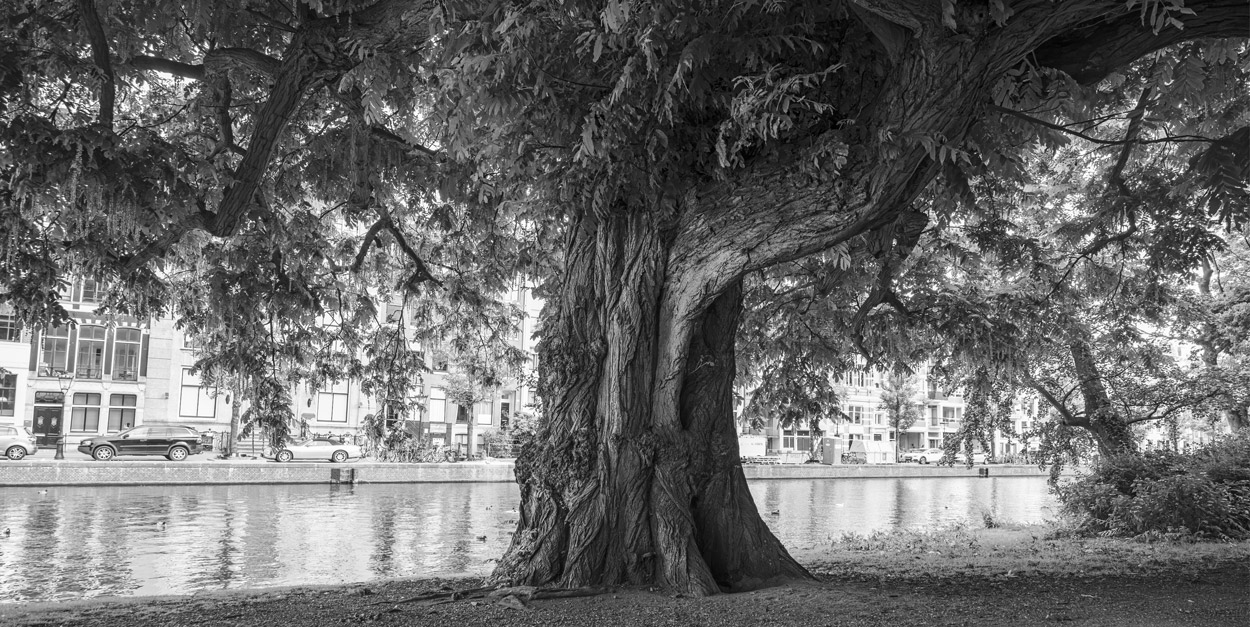
Wertheimpark, first opened to the public in 1812, is named after a prominent 19th century Jewish banker and philanthropist. Sitting by the side of a canal and near the city’s botanical garden, the park has quiet paths lined with stately, lush green trees, several notable trees (that is, trees over 100 years old), and plenty of open space for dogs to play and neighbors to meet when they are keeping an eye on their playing dogs.
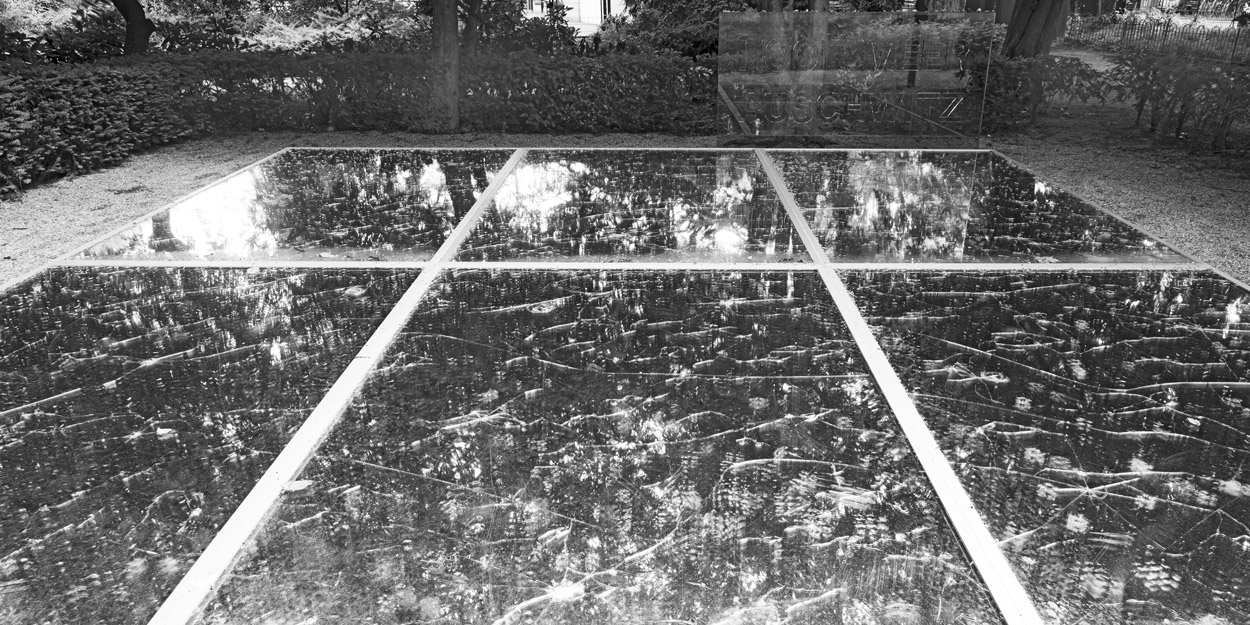
Just off to one side of the open field, there is the artist Jan Wolkers’ “Never Again Auschwitz” memorial to people who died at Auschwitz and other Nazi extermination camps. The memorial is also referred to as “Broken mirrors.”
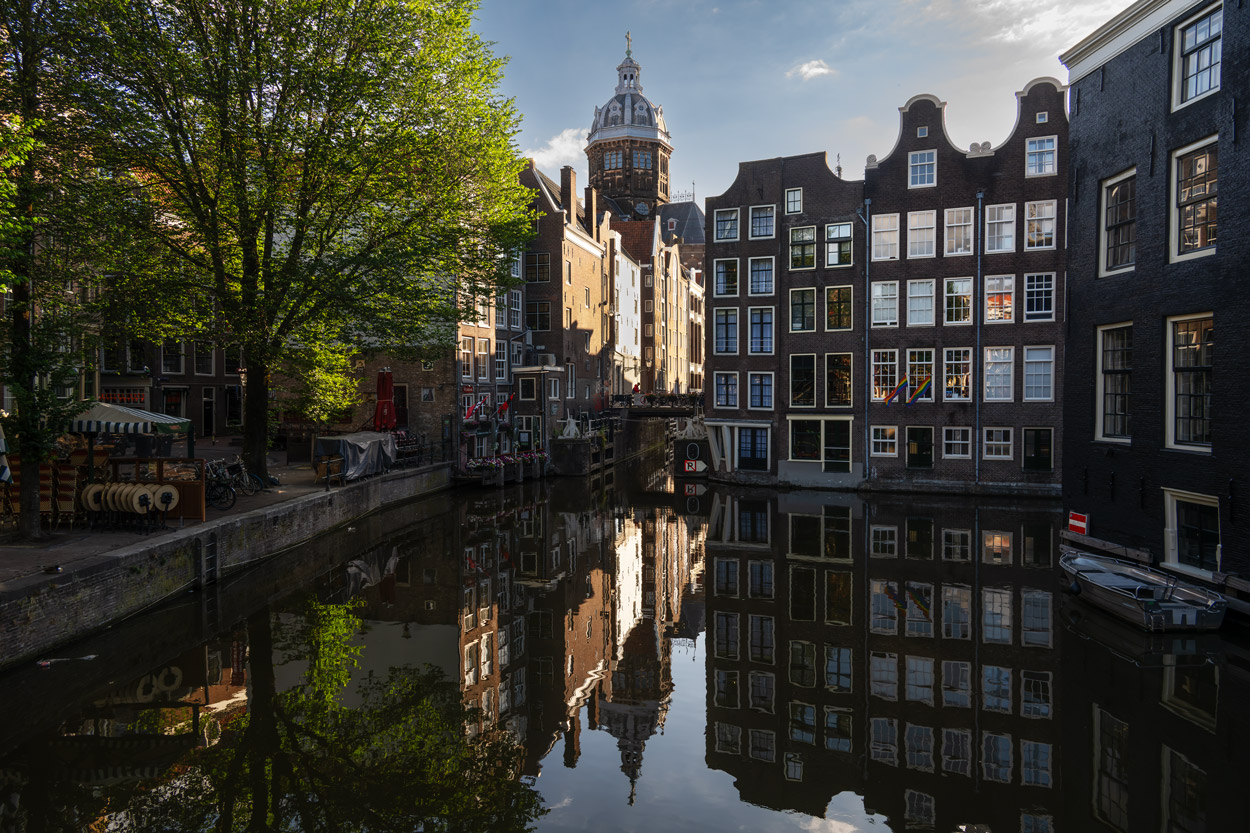
I was at the beginning of a walk that would take me to Amsterdam’s botanical garden and the small but lovely Wertheimpark when I walked into this image. Thinking back, it seems to me the walk had a specific destination, but a month later sitting in Hoi An, I cannot remember what that might have been. The sun was still low in the sky at 7:30 in the morning; the light on the tree and the water literally glowed. The dome of St. Nicholas Church is in the center of the photo. Amsterdam is genuinely a beautiful place.
Though I did not know it at the time, I was standing on the historic Armbrug bridge when I took this photo. The original bridge dates back to 1538; the current bridge, the product of a renovation undertaken in 1988, is not particularly memorable. I happened to run across the history of the bridge when I decided to post the image above and went looking for where I was standing when I took the photo. Not that anyone has asked, but as a point of information, I use an application called Mapy.com when I do map searches online. While Google Maps is better for finding nearby restaurants, unlike Mapy, it had nothing about the Armbrug bridge. In fact when it comes to using a map as a map, Mapy comes out ahead of Google in virtually every respect. Developed and headquartered in the Czech Republic, Mapy has Android and Apple apps, and works fine on my Windows PC. Fed up dealing with criminal organizations like Google? Check out Mapy. And that is today’s unsolicited advertisement.
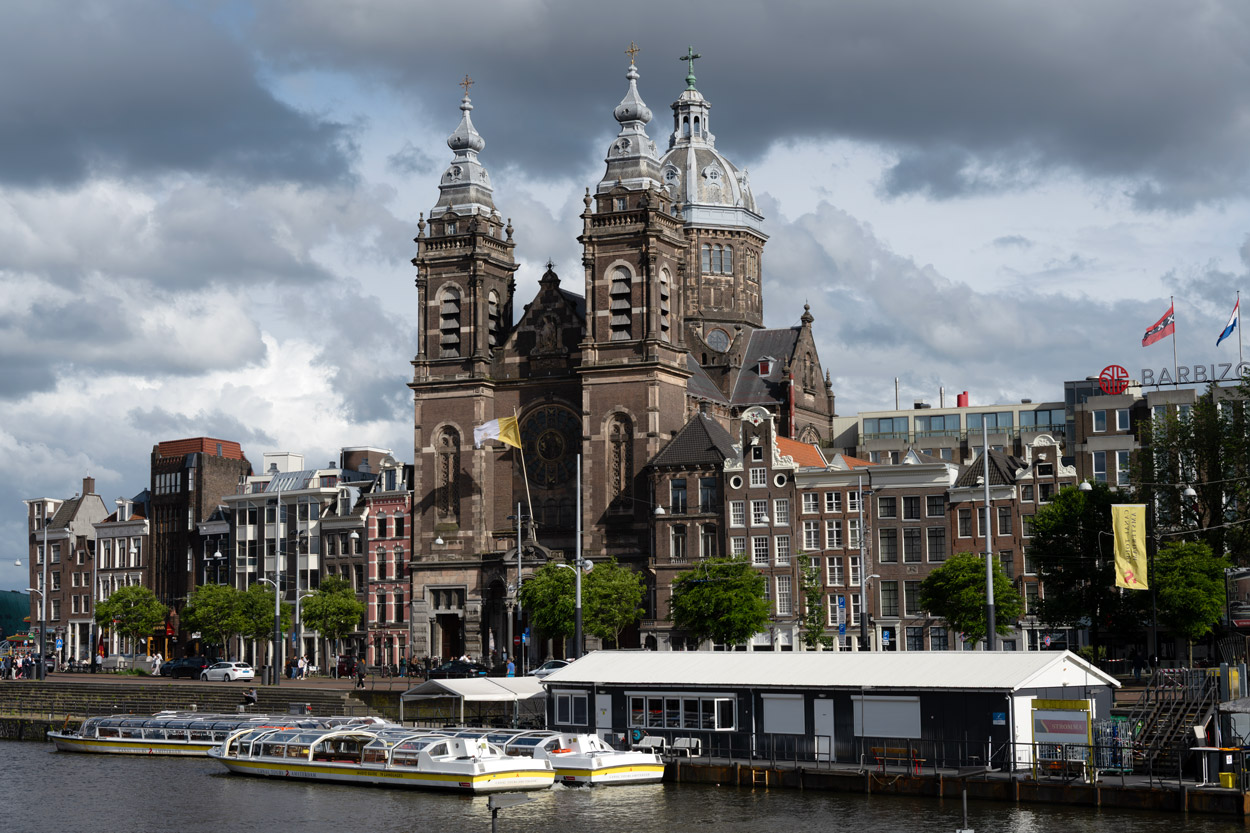
One of Amsterdam’s landmark buildings, the Roman Catholic Church of Saint Nicholas sits across from the city’s central train station in the oldest part of Amsterdam.
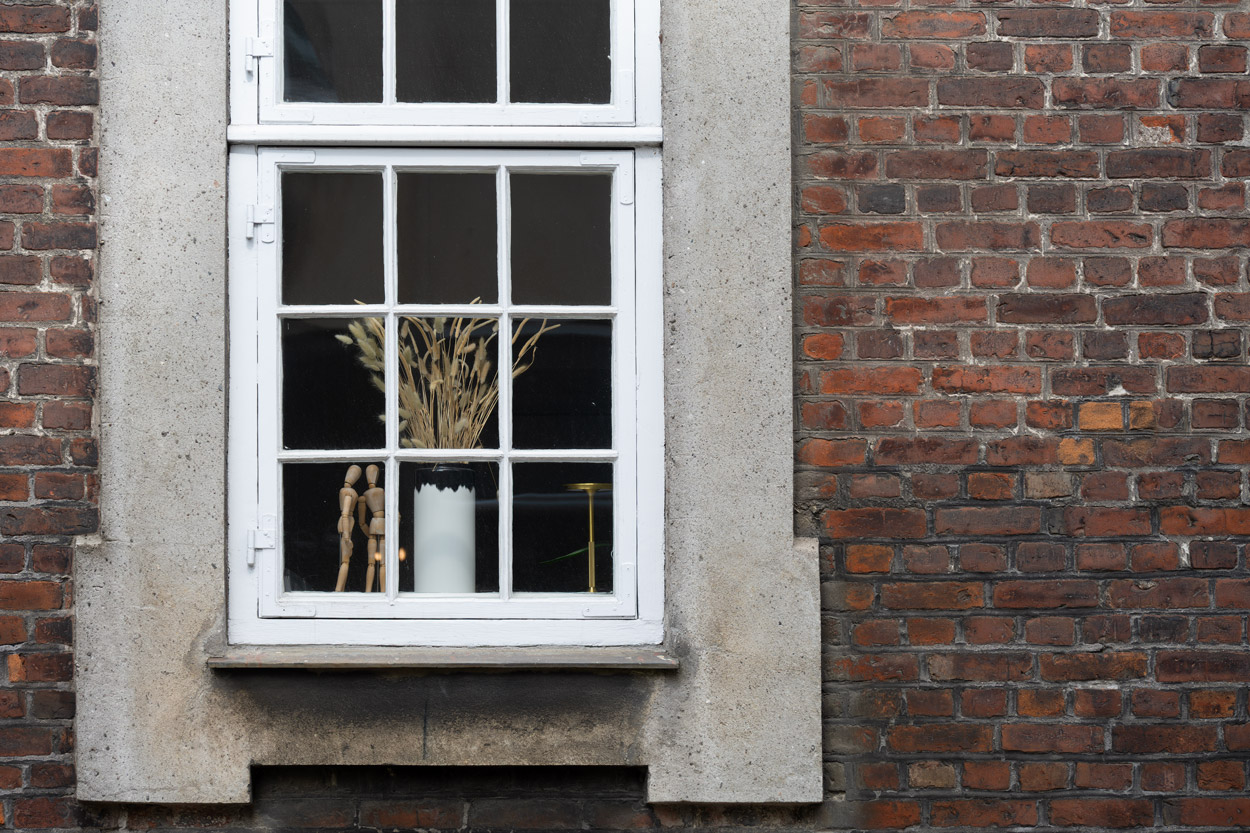
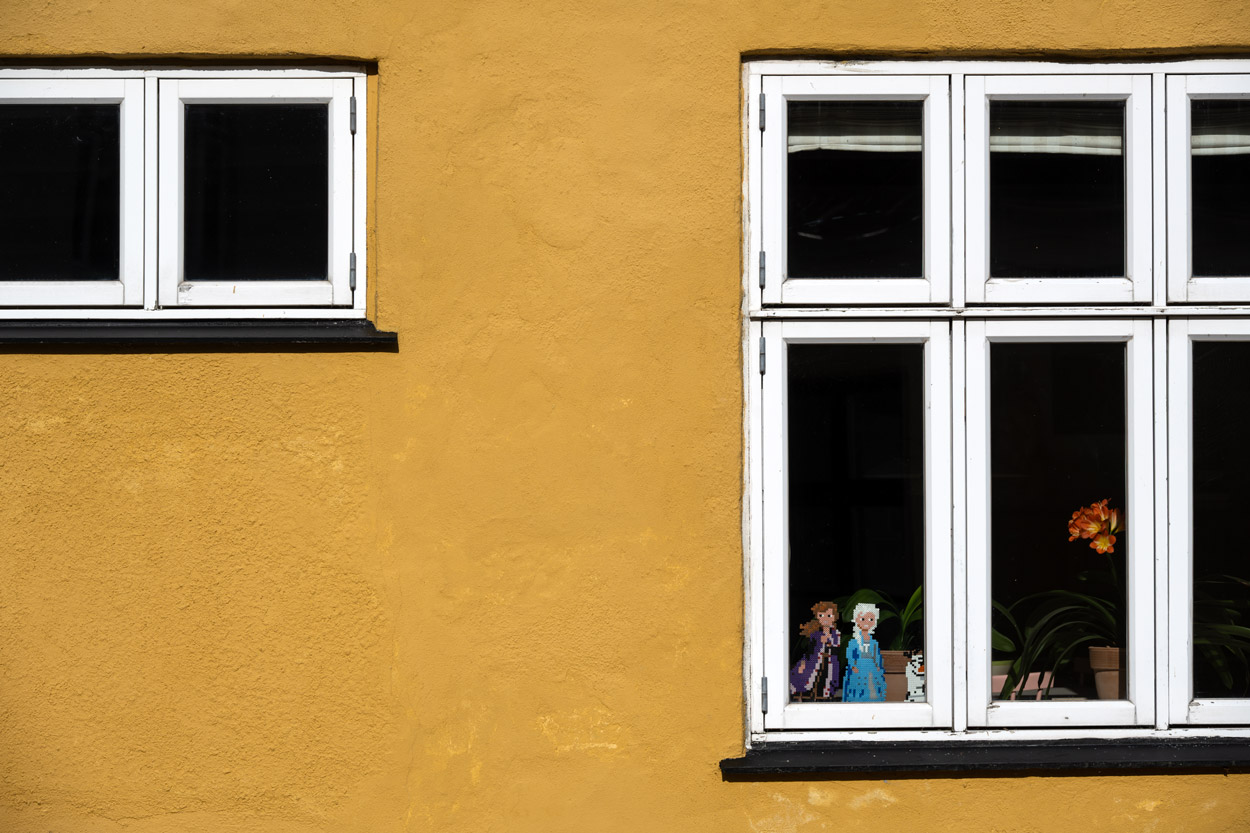
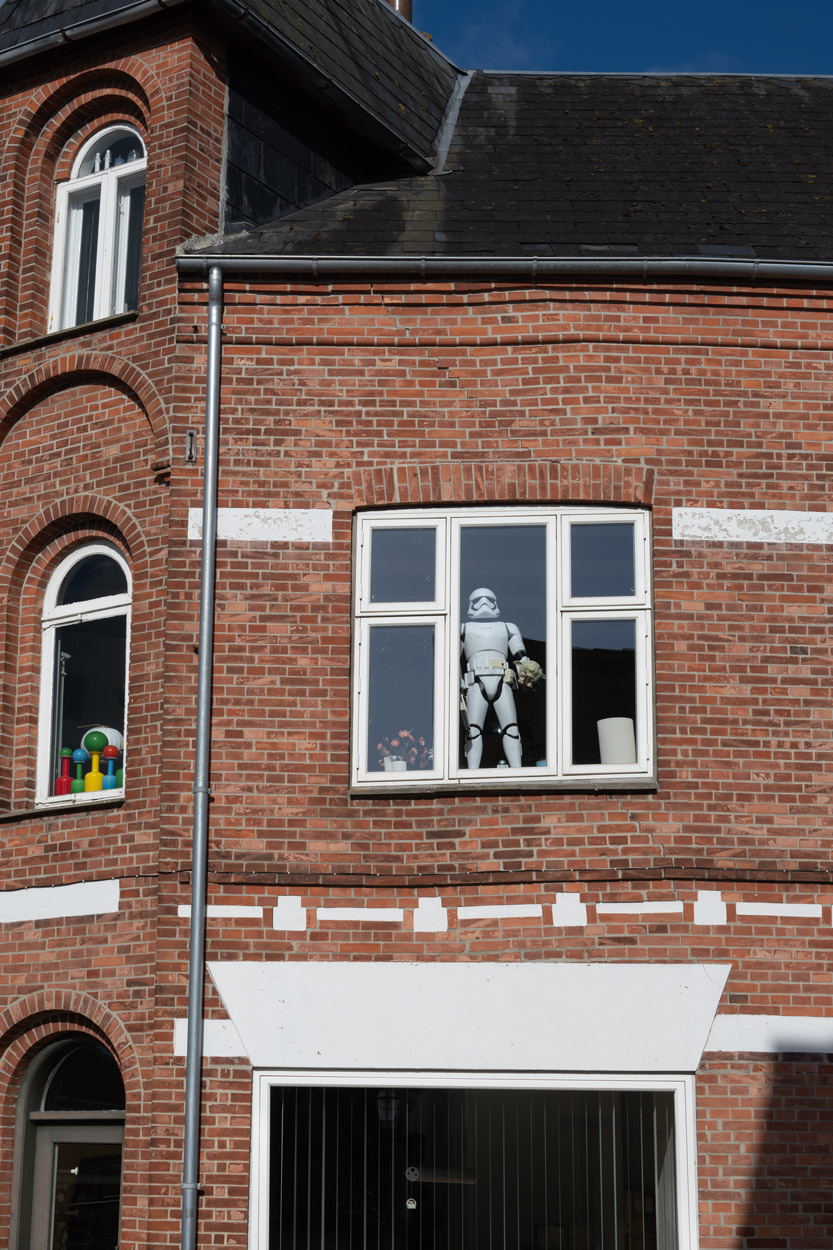
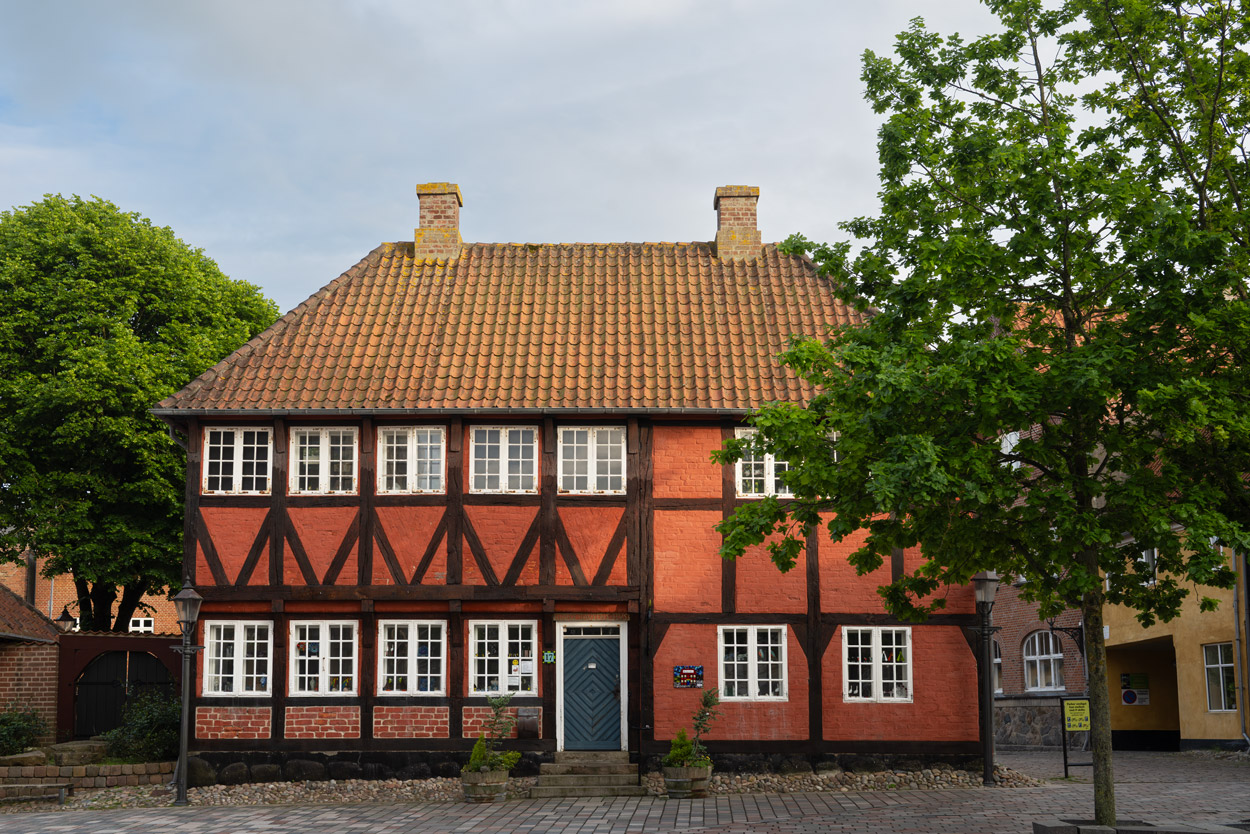
The 16th century Hans Tausen’s House was part of the residence of bishops seated at the Ribe Cathedral. It is located in the village square facing the cathedral.
Hans Tausen, bishop of Ribe from 1542 to 1561, was a well-known reformer in the Lutheran church. He translated the Bible into Danish.
On the Vietnam Airlines flight to Denmark, I sat next to a Swedish man returning to Stockholm via Copenhagen from a business trip to Vietnam. We got into a rambling conversation ranging from his involvement with a startup business that recycles discarded pieces of synthetic fabrics that are cut away in the production of garments to life in Vietnam, the decline of the United States in the hands of malevolent fascists, to things to do in Copenhagen.
The company he works for has been created around some useful ideas, a reminder to me that there are literally thousands of niches in our mass consumption, growth-is-always-good global economy for businesses with ideas that make life on earth a bit less wasteful and a bit more sustainable.
But his thoughts on things to see in Copenhagen were of more immediate value to me. Among other places, he recommended I visit Tivoli which, as I understood his brief description, not entirely accurately as it turned out, was a beautiful space enclosing an amusement park.
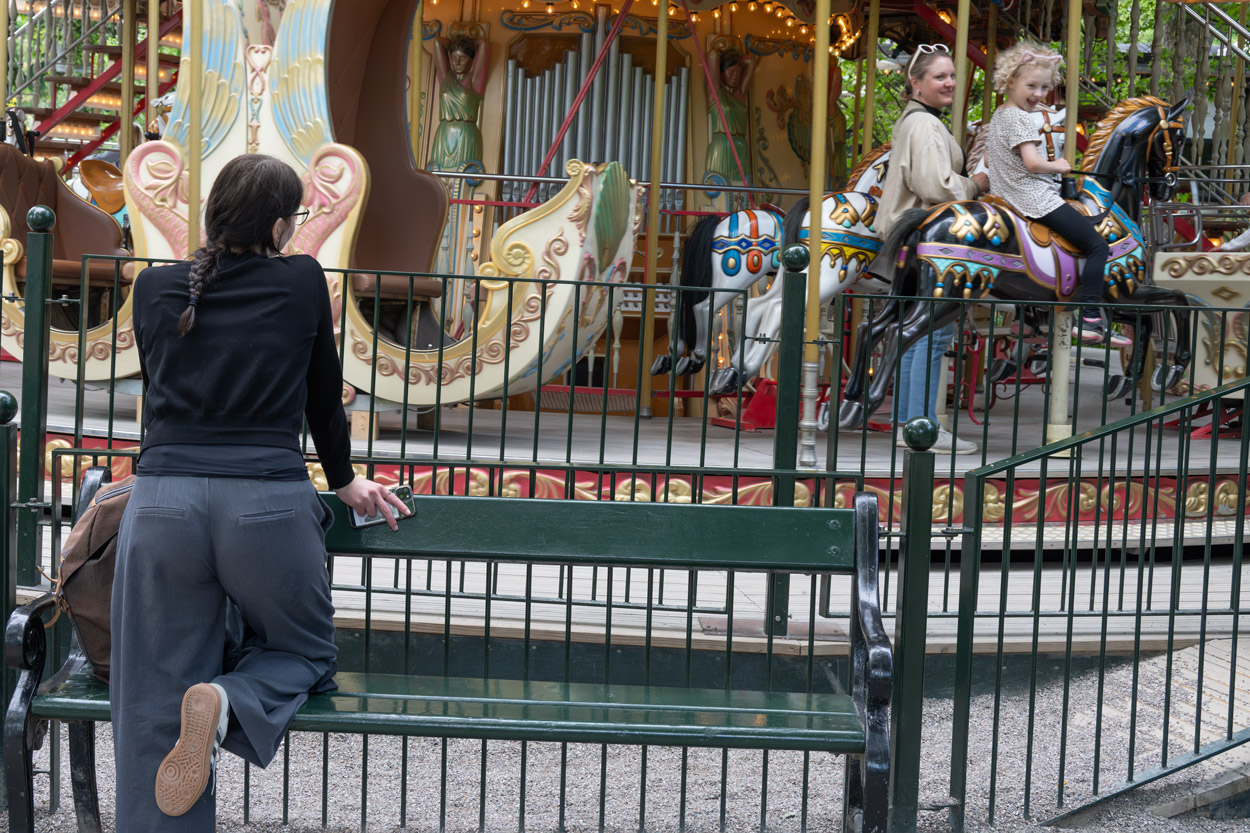
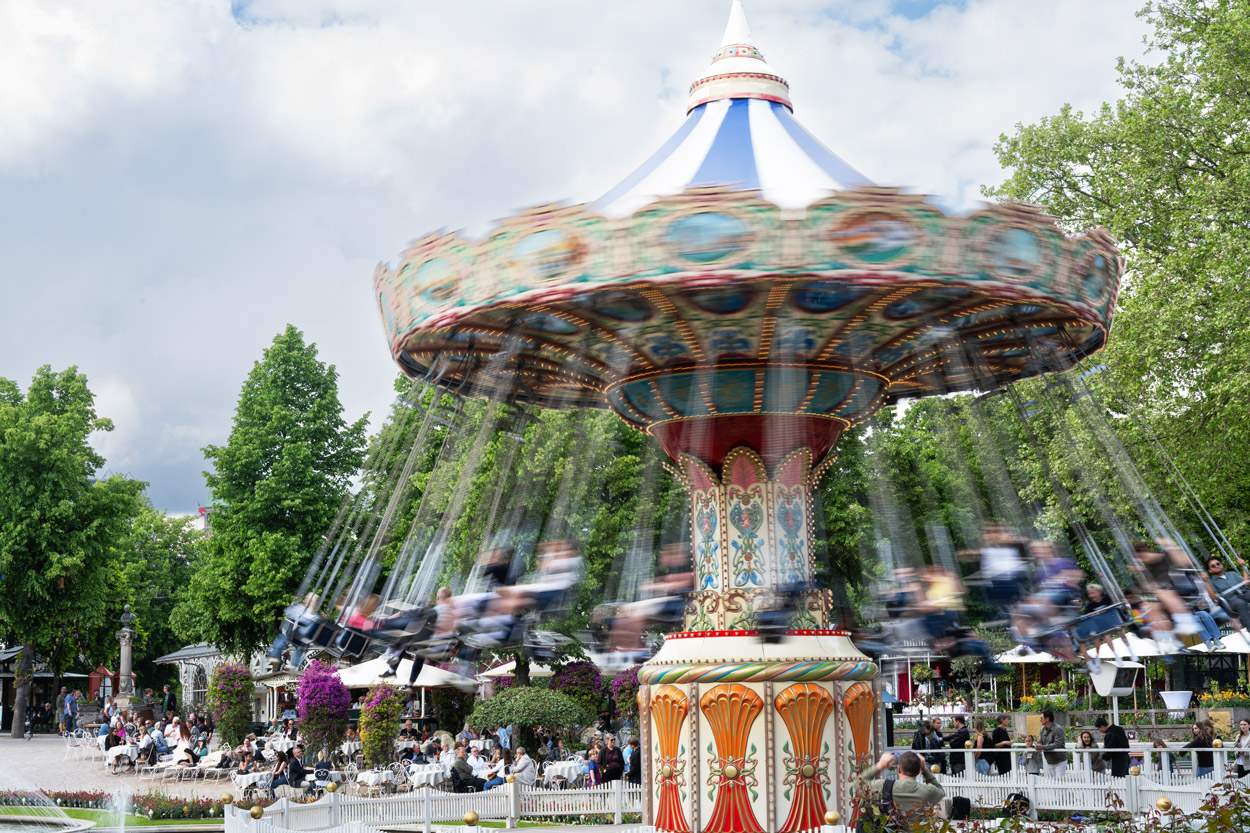
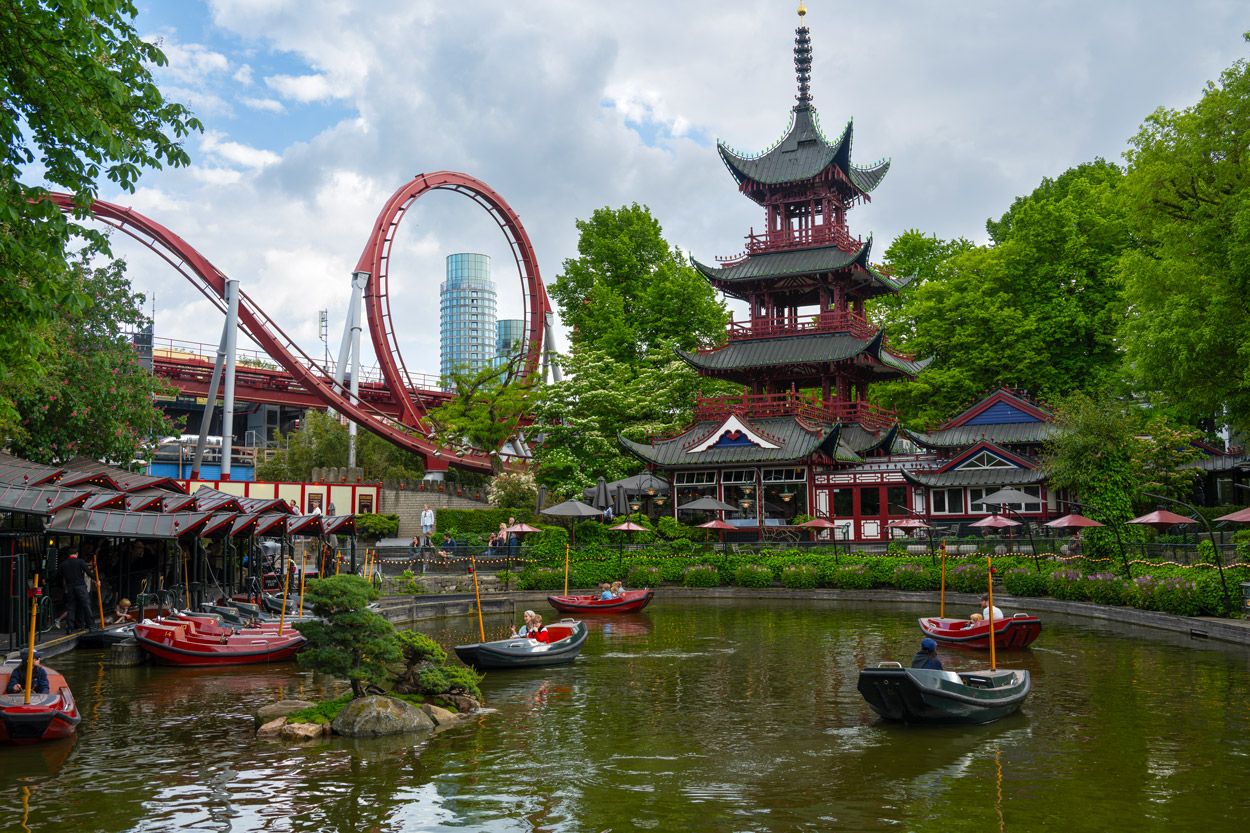
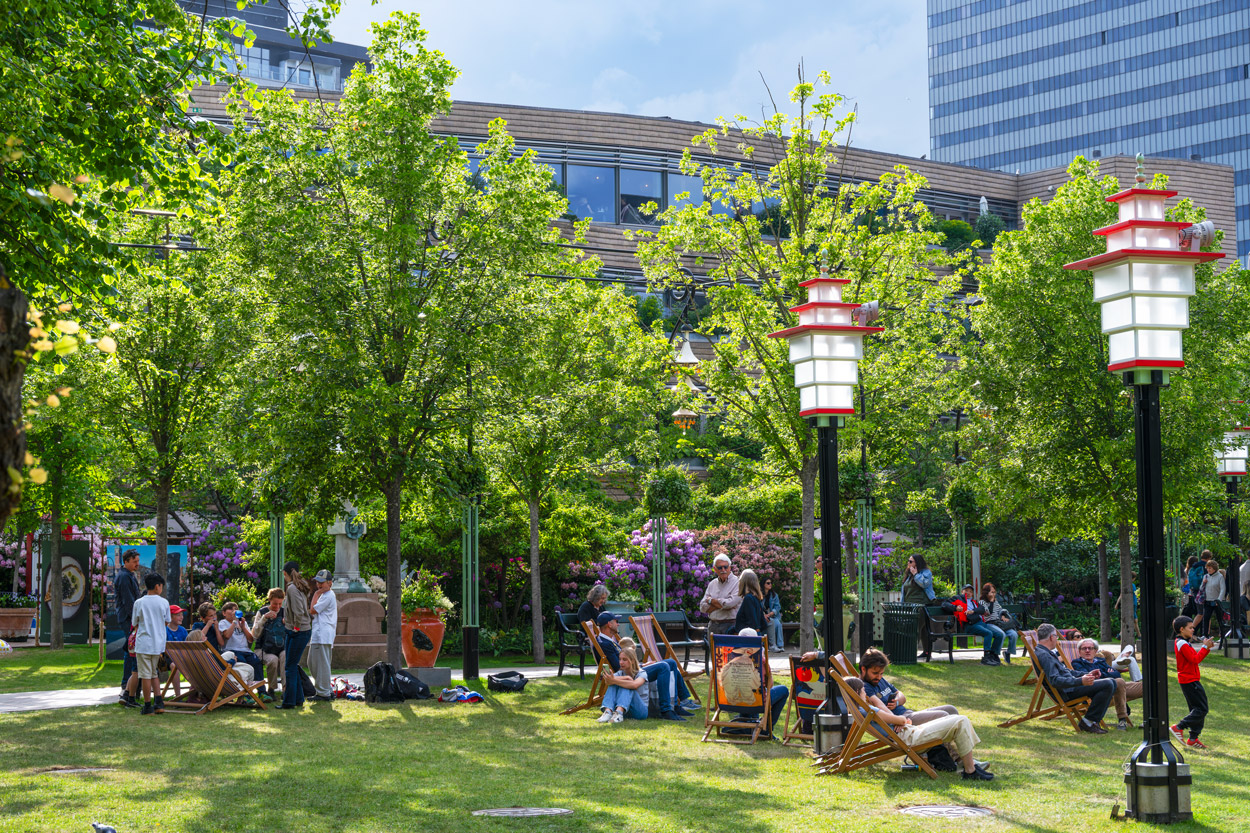
On my second day in Copenhagen I set out around 7:00 am and walked over to Tivoli Gardens only to find the place would not open until 11:00, and when it did, I would need a ticket costing around $23 to go in. I returned late afternoon on my third day, and after buying my ticket and entering the Gardens, I discovered that Tivoli is indeed a beautiful place which features far more than an amusement park that requires a fee to enter. In addition to more than two dozen amusement rides inside the park (each of which requires the purchase of another ticket), Tivoli Gardens also has: a wide variety of restaurants and eateries within, ranging from several restaurants with Michelin stars to a food court serving different kinds of street foods; replicas of a Chinese pagoda (that looks more Japanese to me) and a Moorish palace; regular music, theatre and dance performances, as well as events for kids; and a very pricey five star hotel on the grounds if you are interested in spending a night or two.
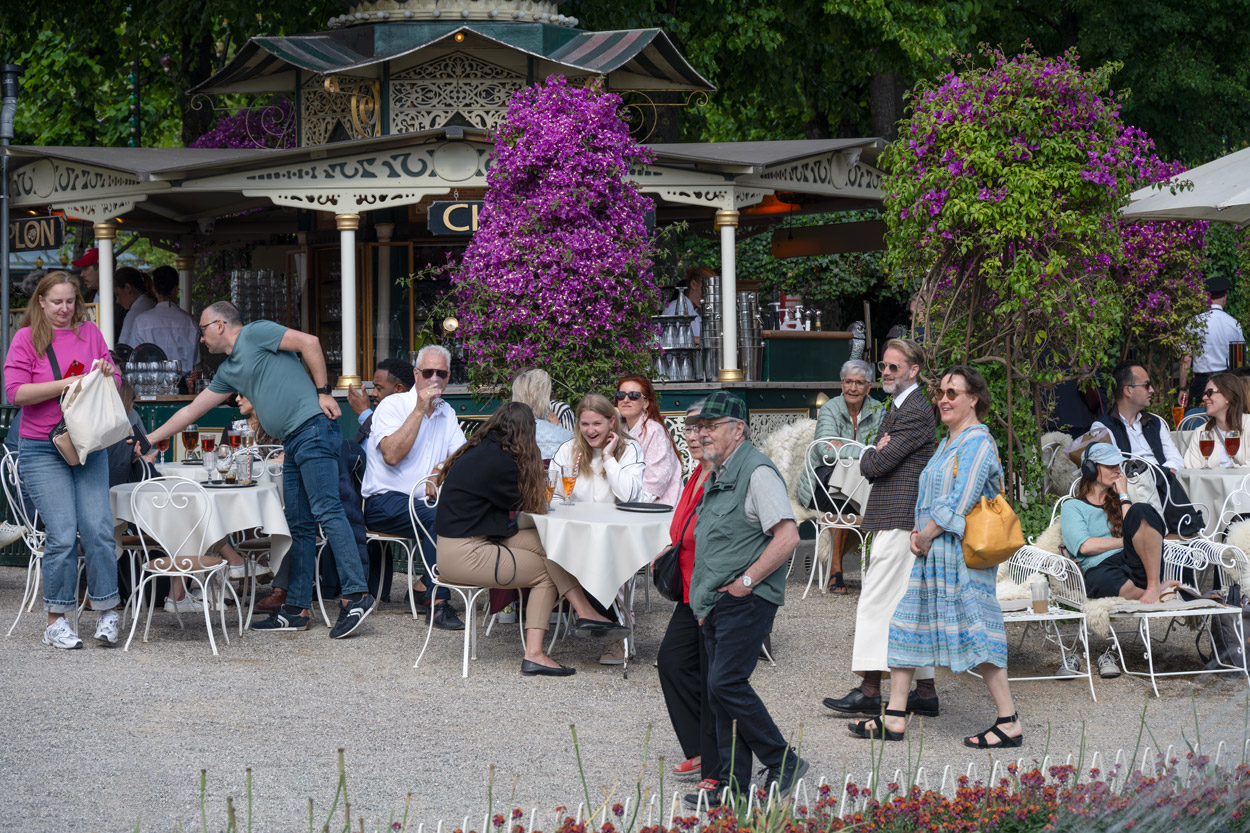
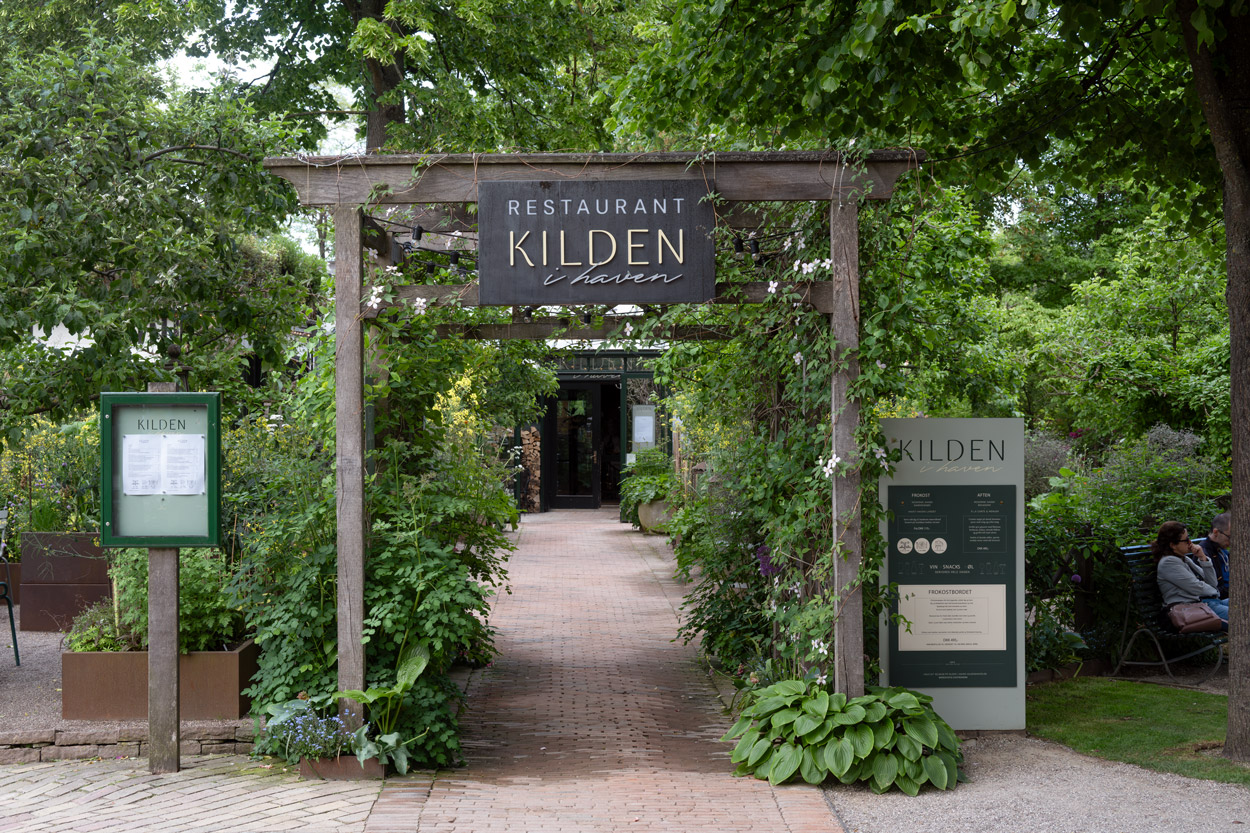
A ticket to enter the park, plus a few rides, and then drinks and dinner, an outing to Tivoli can turn into an expensive day in no time, especially for a family. Though there are various ticket deals varied to what people want to do during their visits. And there is an annual pass ticket for locals who are likely to visit Tivoli several times during the year.
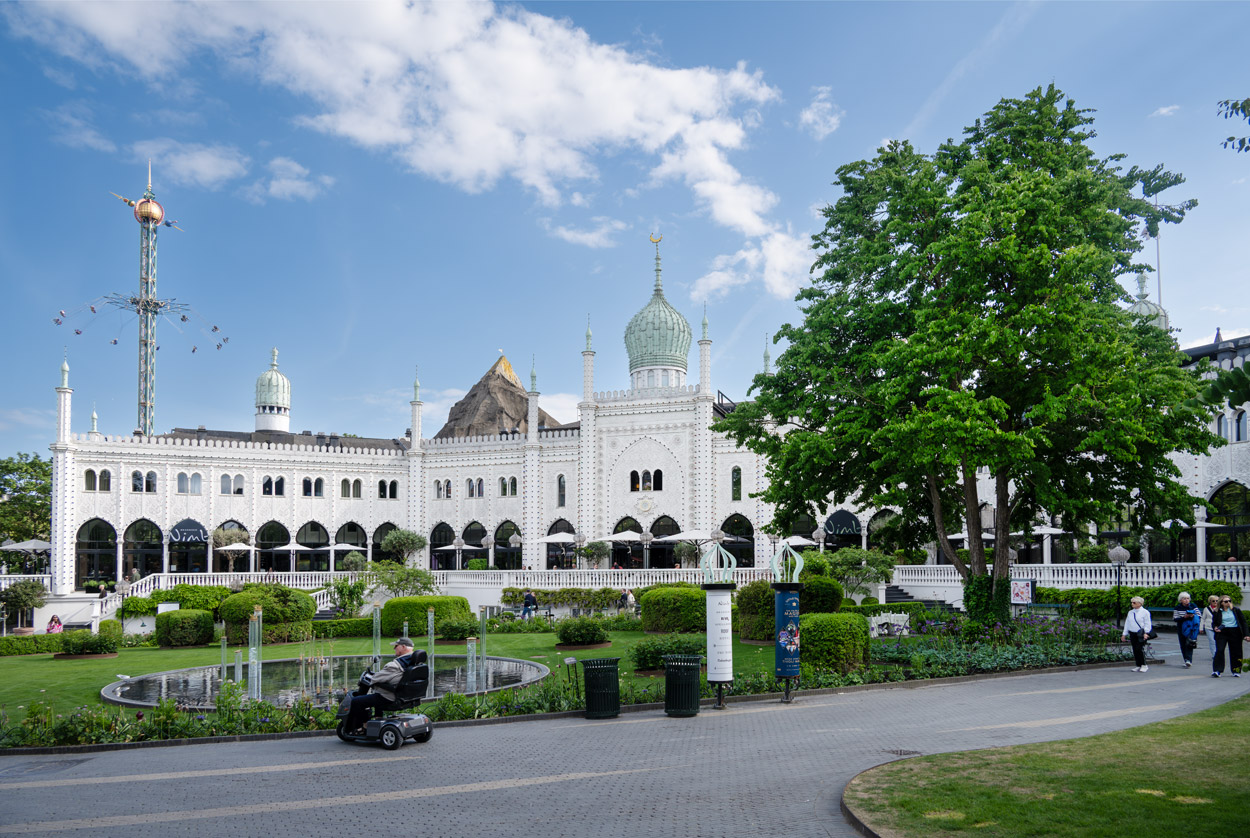
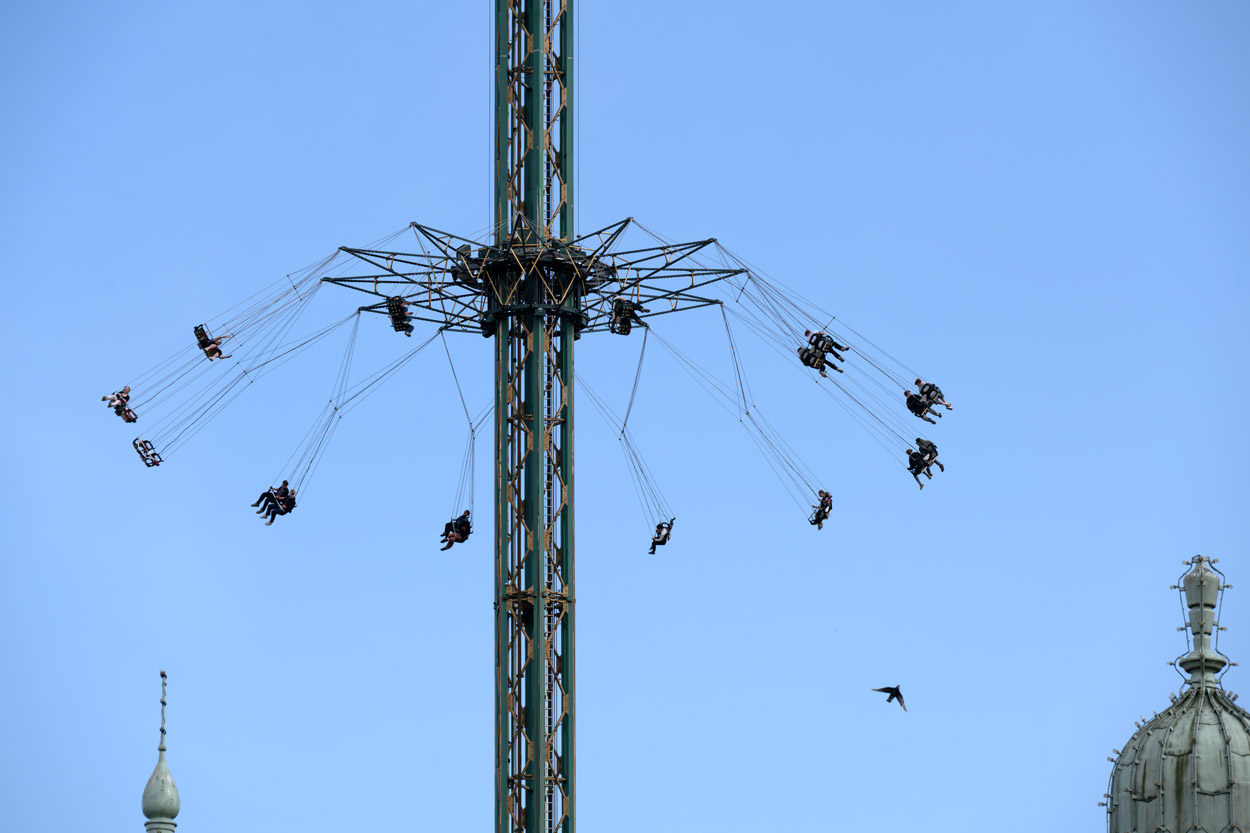
As for me I spent a couple of hours walking around on a beautifully sunny and warm early June afternoon soaking in the sights and the ambience. I came across a gathering of people watching a broadcast on a huge outdoor screen. I stopped to listen to the Lord Mayor of Copenhagen, a 40ish woman named Sisse Marie Welling of the Green Left party, talking with a hot shot from Michelin about Copenhagen’s efforts to turn itself into the foodie capital of Europe. Sure. Why not?
While the city’s goal did little to inspire, it did get me thinking about having a proper dinner at one of the many restaurants in Tivoli Gardens. After spending some time reading restaurant reviews, I ended up in a place called Paafuglen that serves Danish cuisine. I did the works: an aperitif, first course of seasonal white asparagus in a creamy sauce, a main of baked haddock with new potatoes and washed down with a bottle of piss elegant sparkling water, ice cream for dessert, and finally coffee. It was a delicious, memorable dinner, the service was impeccable, and it was not cheap.
Tivoli Gardens, a unique, delightful place that was absolutely worth the price of admission.
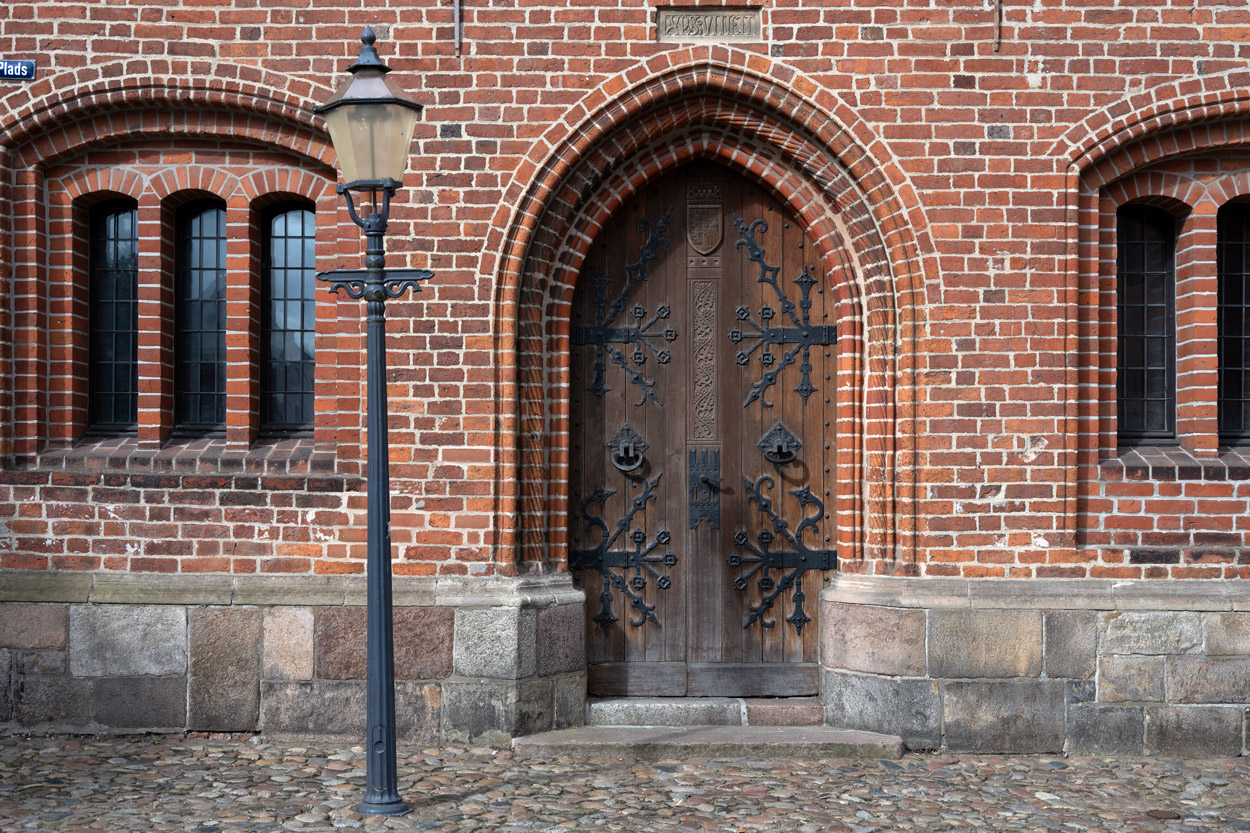
The old town hall of Ribe pictured in part here is in the center of the old village near the town square and Ribe Cathedral. The original town hall on this site was built in 1496, though it is not clear to me whether the building pictured here is the original structure or a newer one. Today the old town hall houses a museum that I did not visit and occasionally hosts local weddings.
Mostly I like the colors and textures in this image: the wall with old and new red brickwork, the wooden door with its wrought iron decorations, granite foundation stones of grays and browns, and cobblestones in the foreground. The street light in front of the building casts a shadow giving the image depth.