History in the Heart of Modernity

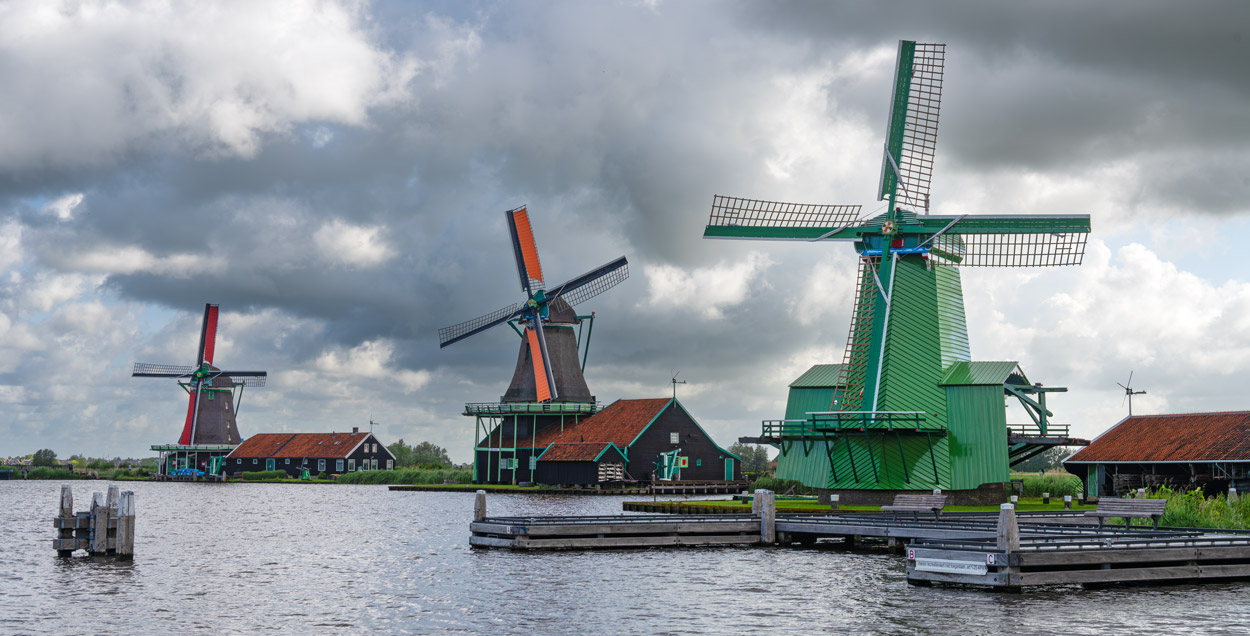
On its website, Zaanse Schans urges tourists to “experience historic Holland” by visiting “this windmill village on the Zaan River … just 20 minutes from Amsterdam.” Friends whom I visited in Amsterdam recommended Zaanse Schans, so I boarded a public bus at Centraal Station early on a cloudless, sunny morning and headed for the village.

The ride took a bit longer than 20 minutes, but that was because I boarded a bus that did not go all the way to my destination, and had to change to a second bus midway in the ride. The trip was interesting as it gave me a chance to see some of Amsterdam away from the renowned historical center of the city. Unfortunately, during the trip, clouds rolled in and quickly hid the sun. Patches of blue remained, but the ominous gray clouds were accompanied by a blustery, rather chilly wind and a definite threat of rain. With no umbrella and a windbreaker that would not keep me dry in anything more than a light drizzle, I set off rather nervously from the bus stop on my walk to and around Zaanse Schans.
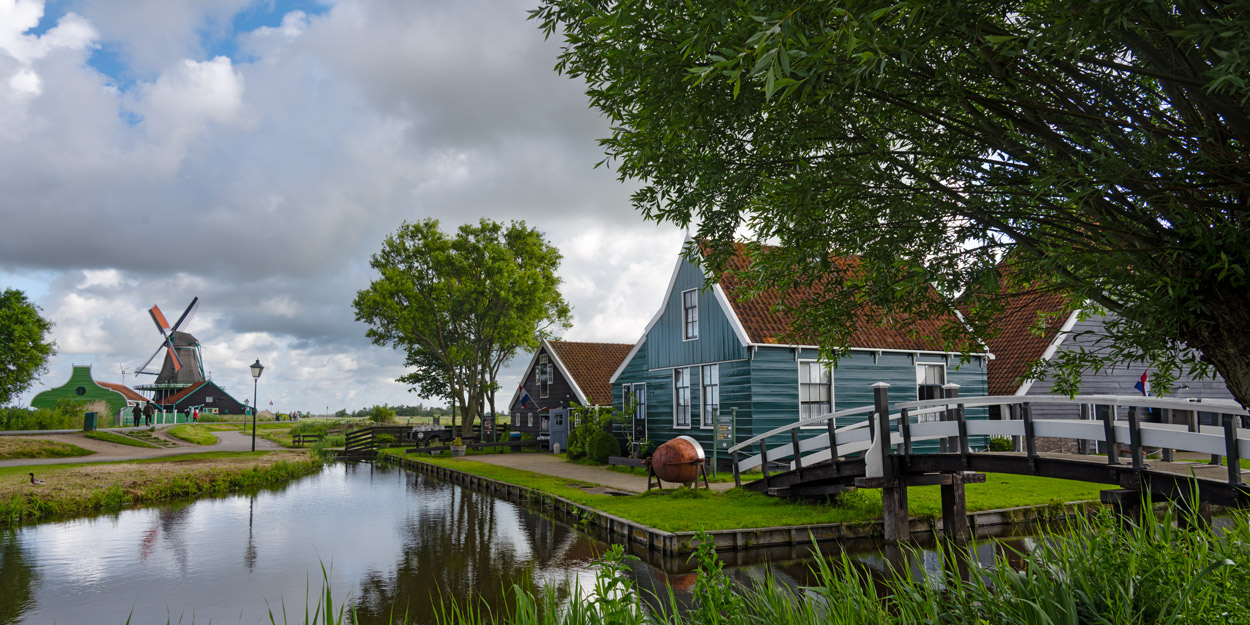
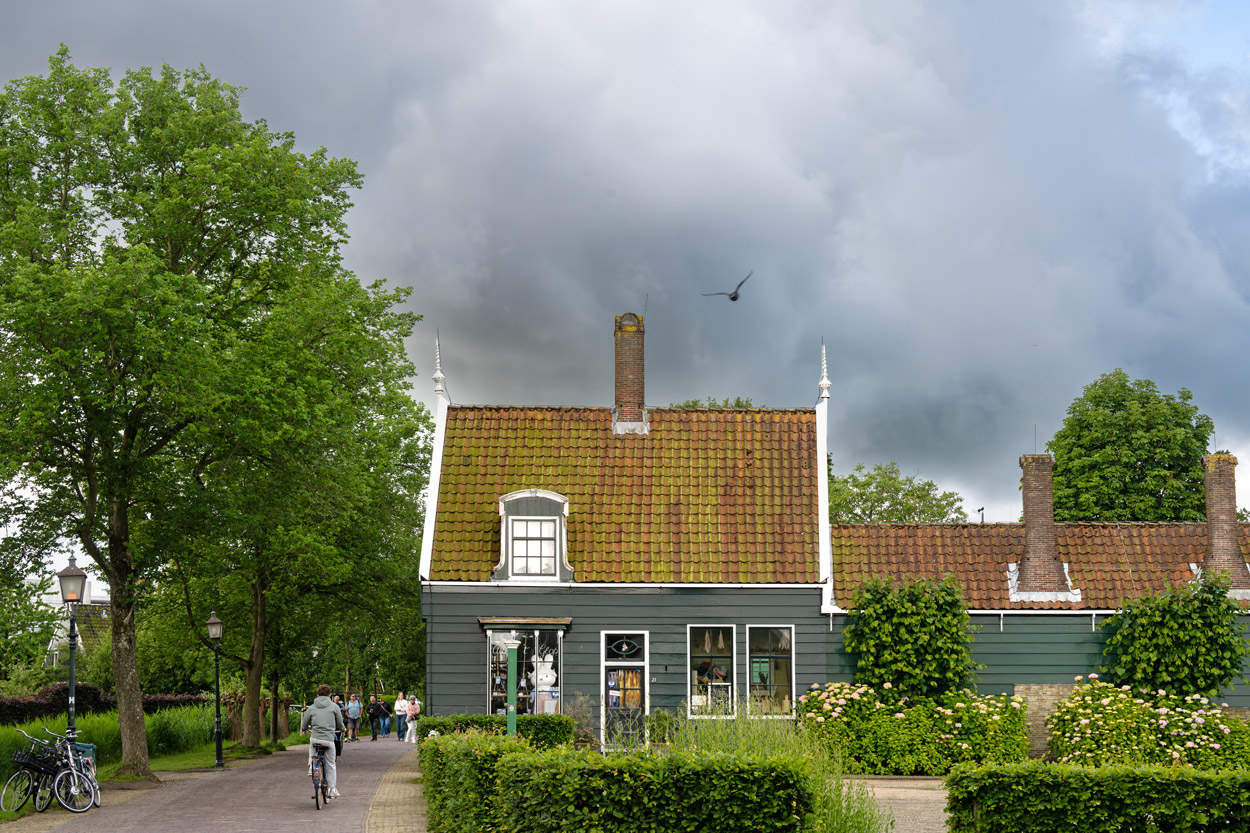
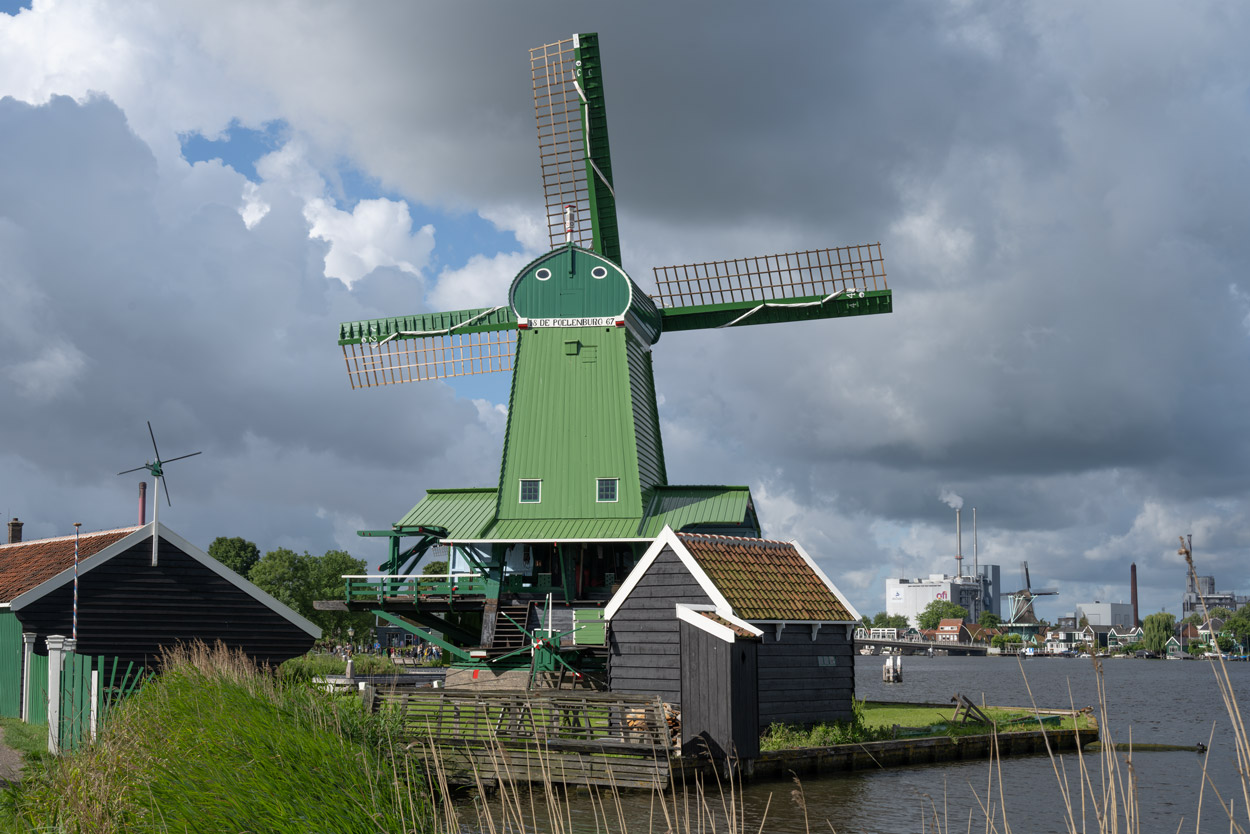
The village is beautiful, and the old windmills and other examples of traditional architecture are fascinating to look at up close. That said, the area has something of the feel of a village “manufactured” for tourists, of the sort you can see near, for instance, Sapa in northern Vietnam. In fact in an effort to preserve examples of historical Dutch architecture and construction, the homes, shops and some of the windmills (two are in their original locations) that make up Zaanse Shanse were moved from other parts of northern Holland to create the village. This preservation effort occurred in the 1960s and 70s, and eventually the protected area that makes up Zaanse Schans was developed into a tourist destination that nowadays attracts more than two million visitors per year. Some of the buildings are occupied by shops catering to tourists, and there are tours of windmills and a cheese making workshop. The homes in the village are, however, occupied by residents and not open to visitors.
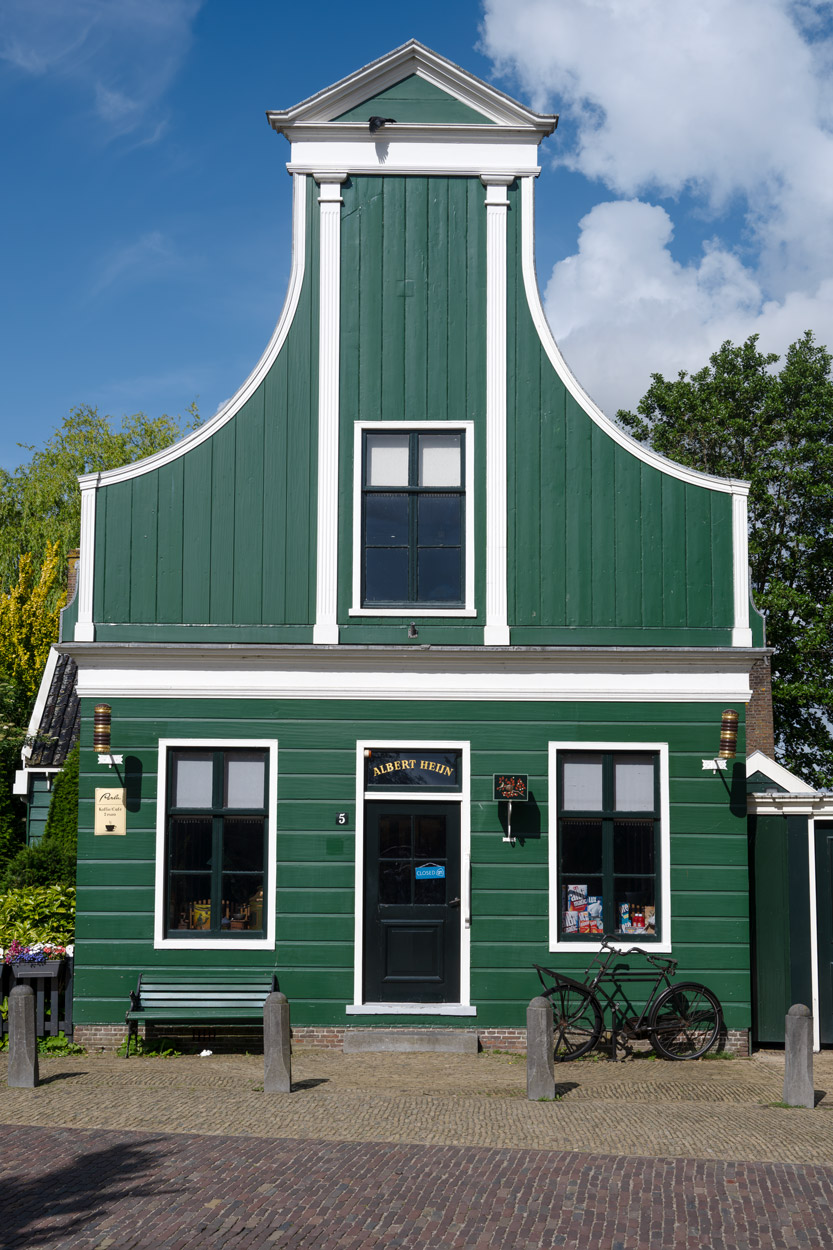
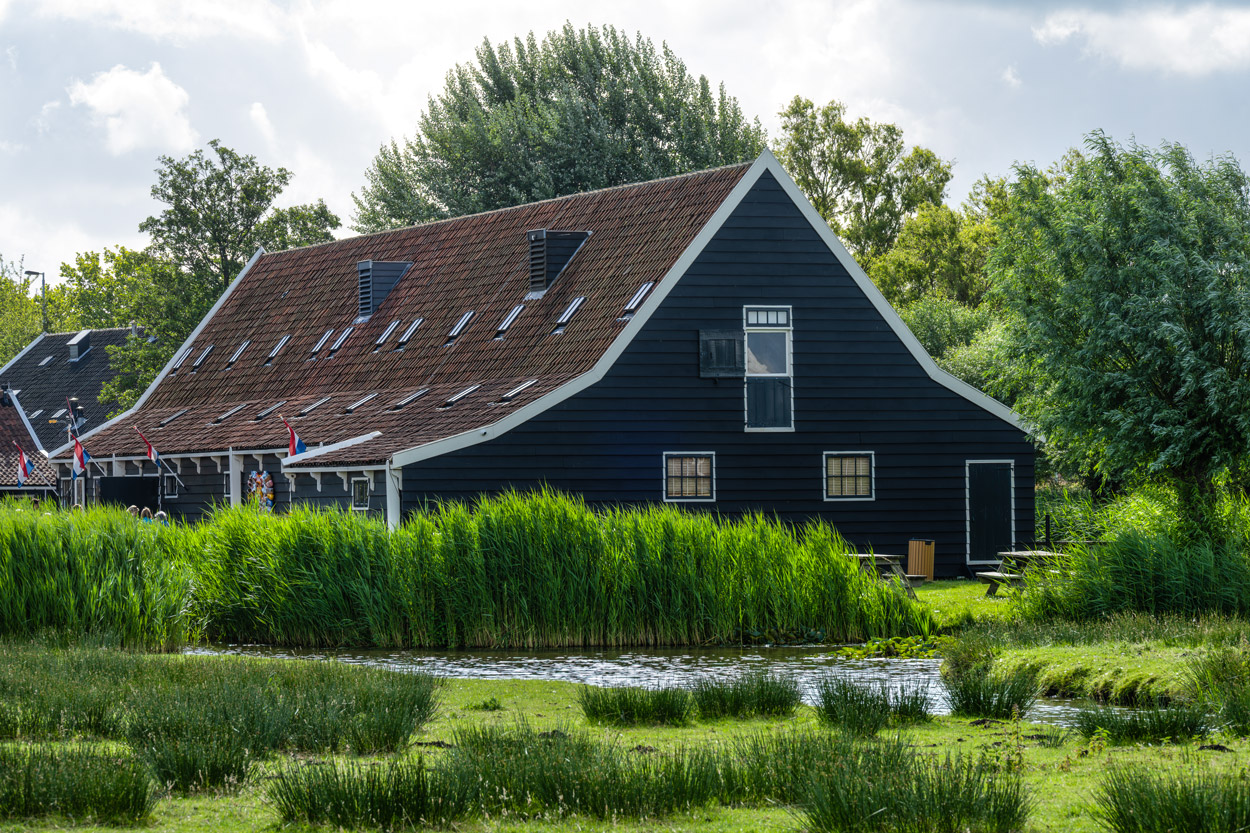
I walked around exploring and taking photos of the relatively small area for about an hour and a half. I even saw a man in yellow wooden shoes. He went through a door too quickly for me to get a photo, but not fast enough to prevent me from wondering why anyone would walk around in footwear that looks so uncomfortable.
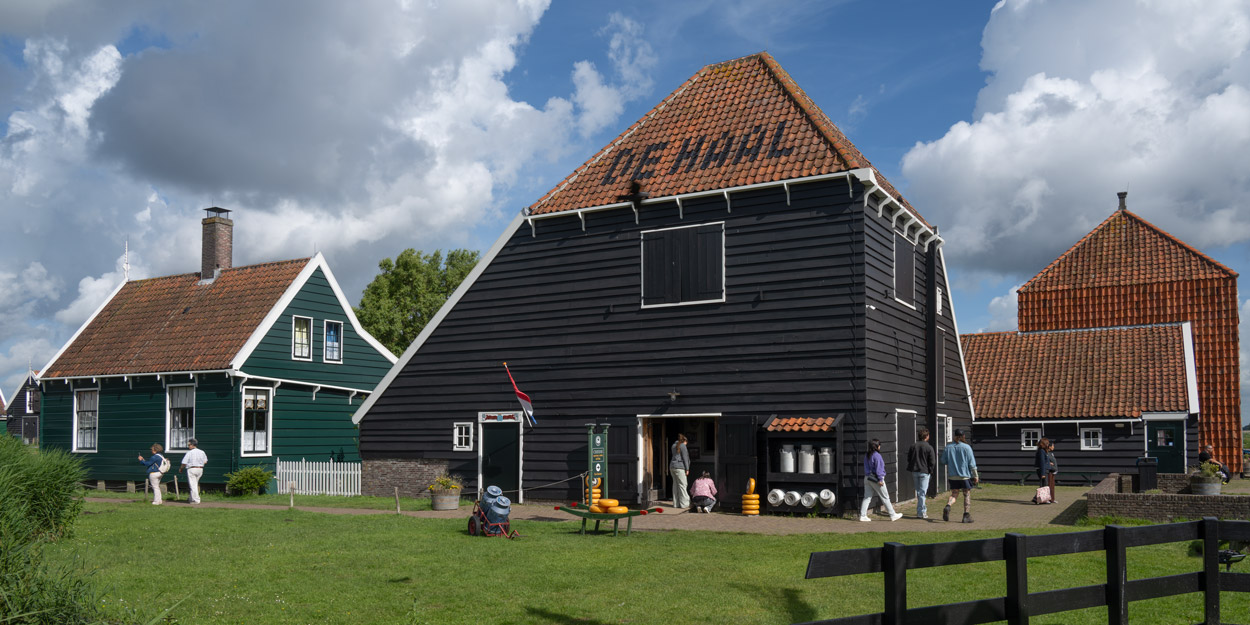
When I began my walk just before 8:30, there were still not many visitors and the places offering tours were not open. I had planned to look inside a windmill and visit the Zaanse Schans museum next to the village before heading back to Amsterdam. In the end I went into a cheese making workshop, but that was it. Once inside I did not pay much attention the cheese making process, instead spending my time eying the huge wheels of Gouda and trying to convince myself I could fit one in my carry-on suitcase for the trip home. Keep in mind, that carry-on was my only suitcase for the three and a half week trip; I learned long ago to travel light. Be that as it may, reason prevailed and I did not return home with several thousand calories of cheese that my waist line absolutely does not need.

As for going in to a windmill or the Zaanse Schans museum, it turned out I was still subject to a fickle weather day. When I first arrived there was a gray, threatening sky and blustery wind, which gave way to warm sunshine and puffy white clouds, then finally to more clouds and the threat of rain again around 10:00. Unprepared for rain as I was, I decided not to take a chance, and headed to the bus stop and a bus back to Centraal and lunch. It did finally rain for awhile in the late afternoon of that day, and I did get a little wet before escaping to my hotel room. But, all in all, it was an excellent travel day.
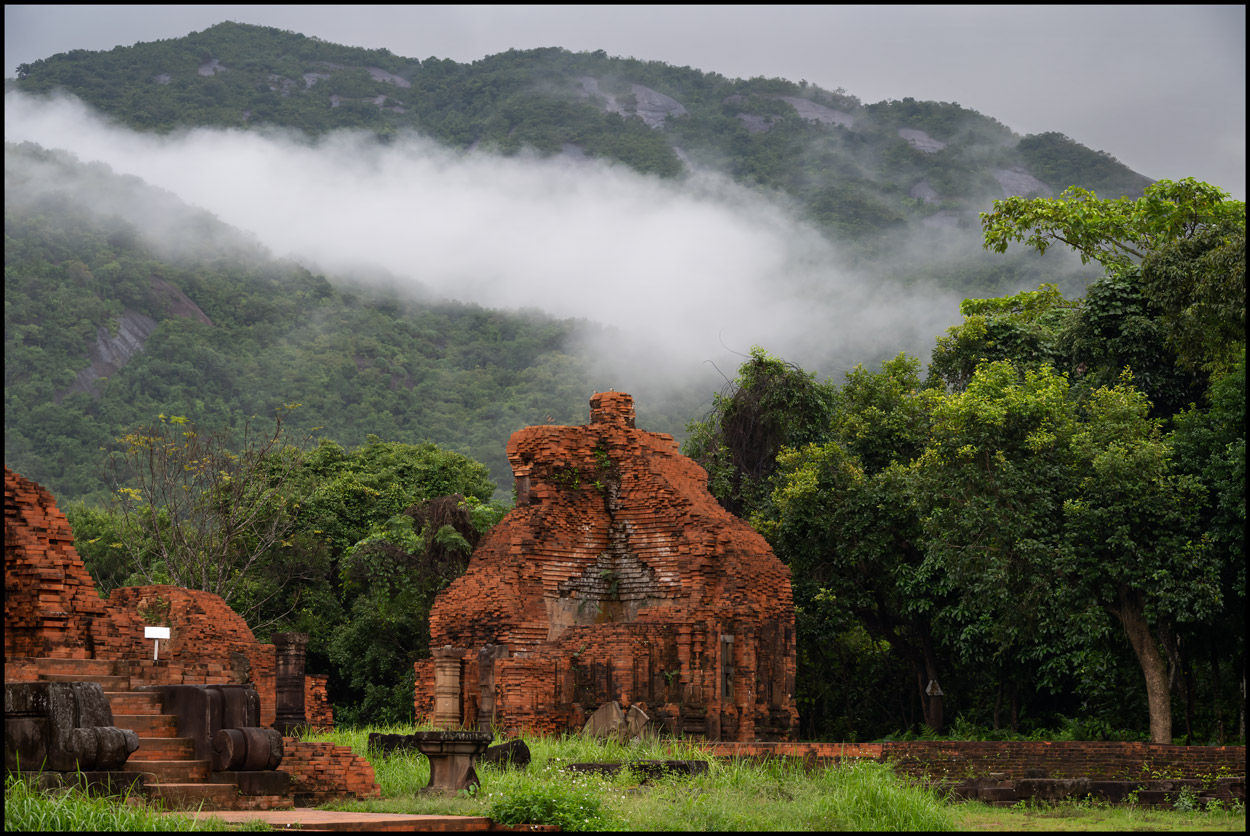
Mỹ Sơn: Legacy of the Cham People

About one hour to the west of Hoi An, the UNESCO World Heritage Site, Mỹ Sơn, was an important religious center of the Cham people. The earliest Cham settlements in what is now central and southern Vietnam date back to the 3rd century CE. At some point early in their history, the Cham came into contact with Hinduism and adopted some variant of that religion. While there is debate about the extent to which the Cham in Vietnam were a unified kingdom, there is no question that Cham polities functioned throughout much of Vietnam for hundreds of years. They were traders and seafarers – Hoi An was originally a Cham port city and trading center – who developed a sophisticated civilization that presented formidable challenges to the Vietnamese living in the northern part of today’s Vietnam. For many years, there were ongoing conflicts and wars between the Cham and the Vietnamese. As the Vietnamese moved south, they eventually overran the Cham and absorbed their culture, though it was not until the 19th century that the last Cham enclaves were subdued.

Vietnamese friends have told me that the Cham people have been completely assimilated into the Vietnamese nation. While I suspect that is largely true, I have read that there is still a small, distinctly Cham ethnic minority in the country. How and to what extent Cham culture and customs have influenced the development of Vietnamese culture, I simply do not know enough about the very complex history of interaction between to two peoples to comment.

I have made two trips to My Son. The first time I went, it was a cloudy gray day. The second time I went, it was a cloudy and raining gray day. The photo above is from my second visit in November of 2024.

Fiery Sunset, Hoi An, Vietnam

Hoi An was treated to a fiery, magnificent sunset last night. The brilliant colors of this sunset may just be serendipity for those of us who got to watch, or they may be a warning announcing the arrival of tropical storm Trami, which is somewhere in the East Sea heading for central Vietnam. Generally speaking, I am not particularly interested in weather and am not fluent in weather folklore, so I cannot say one way or the other. The exception to my general rule of being uninterested in weather is when big weather events are headed my way. And with top wind speeds well over 100 kph and a deluge of rain on offer, Trami qualifies as a big weather event. Being in the path of such a storm gets me interested, in this case, interested enough to download the Windy app so I can track Trami’s movements. From the looks of things, the center of the storm with its destructive high winds and rain will make landfall quite a distance north of Hoi An on Saturday 26 October. Here we are almost certain to get bucket loads of rain over several days – after all this is the rainy season in central Vietnam – but with some good luck we will avoid Trami’s howling winds and the damage they cause. Or maybe we won’t. One report in a Vietnamese publication suggests the storm will turn south after making landfall. At that point it would be headed towards Da Nang and Hoi An. Just have to wait and see. In anticipation, I did a lot of food shopping yesterday.

As some of you know, I just returned from a couple of weeks in Japan. I have loads of photos from the trip, and had planned to get started processing and posting yesterday, my first full day back in Vietnam. That plan was derailed by a ten hour power outage, during which time a crew of a dozen or more guys in orange suits worked on the big power box at the end of my street. Said power box has been acting up for a couple of months now with several outages of short durations, and hopefully the extensive refit it got yesterday has put recent problems to rest. I can at least hope the repairs give me a better chance of having power during the storm. Whatever, I will get started with the Japan photos in the next day or so.

Schloss Schönbrunn, Vienna

Although the sun would break through a bit later, Schönbrunn Palace was set off by heavy, brooding clouds when I first arrived on a Sunday morning. As I walked from the nearby subway station to the Palace gate at 7:30 am, I saw virtually no one. Though he is a little hard to make out in the relatively low-res photo for web posting, there is a lone jogger just to the right of the staircase in the photo. In any case, my plan was to take an early morning walk around the Palace grounds and later buy a ticket to go into the Palace. The walk through the beautiful grounds was thoroughly enjoyable, and went just as planned. However, when I went to buy a ticket for the Palace, the earliest I could enter was after 1:30 pm. Typically, I had done zero research or advanced planning for my visit, and thus was not aware there is a limit to the number of visitors inside the facility at any given time, and one has to reserve a time when buying a ticket. I wanted to go inside, but with only three and a half days in Vienna, it just did not make sense to spend pretty much an entire day at the Schönbrunn, so I went in search of brunch and coffee instead.

Schloss Schönbrunn served as the principal summer residence of Austria’s Hapsburg rulers from around the year 1600 until early in the 20th century. Several kilometers from the Hofburg in the center of old Vienna, even today the Schönbrunn and its extensive landscaped grounds are removed from the bustle of contemporary Vienna. The imposing Baroque-style edifice that appears in this photograph was completed in the 1740s during the reign of Hapsburg empress Maria Theresa. Wikipedia informs us that the palace has 1,441 rooms. The Schönbrunn and the grounds are preserved, restored as needed, owned and managed by a limited-liability company, which is, in turn, wholly-owned by the Austrian state (Wikipedia). Although I did not get inside the palace itself, everything I saw outside was immaculate and in excellent condition. Very impressive.

The main gate to Schönbrunn Palace.

And yes, the Schönbrunn has more statues featuring scantily clad classical figures in what appears to be uncomfortable repose.

Winter Day, Da Nang, Vietnam

There is never snow or really cold weather in this part of the world, but there is definitely a winter season in central Vietnam. It is characterized by rain, overcast days, and the occasional damp chill with temperatures in the 60s. Laugh if you will, but when you live in a house that is completely open to the exterior environment and the temperature inside is the same as the temperature outside, a damp 65 degrees can feel pretty raw and uncomfortable when you are lounging around that house. Normally, the rainy, wintry season begins in late September or October and is over by early to mid-January. Not this year – unseasonable rain, wind, and low temperatures have been with us throughout February.