On the Vietnam Airlines flight to Denmark, I sat next to a Swedish man returning to Stockholm via Copenhagen from a business trip to Vietnam. We got into a rambling conversation ranging from his involvement with a startup business that recycles discarded pieces of synthetic fabrics that are cut away in the production of garments to life in Vietnam, the decline of the United States in the hands of malevolent fascists, to things to do in Copenhagen.
The company he works for has been created around some useful ideas, a reminder to me that there are literally thousands of niches in our mass consumption, growth-is-always-good global economy for businesses with ideas that make life on earth a bit less wasteful and a bit more sustainable.
But his thoughts on things to see in Copenhagen were of more immediate value to me. Among other places, he recommended I visit Tivoli which, as I understood his brief description, not entirely accurately as it turned out, was a beautiful space enclosing an amusement park.


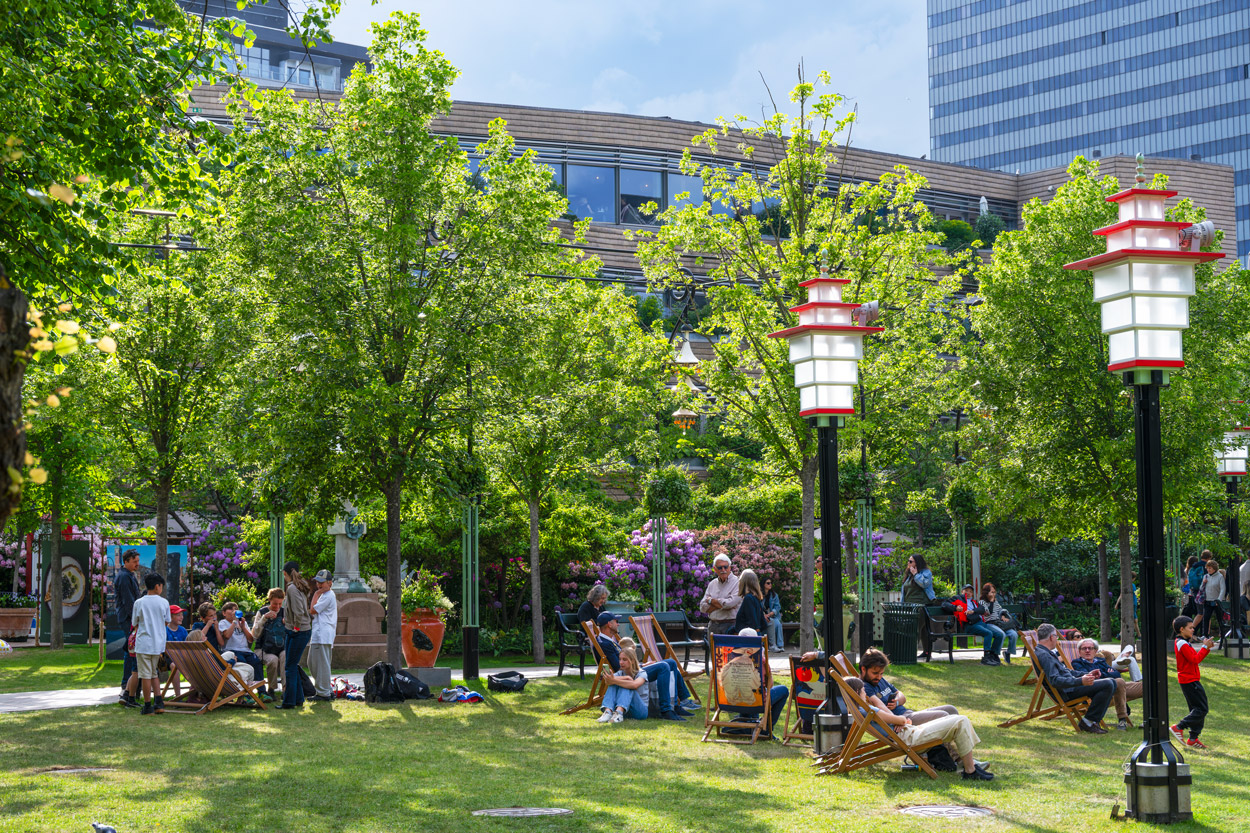
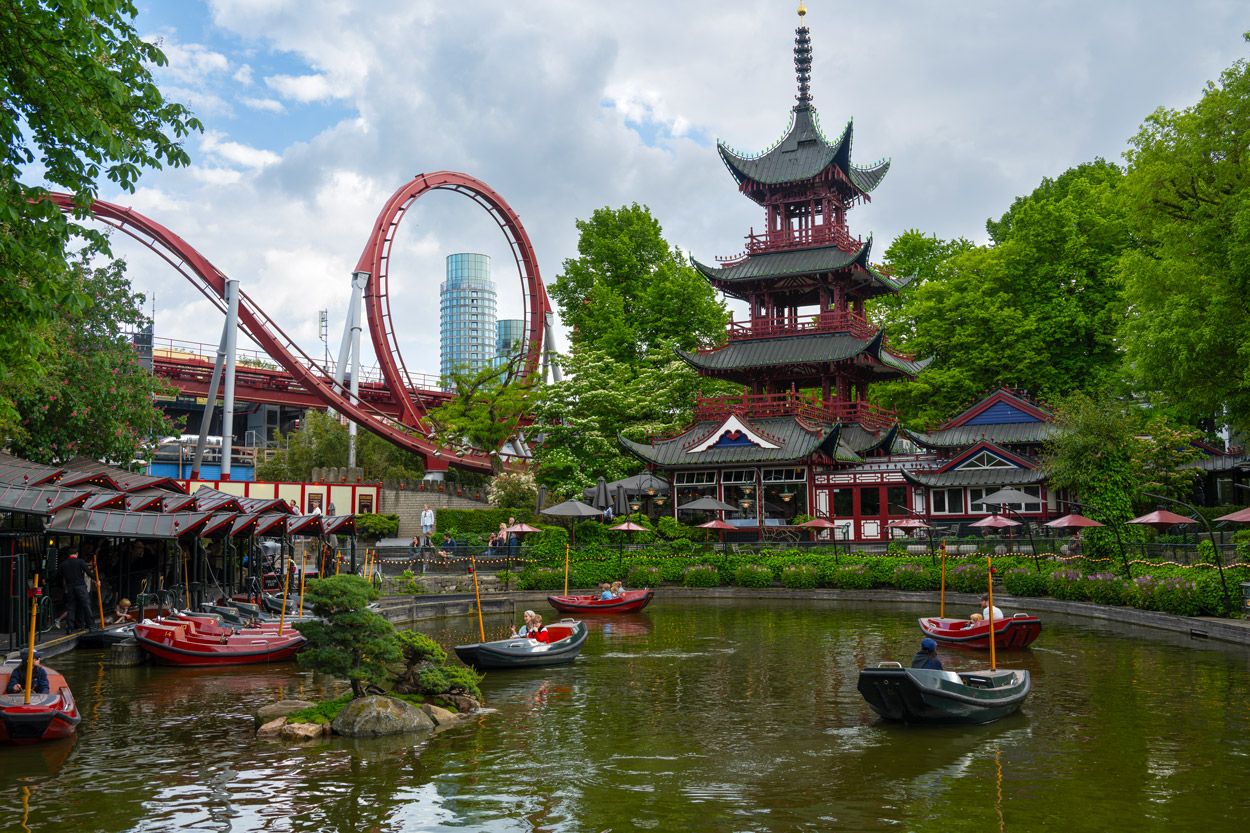
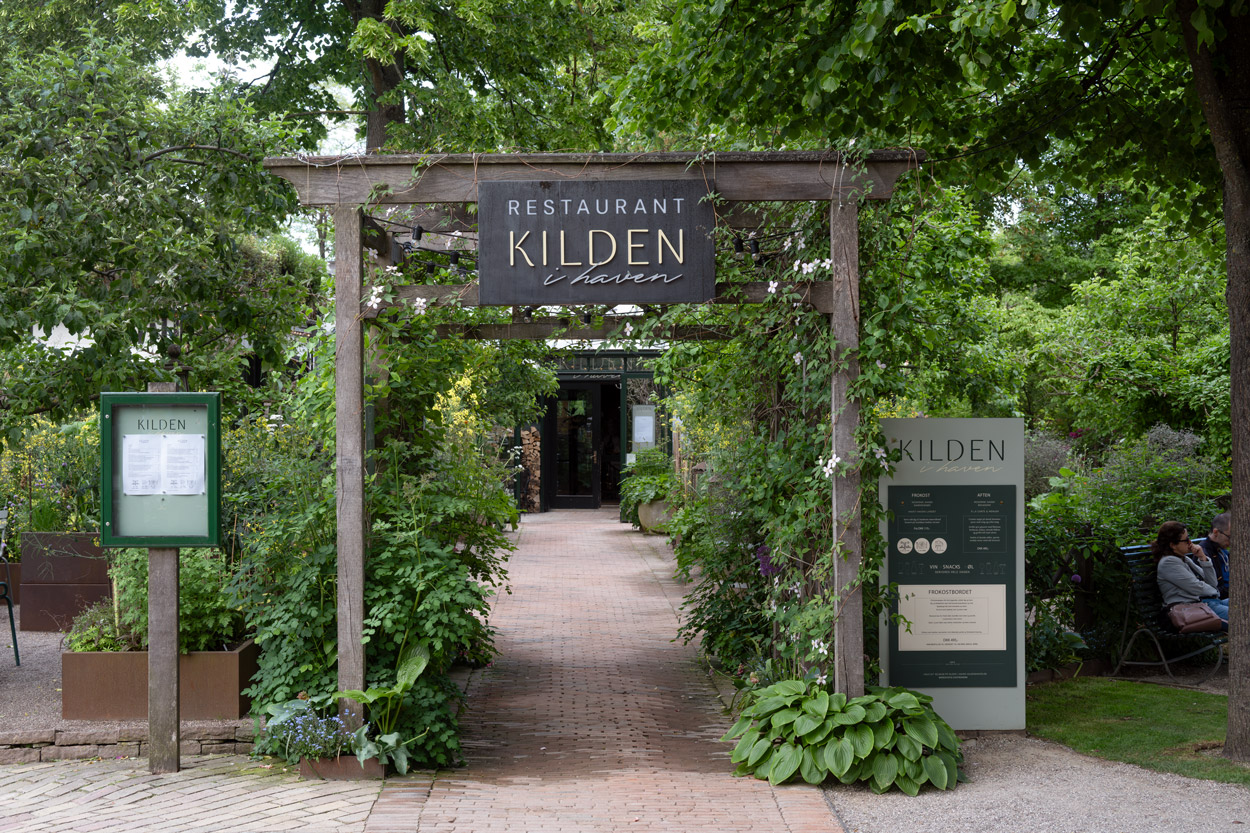
On my second day in Copenhagen I set out around 7:00 am and walked over to Tivoli Gardens only to find the place would not open until 11:00, and when it did, I would need a ticket costing around $23 to go in. I returned late afternoon on my third day, and after buying my ticket and entering the Gardens, I discovered that Tivoli is indeed a beautiful place which features far more than an amusement park that requires a fee to enter. In addition to more than two dozen amusement rides inside the park (each of which requires the purchase of another ticket), Tivoli Gardens also has: a wide variety of restaurants and eateries within, ranging from several restaurants with Michelin stars to a food court serving different kinds of street foods; replicas of a Chinese pagoda (that looks more Japanese to me) and a Moorish palace; regular music, theatre and dance performances, as well as events for kids; and a very pricey five star hotel on the grounds if you are interested in spending a night or two.
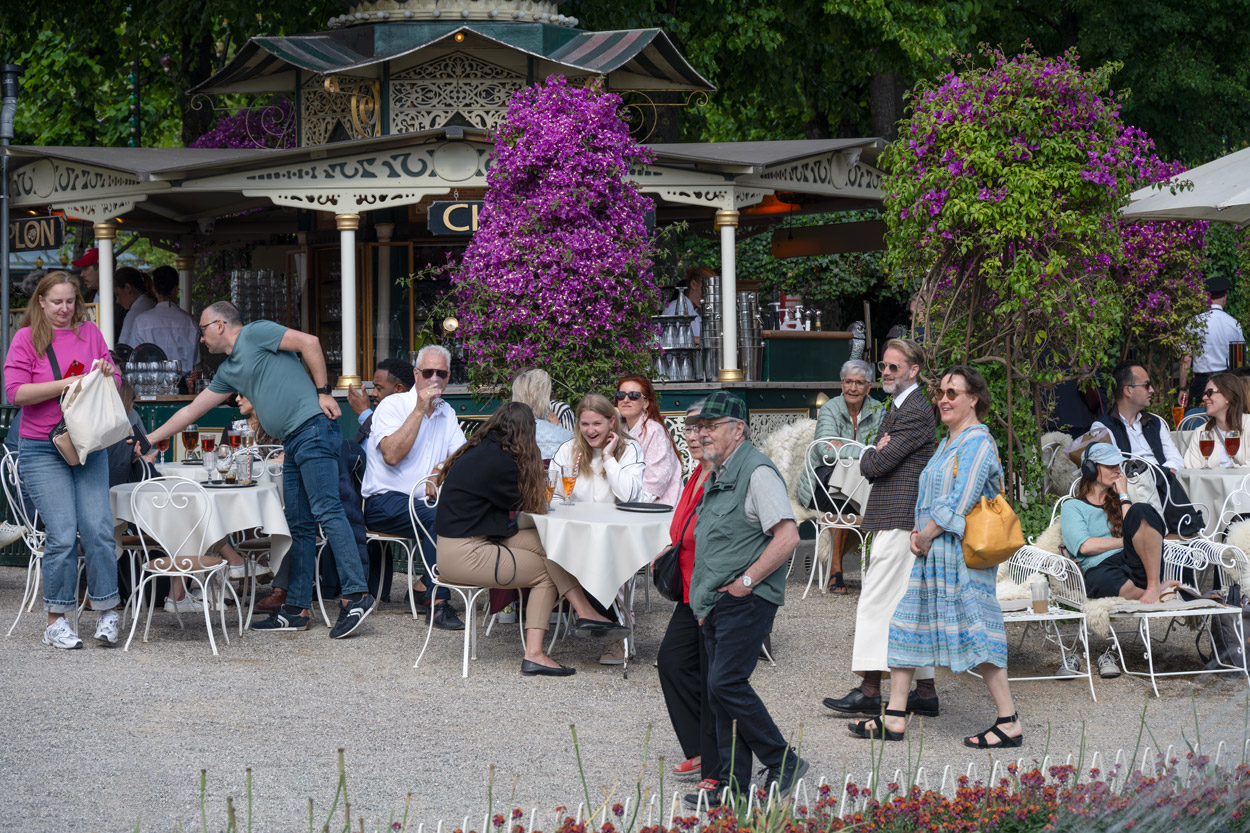
A ticket to enter the park, plus a few rides, and then drinks and dinner, an outing to Tivoli can turn into an expensive day in no time, especially for a family. Though there are various ticket deals varied to what people want to do during their visits. And there is an annual pass ticket for locals who are likely to visit Tivoli several times during the year.


As for me I spent a couple of hours walking around on a beautifully sunny and warm early June afternoon soaking in the sights and the ambience. I came across a gathering of people watching a broadcast on a huge outdoor screen. I stopped to listen to the Lord Mayor of Copenhagen, a 40ish woman named Sisse Marie Welling of the Green Left party, talking with a hot shot from Michelin about Copenhagen’s efforts to turn itself into the foodie capital of Europe. Sure. Why not?
While the city’s goal did little to inspire, it did get me thinking about having a proper dinner at one of the many restaurants in Tivoli Gardens. After spending some time reading restaurant reviews, I ended up in a place called Paafuglen that serves Danish cuisine. I did the works: an aperitif, first course of seasonal white asparagus in a creamy sauce, a main of baked haddock with new potatoes and washed down with a bottle of piss elegant sparkling water, ice cream for dessert, and finally coffee. It was a delicious, memorable dinner, the service was impeccable, and it was not cheap.
Tivoli Gardens, a unique, delightful place that was absolutely worth the price of admission.