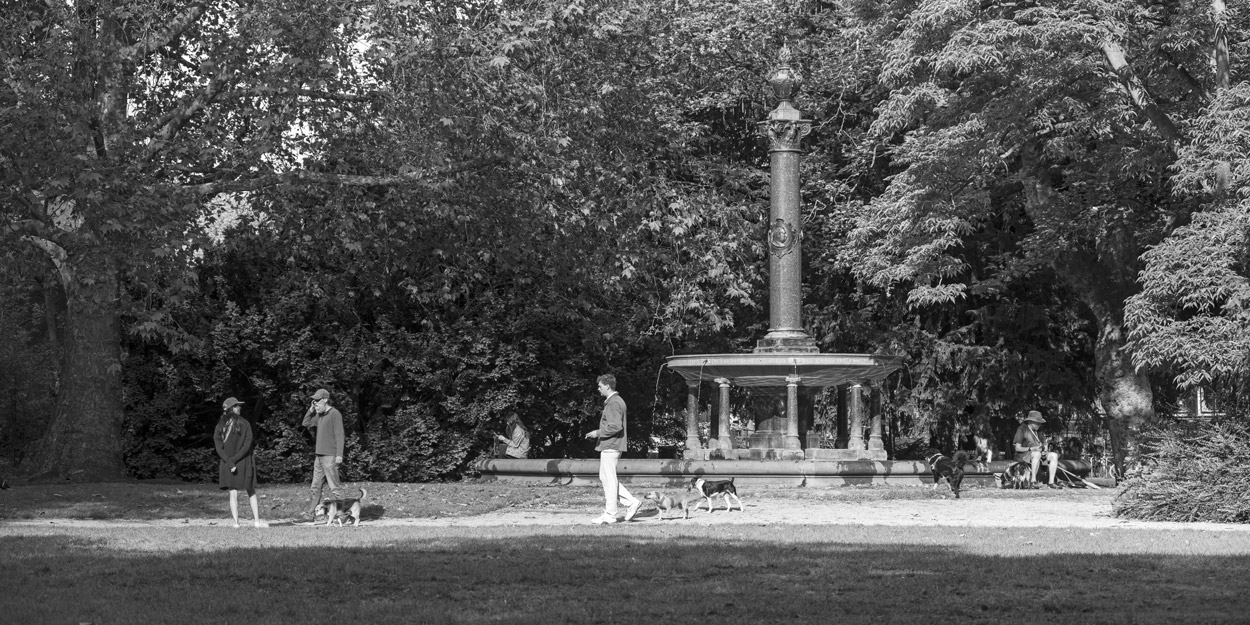
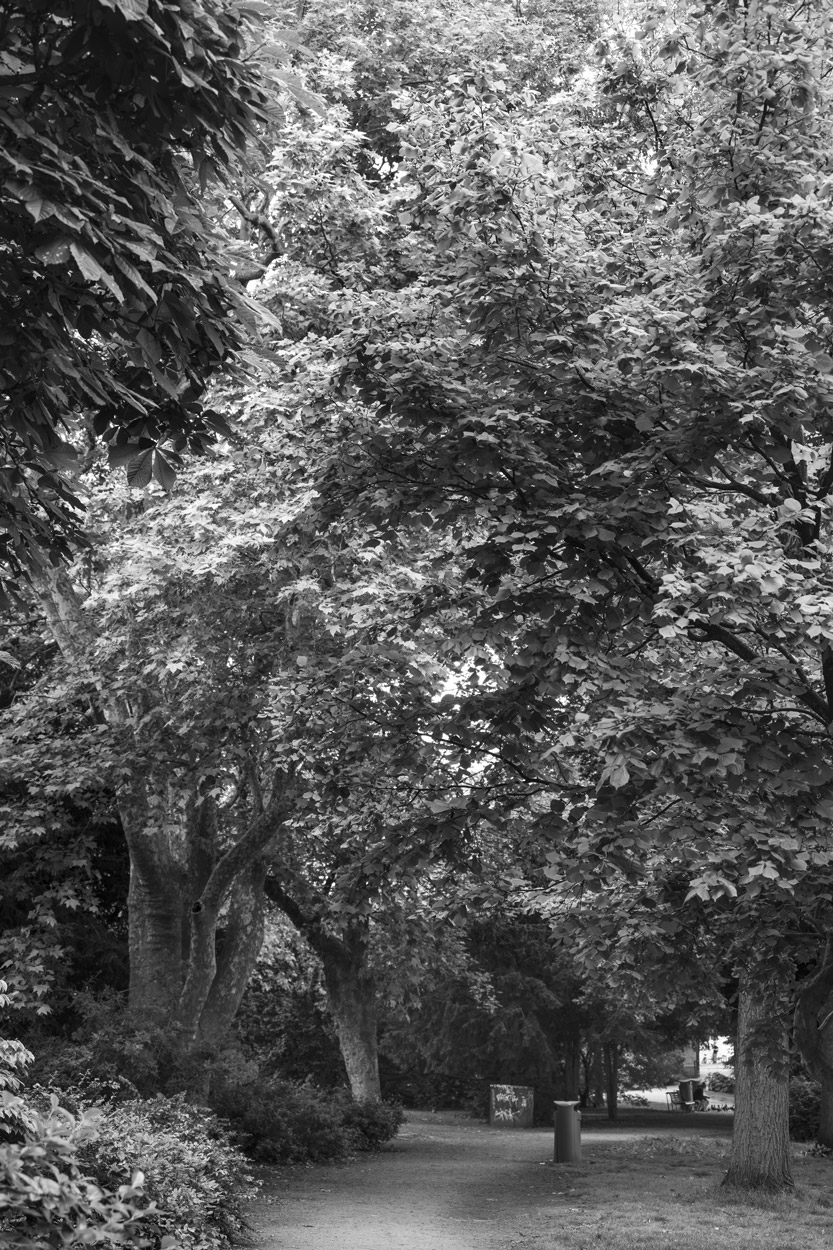
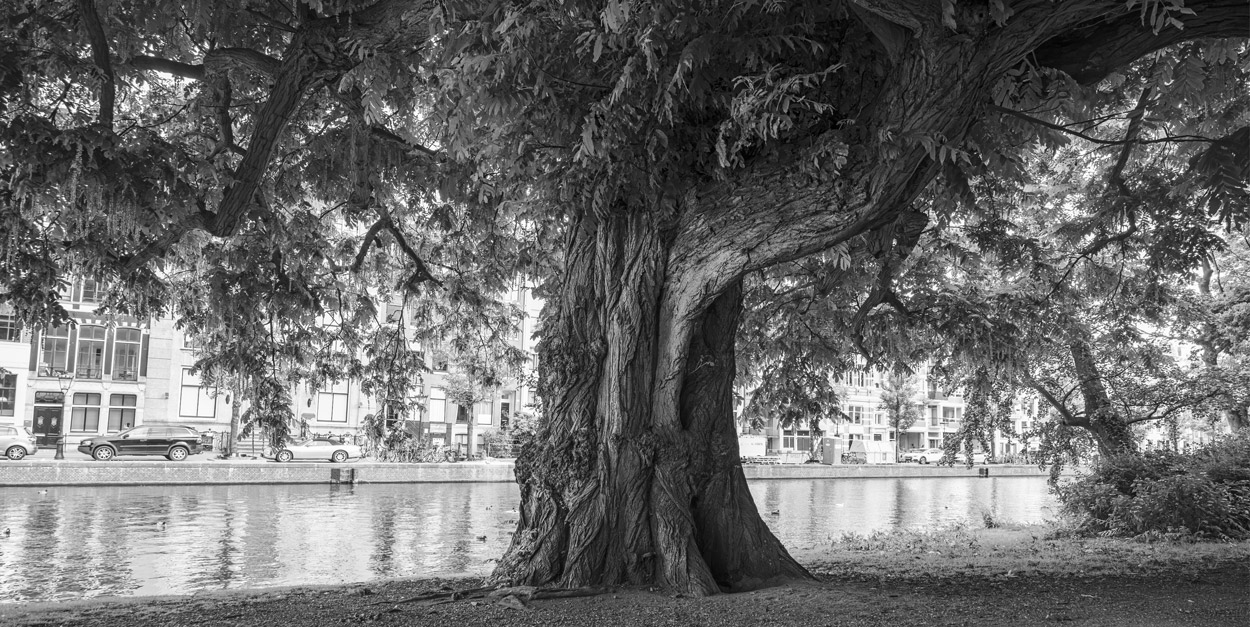
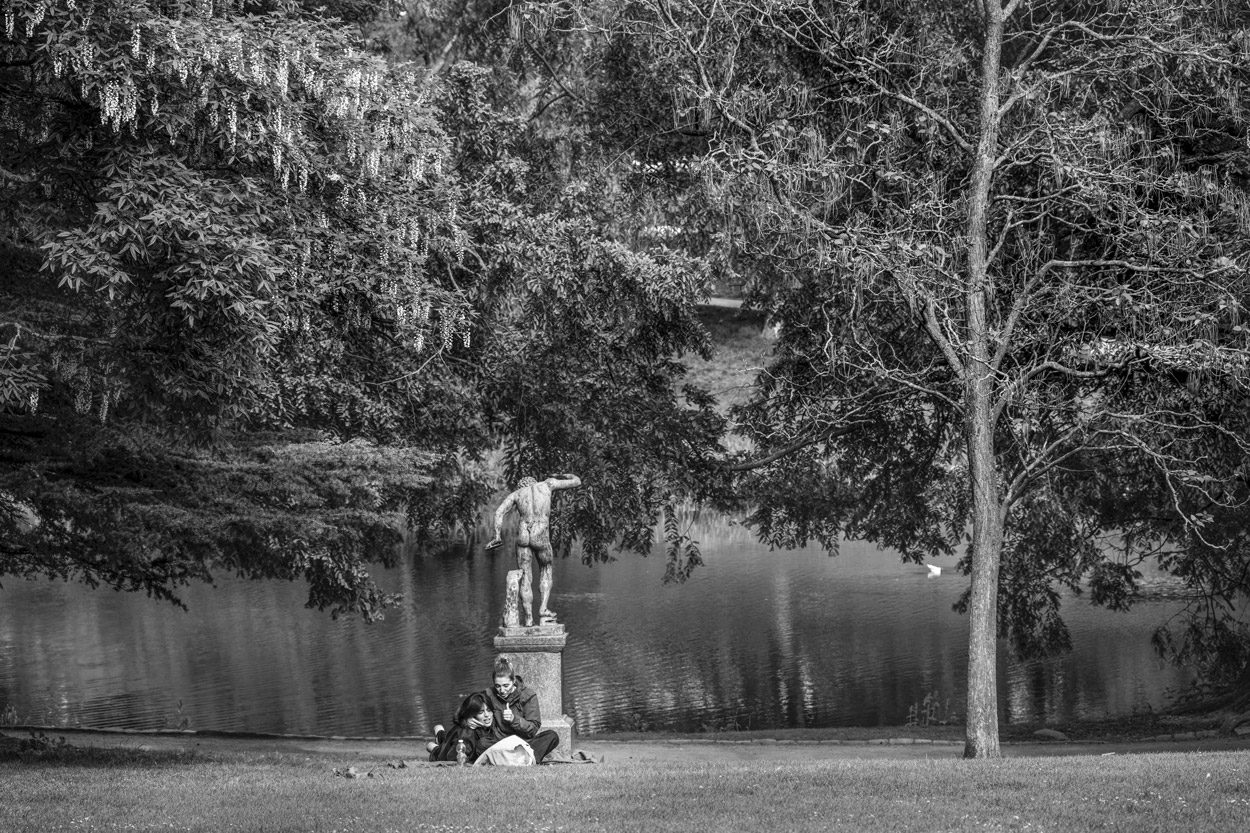
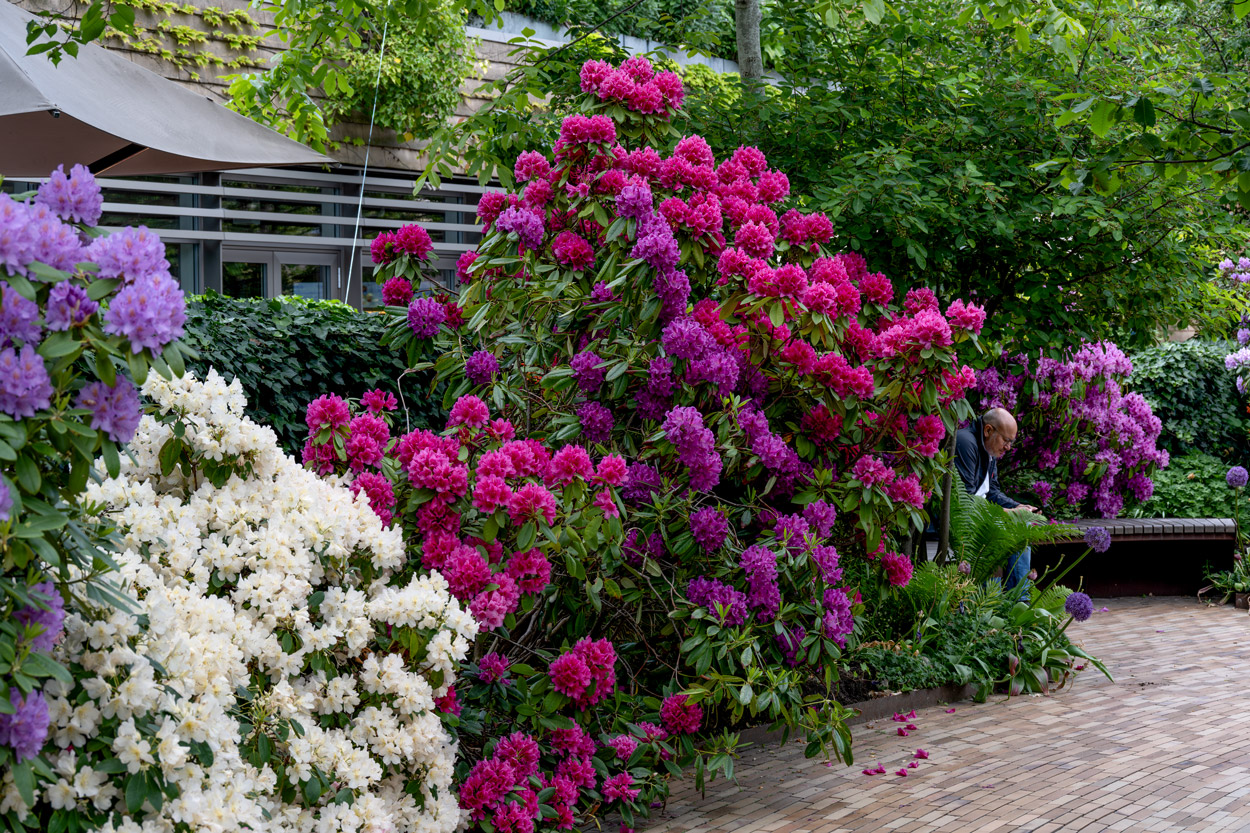
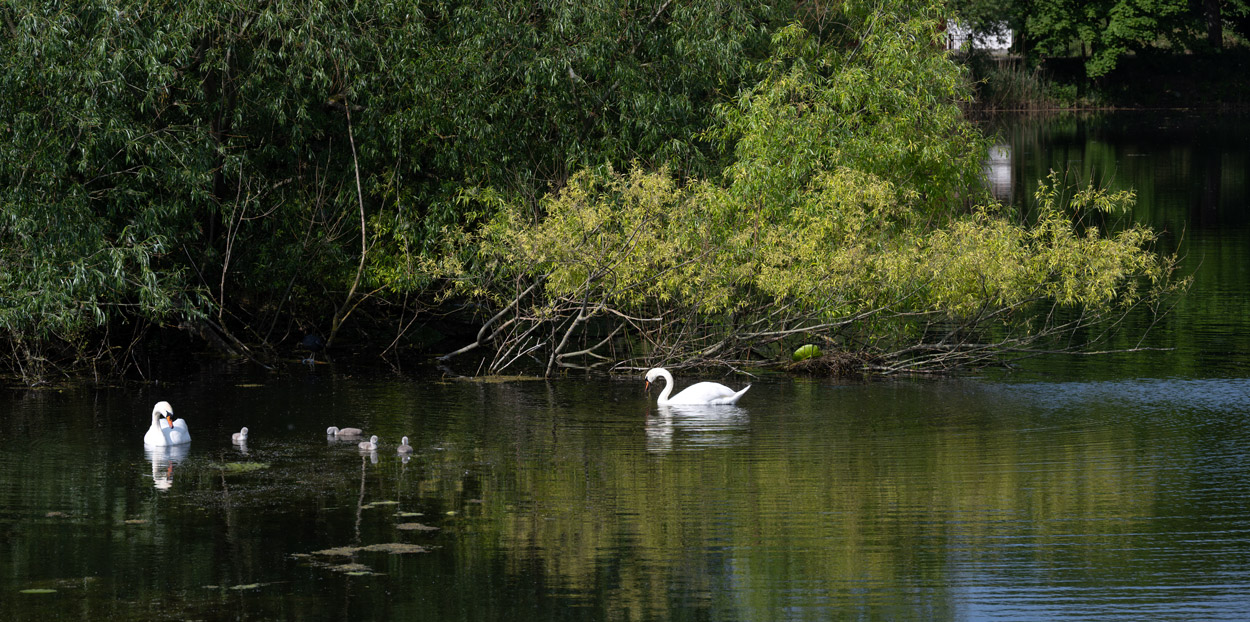
Wertheimpark, first opened to the public in 1812, is named after a prominent 19th century Jewish banker and philanthropist. Sitting by the side of a canal and near the city’s botanical garden, the park has quiet paths lined with stately, lush green trees, several notable trees (that is, trees over 100 years old), and plenty of open space for dogs to play and neighbors to meet when they are keeping an eye on their playing dogs.
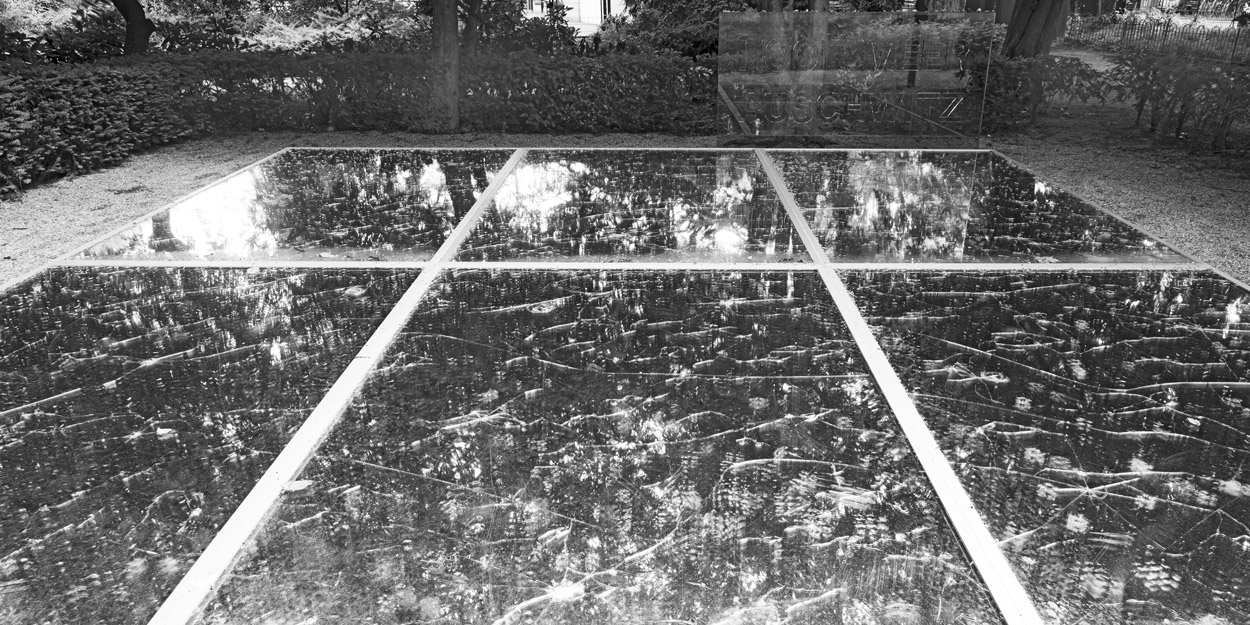
Just off to one side of the open field, there is the artist Jan Wolkers’ “Never Again Auschwitz” memorial to people who died at Auschwitz and other Nazi extermination camps. The memorial is also referred to as “Broken mirrors.”
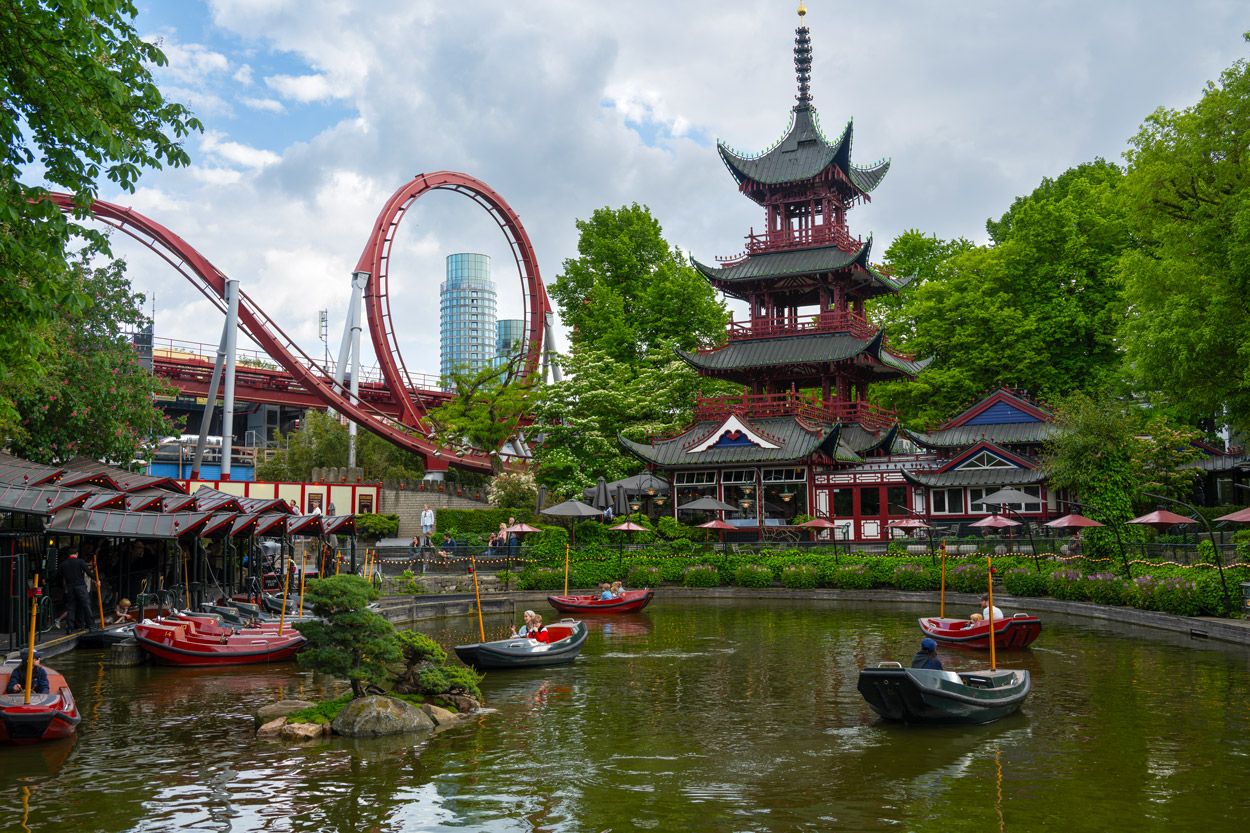
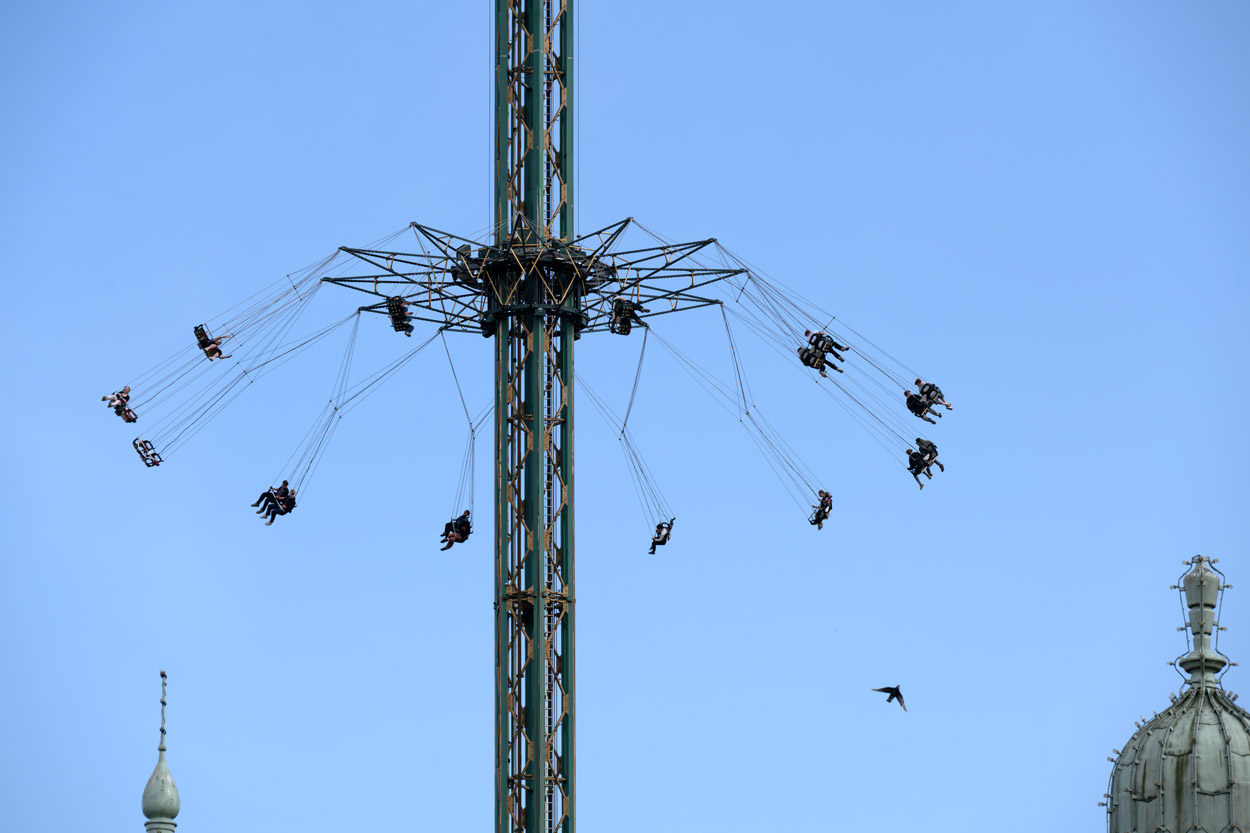
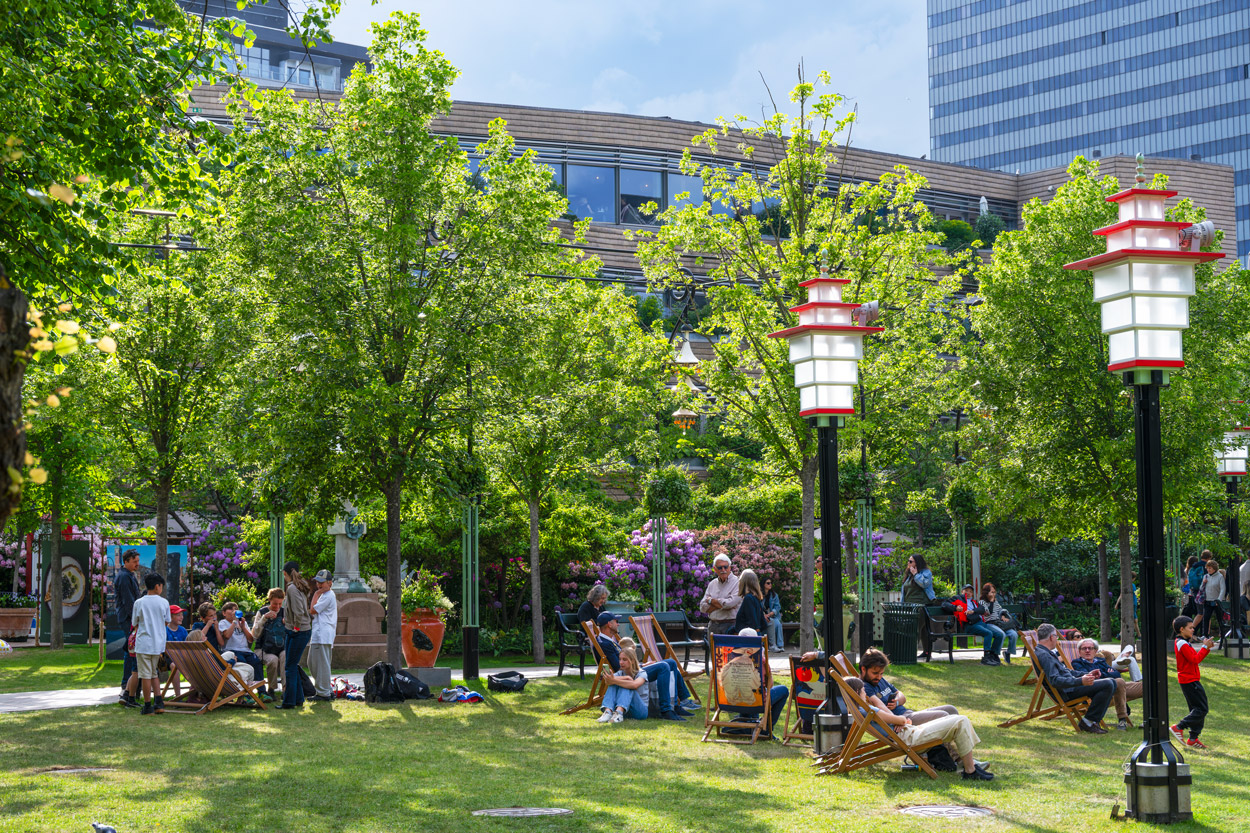
Tivoli’s Chinese pagoda and a roller coaster loop that turns people on their heads.
On the Vietnam Airlines flight to Denmark, I sat next to a Swedish man returning to Stockholm via Copenhagen from a business trip to Vietnam. We got into a rambling conversation ranging from his involvement with a startup business that recycles discarded pieces of synthetic fabrics that are cut away in the production of garments to life in Vietnam, the decline of the United States in the hands of malevolent fascists, to things to do in Copenhagen.
The company he works for has been created around some useful ideas, a reminder to me that there are literally thousands of niches in our mass consumption, growth-is-always-good global economy for businesses with ideas that make life on earth a bit less wasteful and a bit more sustainable.
But his thoughts on things to see in Copenhagen were of more immediate value to me. Among other places, he recommended I visit Tivoli which, as I understood his brief description, not entirely accurately as it turned out, was a beautiful space enclosing an amusement park.
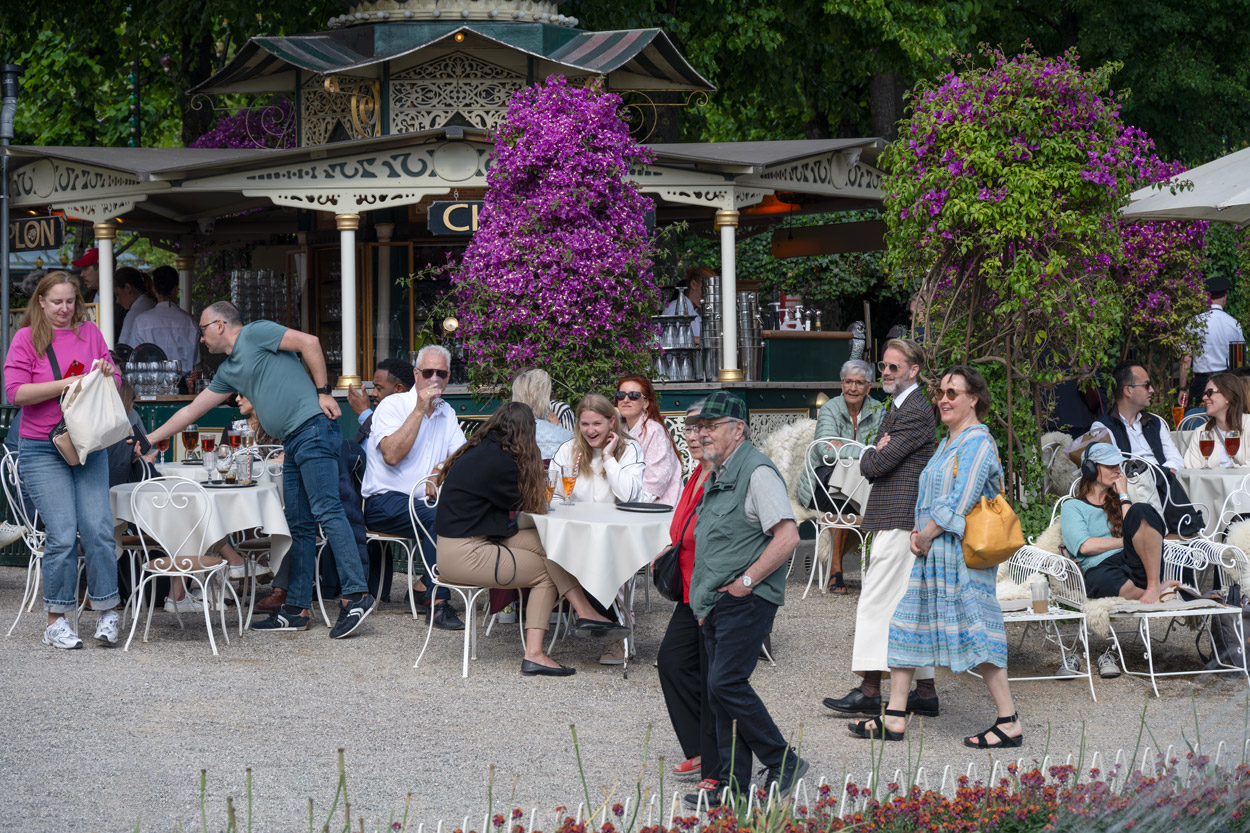
No rides for me. I’m headed for a table and an icy cocktail in a tall glass.
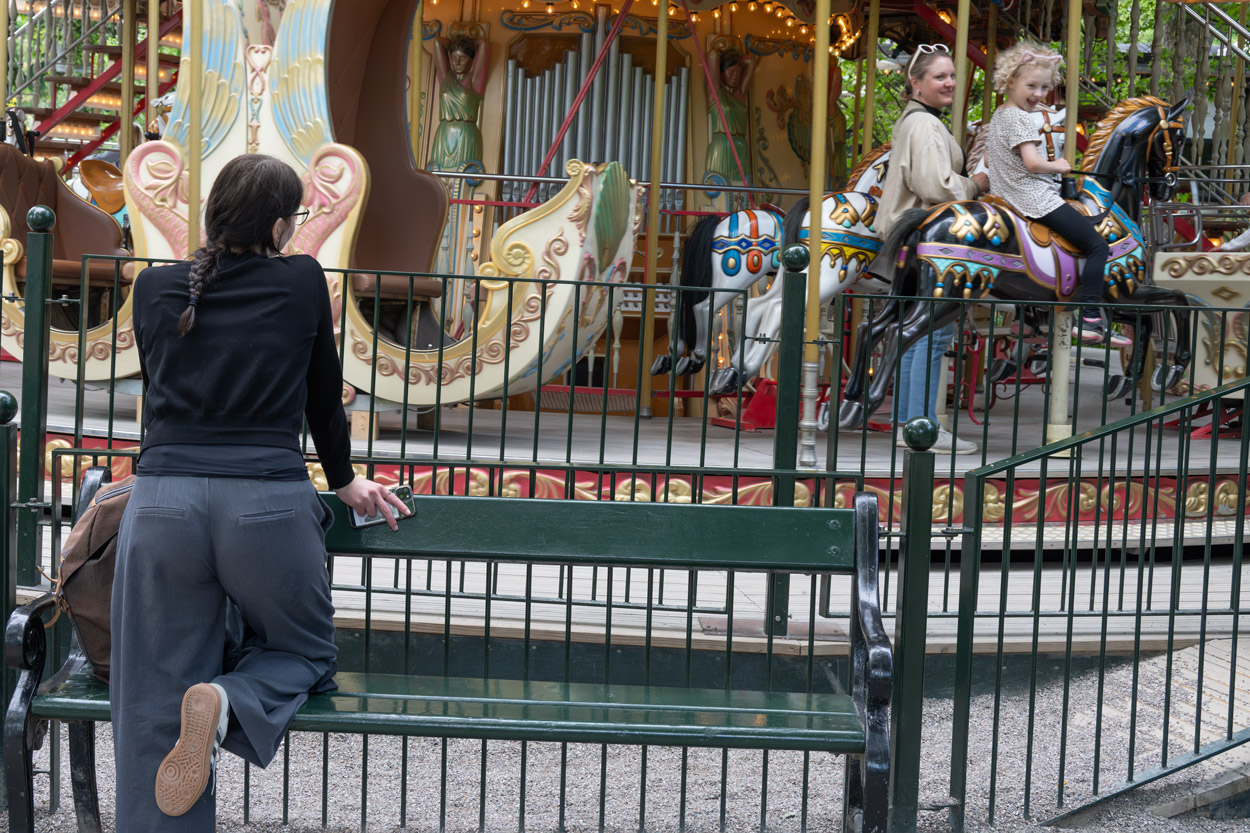
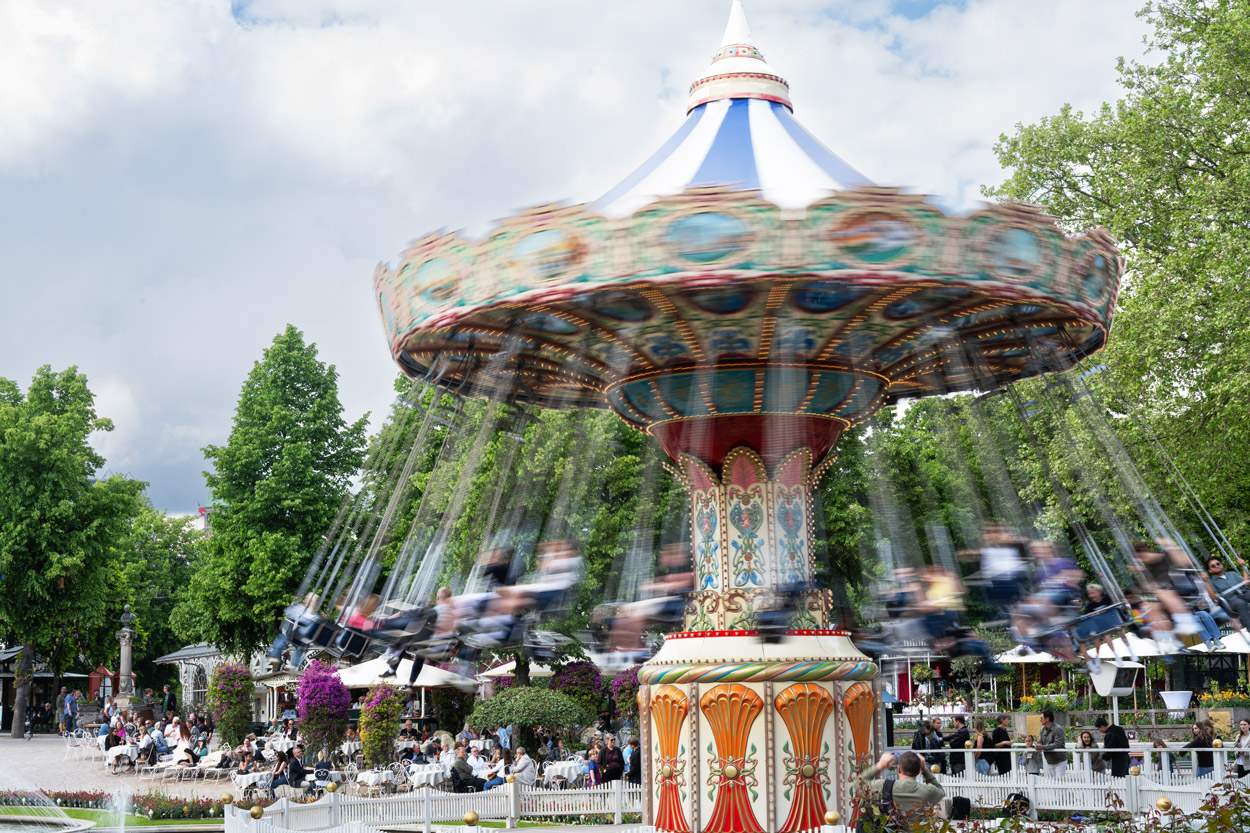
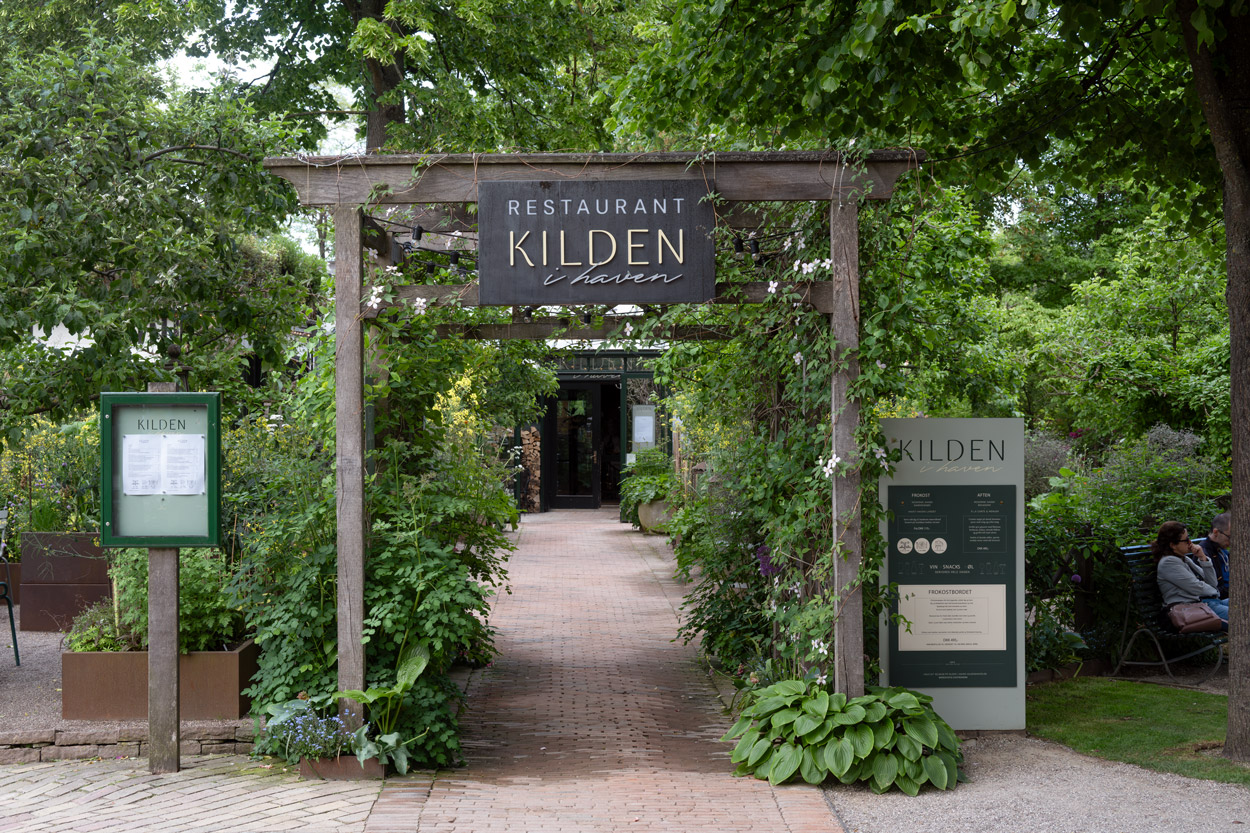
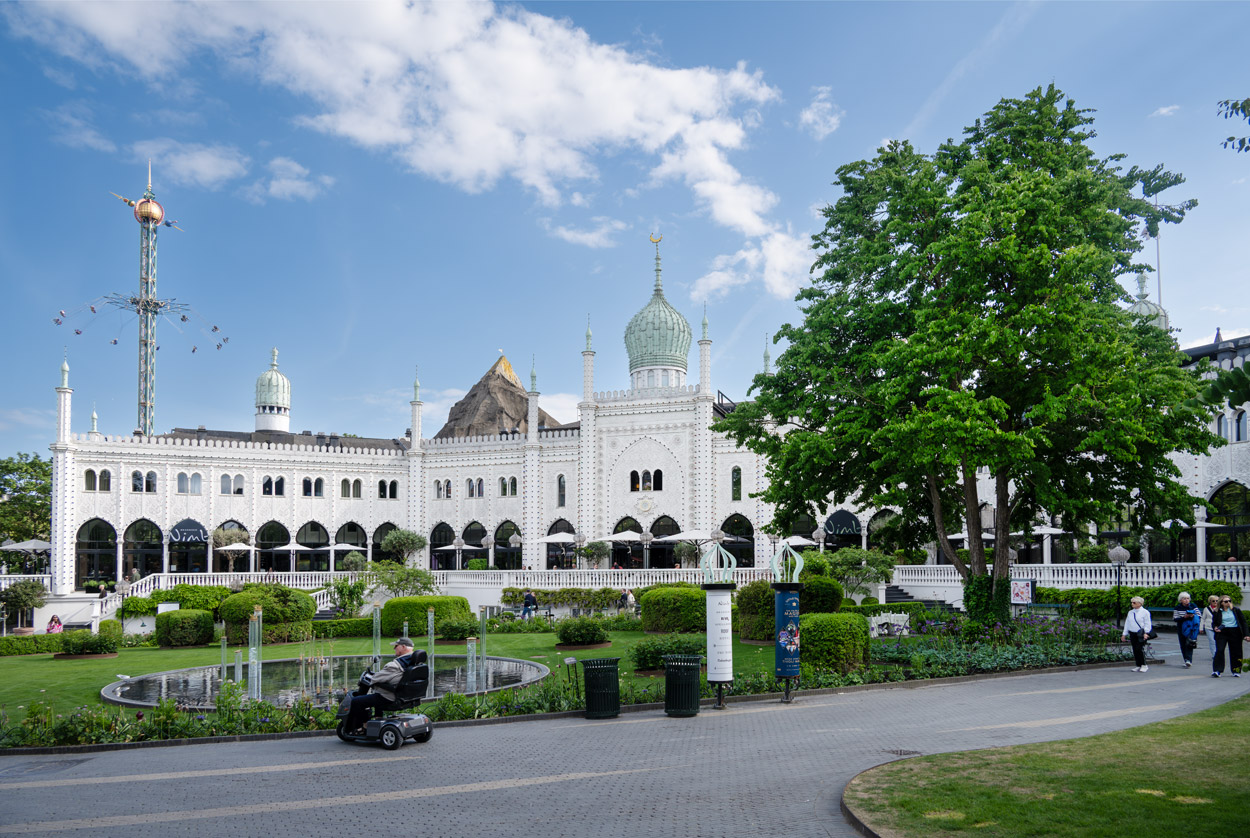
On my second day in Copenhagen I set out around 7:00 am and walked over to Tivoli Gardens only to find the place would not open until 11:00, and when it did, I would need a ticket costing around $23 to go in. I returned late afternoon on my third day, and after buying my ticket and entering the Gardens, I discovered that Tivoli is indeed a beautiful place which features far more than an amusement park that requires a fee to enter. In addition to more than two dozen amusement rides inside the park (each of which requires the purchase of another ticket), Tivoli Gardens also has: a wide variety of restaurants and eateries within, ranging from several restaurants with Michelin stars to a food court serving different kinds of street foods; replicas of a Chinese pagoda (that looks more Japanese to me) and a Moorish palace; regular music, theatre and dance performances, as well as events for kids; and a very pricey five star hotel on the grounds if you are interested in spending a night or two.
When you’ve had enough walking, there’s plenty of places for a drink or a meal.
A ticket to enter the park, plus a few rides, and then drinks and dinner, an outing to Tivoli can turn into an expensive day in no time, especially for a family. Though there are various ticket deals varied to what people want to do during their visits. And there is an annual pass ticket for locals who are likely to visit Tivoli several times during the year.
The five-star Nimb Hotel is inside the Moorish palace.
As for me I spent a couple of hours walking around on a beautifully sunny and warm early June afternoon soaking in the sights and the ambience. I came across a gathering of people watching a broadcast on a huge outdoor screen. I stopped to listen to the Lord Mayor of Copenhagen, a 40ish woman named Sisse Marie Welling of the Green Left party, talking with a hot shot from Michelin about Copenhagen’s efforts to turn itself into the foodie capital of Europe. Sure. Why not?
While the city’s goal did little to inspire, it did get me thinking about having a proper dinner at one of the many restaurants in Tivoli Gardens. After spending some time reading restaurant reviews, I ended up in a place called Paafuglen that serves Danish cuisine. I did the works: an aperitif, first course of seasonal white asparagus in a creamy sauce, a main of baked haddock with new potatoes and washed down with a bottle of piss elegant sparkling water, ice cream for dessert, and finally coffee. It was a delicious, memorable dinner, the service was impeccable, and it was not cheap.
Tivoli Gardens, a unique, delightful place that was absolutely worth the price of admission.
I don’t mind admitting I am not very optimistic about the coming year. On the big picture level, it is mostly a question of how bad things will be. Anything not truly horrible will count as a pleasant surprise. On a personal level, I am in survival mode.
French travelers walk through Tokyo’s Ueno Park on a rainy day.
My first day in Tokyo had consisted of disembarking from my very red-eye flight at about 7:30 in the morning, making my way from the airport to the city, and then wandering around the neighborhood of my hotel a bit bleary eyed until 2:50 in the afternoon at which time I passed the hotel’s check-in goal post. Since check-in time was 3pm, I guess the hotel had cut me some slack after all, though you will have to pardon me for not being particularly grateful. Whatever, within moments of entering my room, I lay down for a much needed nap.
I woke up to find my stomach growling, but before setting off to look for dinner, I stopped to explore my room, a fast journey indeed. On the hotel’s booking page, Agoda listed the room size at 11.5 sq meters. That’s roughly 125 sq feet for those who are still wedded to inches, feet, and miles. In a word: small. As one entered the room, there was a hallway on the left and the door to a very efficiently organized bathroom on the right. The room then “opened up” to a single bed on the right and on the left a narrow desk/counter complete with flat screen TV, a refrigerator underneath and other amenities one expects to find in a good quality budget hotel room. The bed and the desk were divided by a rather narrow walkway. Though a little soft for my taste, the bed was comfortable and plenty roomy enough, even for my rather too abundant physique. I put my luggage on the floor at the far end of the room where there was a window. Years of living in crowded China taught me to travel light; today my travel gear consists of a single, small carry-on bag, and a small back pack, even when I go on longer trips. For those of you who can’t take even a one week journey without an enormous suitcase, budget hotels in Japanese cities are probably not for you. Everything in the room was spotlessly clean, and as I would learn during the days that followed, housekeeping was capable and meticulous. For the record, despite being annoyed at the long wait to check-in (3pm was check-in time for all of the hotels I considered in Japan), I was very satisfied with the New Ueno Hotel——friendly, efficient, clean, and quiet, all in a great location.
I had delicious grilled eel for dinner.
The next day (9 Oct) I was awake early. I am always awake early these days——I suppose one of the dubious perks of being a senior citizen. It was cloudy and the small street behind the hotel was wet, but there was a man walking along the street without an umbrella. Encouraged, I put my camera in the back pack and took off for more exploration. When I got downstairs to leave the hotel, I realized that the man I had seen with no umbrella was either eccentric or looking for a place to buy an umbrella to replace the one he had misplaced. It was not raining hard, but I needed to open my umbrella as I struck out walking in the direction of Ueno Park.
I entered the park and stood under a canopy created by huge trees lining the park paths. Wet but beautiful. Suddenly, the steady but light rain gave way to an absolute downpour. I beat a hasty retreat to Ueno Station where I sought out coffee and a chance to get upset reading news from the United States on my phone. A while later, full of caffeine and bile, I found the rain had subsided and I set out again. Even on a wet somewhat gloomy morning, Ueno Park is beautiful.
Kiyomizu Kannon-dō Temple in Ueno Park
As the rain gave no indication of stopping, nor did the day give any indication of clearing up, I decided this would be an ideal time to visit the Tokyo National Museum, one of several museums in Ueno Park. The flaw in this plan became more apparent as the path towards the museum became more and more crowded the closer I got to my destination. Not surprisingly, plenty of other people shared my idea. Not in the mood for a very crowded museum visit, it seemed time to end my walk and find a quiet, dry place to consider what I would do later in the day.
Planty Park? The Polish name seems to mean park of plants, or something to that effect. You’d think the city would have come up with something more evocative of Kraków’s distinguished past, but so be it. This marvelous urban green way is one of features that gives Kraków its captivating charm.
Like many ancient and medieval European cities, for many years, the historic urban core of Kraków was enclosed by a defensive wall and a moat. Eventually, as artillery that could fire explosive projectiles replaced catapults hurling stones, walls lost their defensive edge and cities began to remove them. In the 1800s, Kraków replaced its wall and moat with a green beltway that rings the city’s Old Town.
Today Planty Park is a beautiful common space with lengthy walkways shaded by stately trees. While it never felt crowded to me, the park was full of people, from locals going about their business to visitors with cameras. A place for strolling, quality thinking time, meeting friends, texting, or catching some morning rays.
Finally, when you have walked your fill or gotten where you are going, the city is never far away.