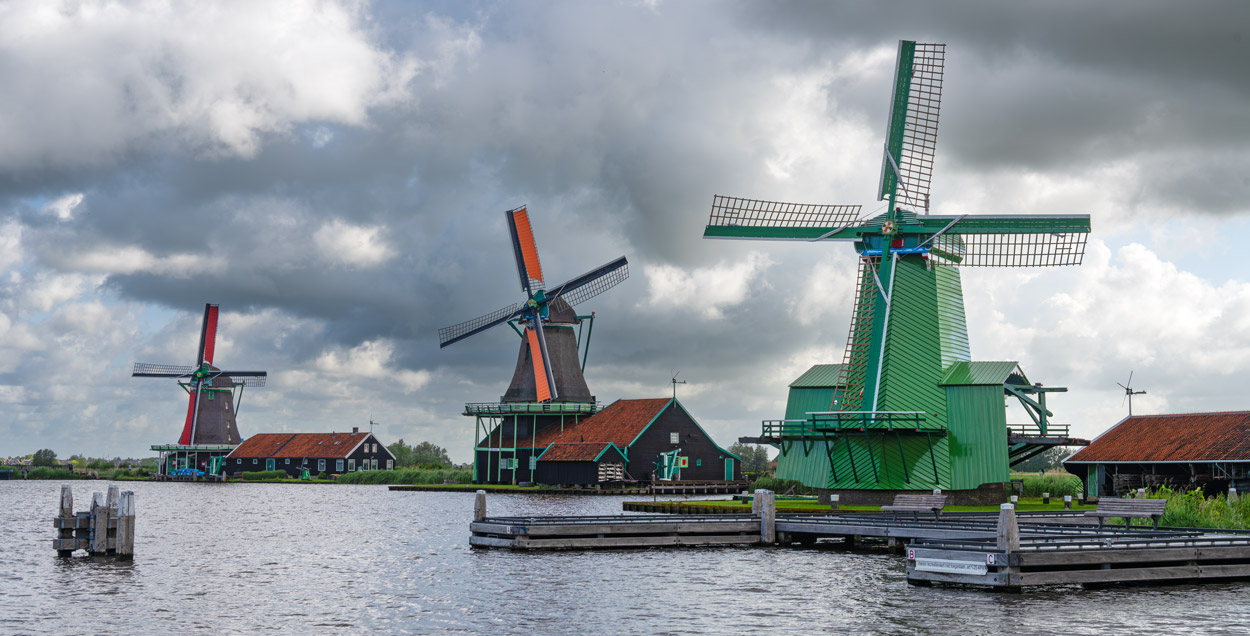
History in the Heart of Modernity

On its website, Zaanse Schans urges tourists to “experience historic Holland” by visiting “this windmill village on the Zaan River … just 20 minutes from Amsterdam.” Friends whom I visited in Amsterdam recommended Zaanse Schans, so I boarded a public bus at Centraal Station early on a cloudless, sunny morning and headed for the village.

The ride took a bit longer than 20 minutes, but that was because I boarded a bus that did not go all the way to my destination, and had to change to a second bus midway in the ride. The trip was interesting as it gave me a chance to see some of Amsterdam away from the renowned historical center of the city. Unfortunately, during the trip, clouds rolled in and quickly hid the sun. Patches of blue remained, but the ominous gray clouds were accompanied by a blustery, rather chilly wind and a definite threat of rain. With no umbrella and a windbreaker that would not keep me dry in anything more than a light drizzle, I set off rather nervously from the bus stop on my walk to and around Zaanse Schans.
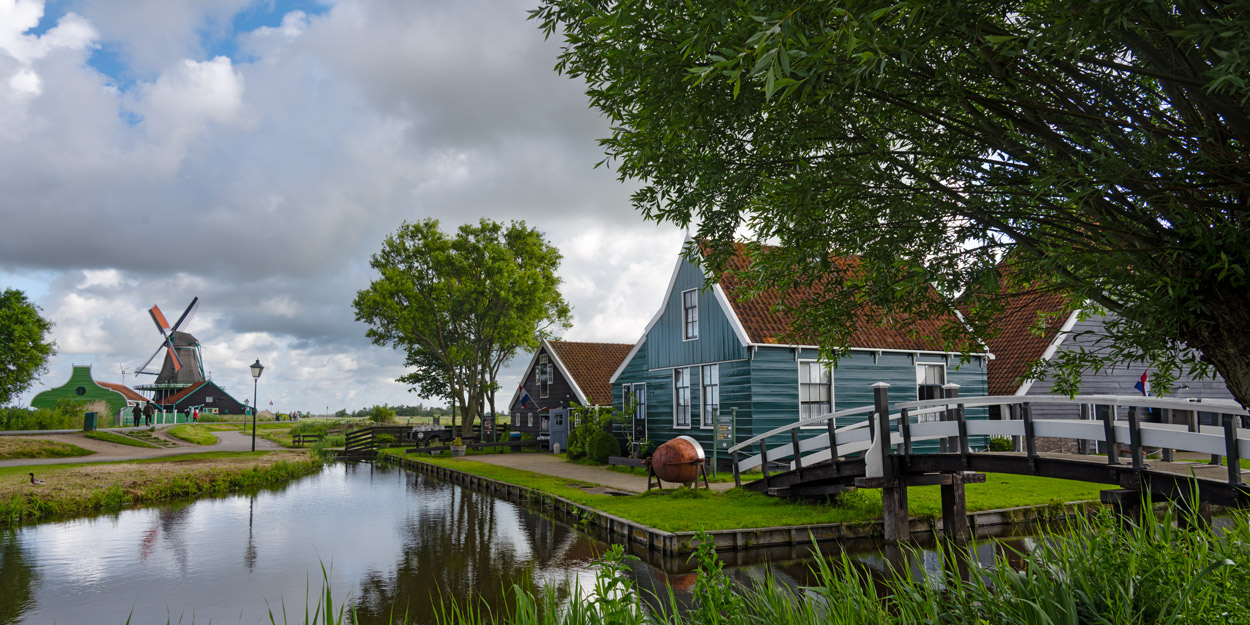
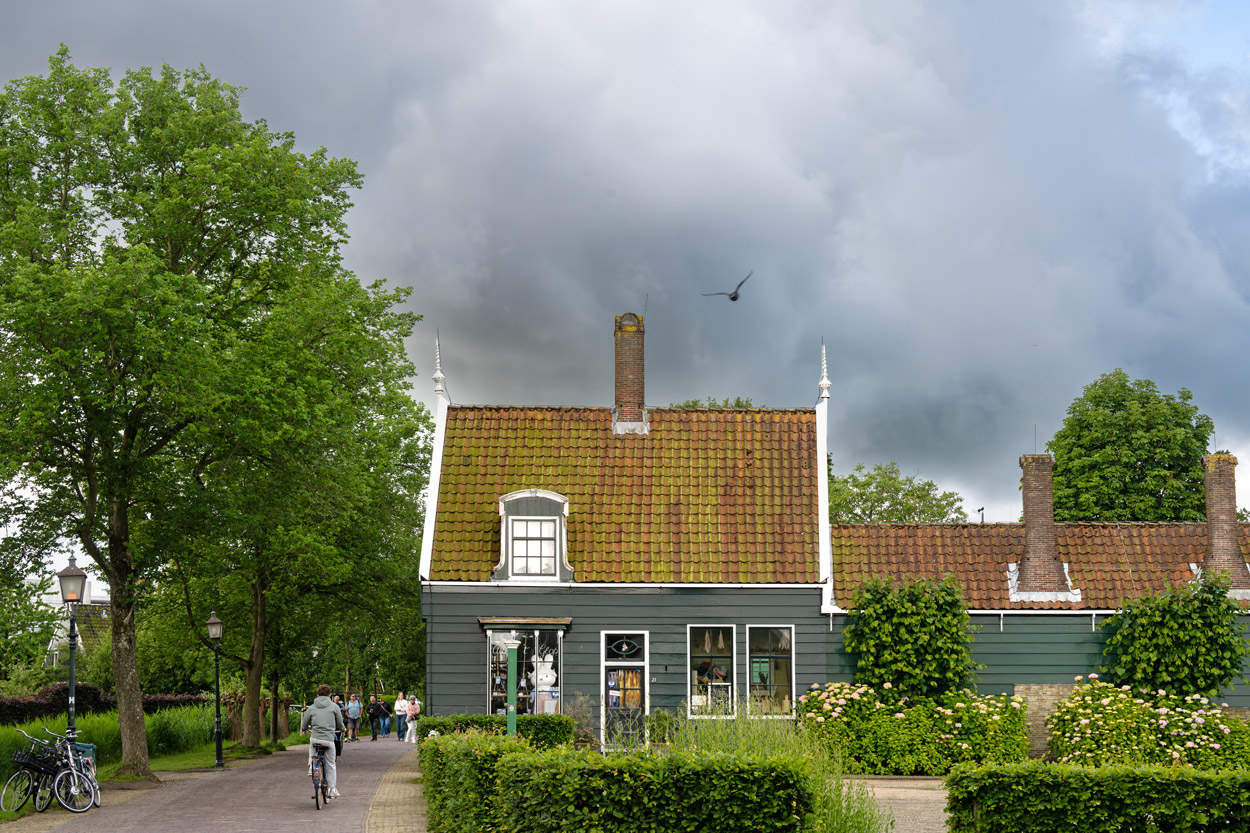
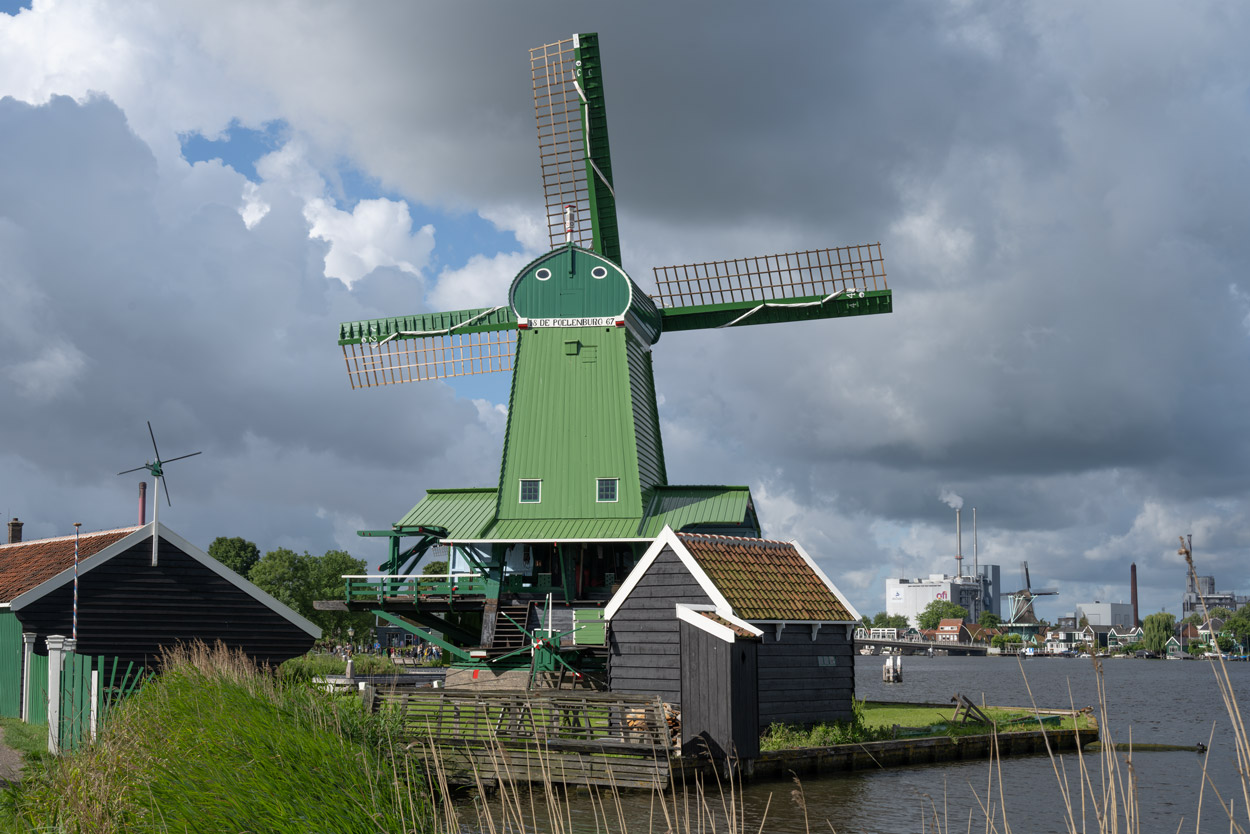
The village is beautiful, and the old windmills and other examples of traditional architecture are fascinating to look at up close. That said, the area has something of the feel of a village “manufactured” for tourists, of the sort you can see near, for instance, Sapa in northern Vietnam. In fact in an effort to preserve examples of historical Dutch architecture and construction, the homes, shops and some of the windmills (two are in their original locations) that make up Zaanse Shanse were moved from other parts of northern Holland to create the village. This preservation effort occurred in the 1960s and 70s, and eventually the protected area that makes up Zaanse Schans was developed into a tourist destination that nowadays attracts more than two million visitors per year. Some of the buildings are occupied by shops catering to tourists, and there are tours of windmills and a cheese making workshop. The homes in the village are, however, occupied by residents and not open to visitors.
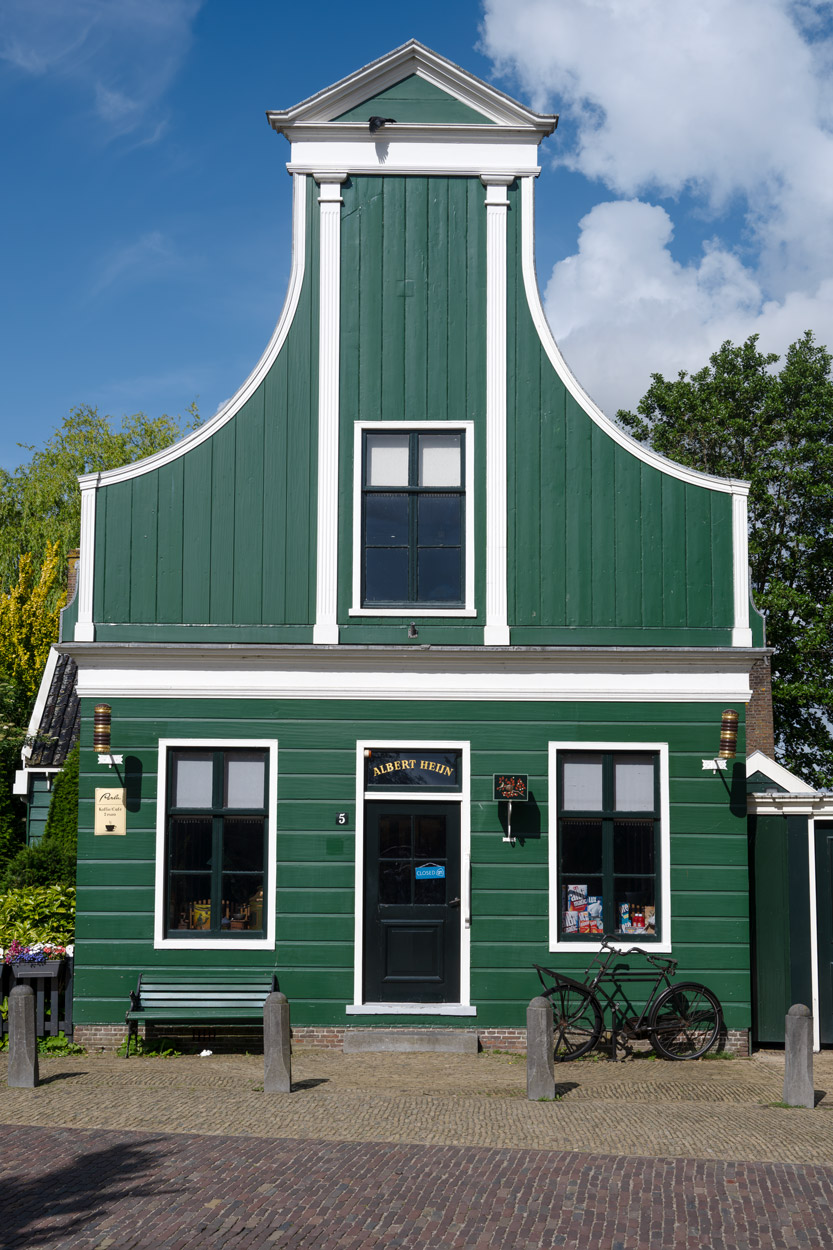
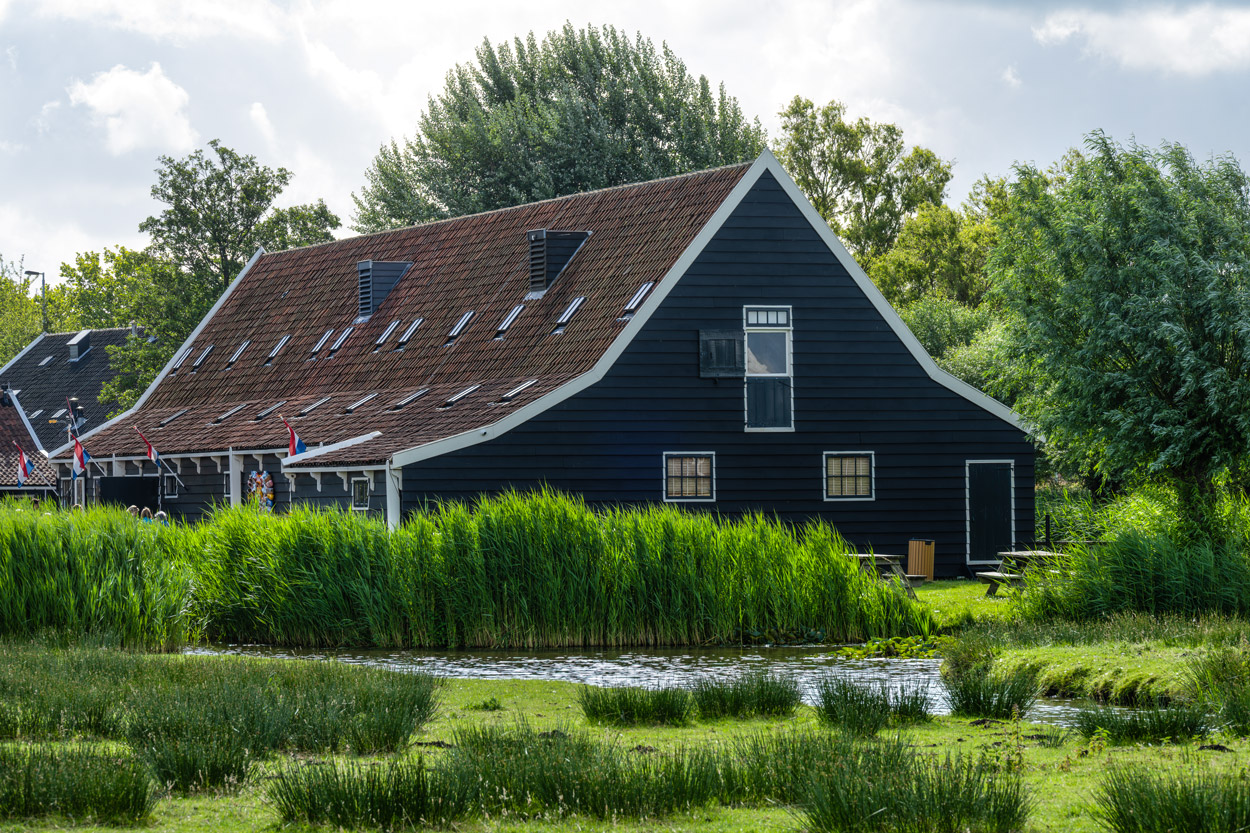
I walked around exploring and taking photos of the relatively small area for about an hour and a half. I even saw a man in yellow wooden shoes. He went through a door too quickly for me to get a photo, but not fast enough to prevent me from wondering why anyone would walk around in footwear that looks so uncomfortable.
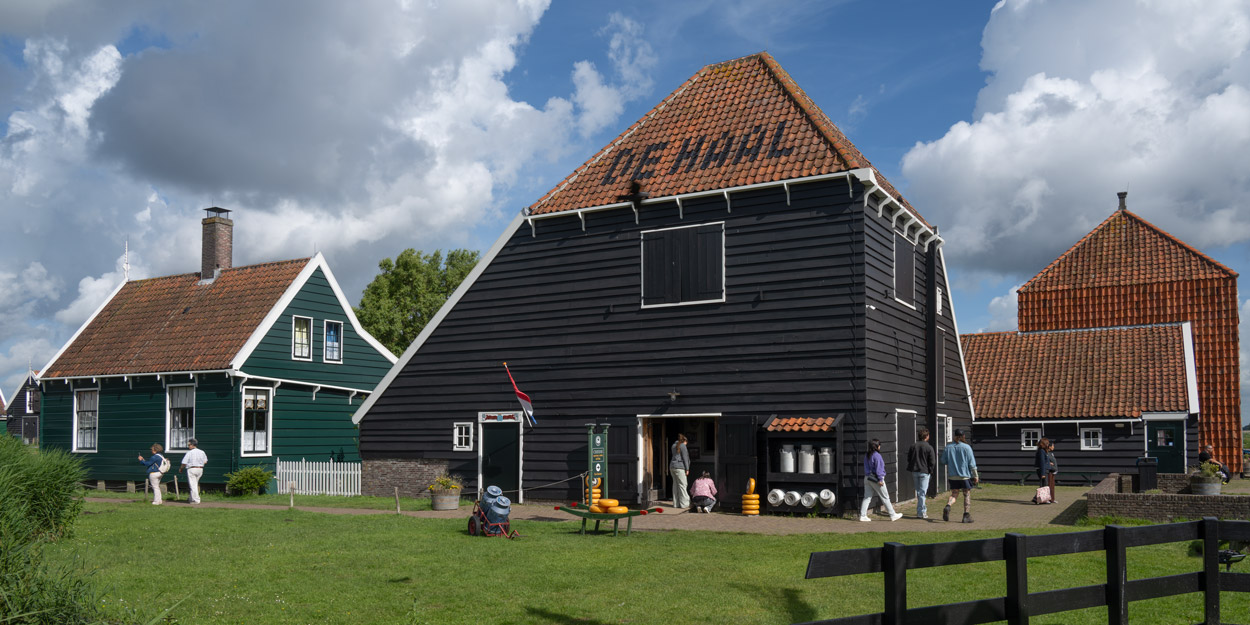
When I began my walk just before 8:30, there were still not many visitors and the places offering tours were not open. I had planned to look inside a windmill and visit the Zaanse Schans museum next to the village before heading back to Amsterdam. In the end I went into a cheese making workshop, but that was it. Once inside I did not pay much attention the cheese making process, instead spending my time eying the huge wheels of Gouda and trying to convince myself I could fit one in my carry-on suitcase for the trip home. Keep in mind, that carry-on was my only suitcase for the three and a half week trip; I learned long ago to travel light. Be that as it may, reason prevailed and I did not return home with several thousand calories of cheese that my waist line absolutely does not need.

As for going in to a windmill or the Zaanse Schans museum, it turned out I was still subject to a fickle weather day. When I first arrived there was a gray, threatening sky and blustery wind, which gave way to warm sunshine and puffy white clouds, then finally to more clouds and the threat of rain again around 10:00. Unprepared for rain as I was, I decided not to take a chance, and headed to the bus stop and a bus back to Centraal and lunch. It did finally rain for awhile in the late afternoon of that day, and I did get a little wet before escaping to my hotel room. But, all in all, it was an excellent travel day.
Visitors Walk in the Rain, Tokyo

French travelers walk through Tokyo’s Ueno Park on a rainy day.

My first day in Tokyo had consisted of disembarking from my very red-eye flight at about 7:30 in the morning, making my way from the airport to the city, and then wandering around the neighborhood of my hotel a bit bleary eyed until 2:50 in the afternoon at which time I passed the hotel’s check-in goal post. Since check-in time was 3pm, I guess the hotel had cut me some slack after all, though you will have to pardon me for not being particularly grateful. Whatever, within moments of entering my room, I lay down for a much needed nap.

I woke up to find my stomach growling, but before setting off to look for dinner, I stopped to explore my room, a fast journey indeed. On the hotel’s booking page, Agoda listed the room size at 11.5 sq meters. That’s roughly 125 sq feet for those who are still wedded to inches, feet, and miles. In a word: small. As one entered the room, there was a hallway on the left and the door to a very efficiently organized bathroom on the right. The room then “opened up” to a single bed on the right and on the left a narrow desk/counter complete with flat screen TV, a refrigerator underneath and other amenities one expects to find in a good quality budget hotel room. The bed and the desk were divided by a rather narrow walkway. Though a little soft for my taste, the bed was comfortable and plenty roomy enough, even for my rather too abundant physique. I put my luggage on the floor at the far end of the room where there was a window. Years of living in crowded China taught me to travel light; today my travel gear consists of a single, small carry-on bag, and a small back pack, even when I go on longer trips. For those of you who can’t take even a one week journey without an enormous suitcase, budget hotels in Japanese cities are probably not for you. Everything in the room was spotlessly clean, and as I would learn during the days that followed, housekeeping was capable and meticulous. For the record, despite being annoyed at the long wait to check-in (3pm was check-in time for all of the hotels I considered in Japan), I was very satisfied with the New Ueno Hotel——friendly, efficient, clean, and quiet, all in a great location.

I had delicious grilled eel for dinner.

The next day (9 Oct) I was awake early. I am always awake early these days——I suppose one of the dubious perks of being a senior citizen. It was cloudy and the small street behind the hotel was wet, but there was a man walking along the street without an umbrella. Encouraged, I put my camera in the back pack and took off for more exploration. When I got downstairs to leave the hotel, I realized that the man I had seen with no umbrella was either eccentric or looking for a place to buy an umbrella to replace the one he had misplaced. It was not raining hard, but I needed to open my umbrella as I struck out walking in the direction of Ueno Park.

I entered the park and stood under a canopy created by huge trees lining the park paths. Wet but beautiful. Suddenly, the steady but light rain gave way to an absolute downpour. I beat a hasty retreat to Ueno Station where I sought out coffee and a chance to get upset reading news from the United States on my phone. A while later, full of caffeine and bile, I found the rain had subsided and I set out again. Even on a wet somewhat gloomy morning, Ueno Park is beautiful.

Kiyomizu Kannon-dō Temple in Ueno Park

As the rain gave no indication of stopping, nor did the day give any indication of clearing up, I decided this would be an ideal time to visit the Tokyo National Museum, one of several museums in Ueno Park. The flaw in this plan became more apparent as the path towards the museum became more and more crowded the closer I got to my destination. Not surprisingly, plenty of other people shared my idea. Not in the mood for a very crowded museum visit, it seemed time to end my walk and find a quiet, dry place to consider what I would do later in the day.

Raw Rainy Day Morning, Tokyo

My Vietnam Airlines flight to Tokyo (Narita) left Da Nang at just past midnight on 8 October and arrived at 7:30 the same morning. There is a two hour time difference between Japan and Vietnam; flight time was roughly five and a half hours. Narita is some distance from Tokyo, and there are a number of options for covering the distance. Taxi or car service would have busted my trip budget before I checked into my hotel, so they were out. My choices boiled down to an express train taking 50 minutes for around $20 or a limited express train (i.e., a train that makes several fewer stops than a local train) taking about an hour and fifteen minutes and costing about $7.

I opted for the $7 ride, first because I am cheap about expenses like this, and second, during a trip to Japan I would rather spend my money on sashimi than spending an additional $13 to save 25 to 30 minutes on a train ride. A third not unimportant consideration: Whichever train I chose, I would be arriving at my destination in Tokyo a bit before 10:30am and check-in time at my hotel was 3pm. Three o’clock? A bit late in the day for a check-in time, don’t you think? But all of the three hotels I booked in Japan had check-in at 3pm and check-out at 10am. And the place in Tokyo would not cut me even a little slack. Four and a half hours wandering around the hotel’s neighborhood on a couple hours of sleep after an all-night plane ride made for one grumpy curmudgeon by the time 3pm rolled around.

By the way, have I mentioned it was raining? I have lived almost 35 years in East and Southeast Asia, and this was my first visit to Japan. Rain on the first day of that long-awaited visit was definitely not on my wish list. It was not a hard driving rain, but it was hard enough that I used an umbrella, among various reasons, because I didn’t want my new, well-engineered, expensive, water-resistant but not waterproof camera directly exposed to the rain as I walked around waiting for check-in time for my hotel room to roll around. And just to dot this particular “i”, holding a camera and composing a photo while juggling an umbrella is not really my idea of a good time. Grumpy curmudgeon indeed.

It rained on my second day in Tokyo as well. Though after that, with the exception of a bit of drizzle in Kyoto, the weather for my remaining 13 days in Japan was lovely.

Winter Day, Da Nang, Vietnam

There is never snow or really cold weather in this part of the world, but there is definitely a winter season in central Vietnam. It is characterized by rain, overcast days, and the occasional damp chill with temperatures in the 60s. Laugh if you will, but when you live in a house that is completely open to the exterior environment and the temperature inside is the same as the temperature outside, a damp 65 degrees can feel pretty raw and uncomfortable when you are lounging around that house. Normally, the rainy, wintry season begins in late September or October and is over by early to mid-January. Not this year – unseasonable rain, wind, and low temperatures have been with us throughout February.

Sunny Day, Hoi An

This Monday was the first full day of sunshine in more than two weeks. Sort of anemic sunshine for sure, but the sky was decidedly blue versus gray for a change. It did not rain all day. Sadly, if the weather forecast is accurate, a nasty storm will arrive in Hoi An by way of the East Sea sometime tonight or tomorrow. We apparently are in for a couple of days of heavy rain at the very least. The flooding from our first big storm of the year, now more than two weeks ago, has mostly receded (the floods making international news are to the north of Hoi An), but there is still plenty of water standing in the fields. If the storm brings heavy, driving rain for any length of time, roads will become impassable and life will get messy again.