Copenhagen’s Iconic Nyhavn Canal

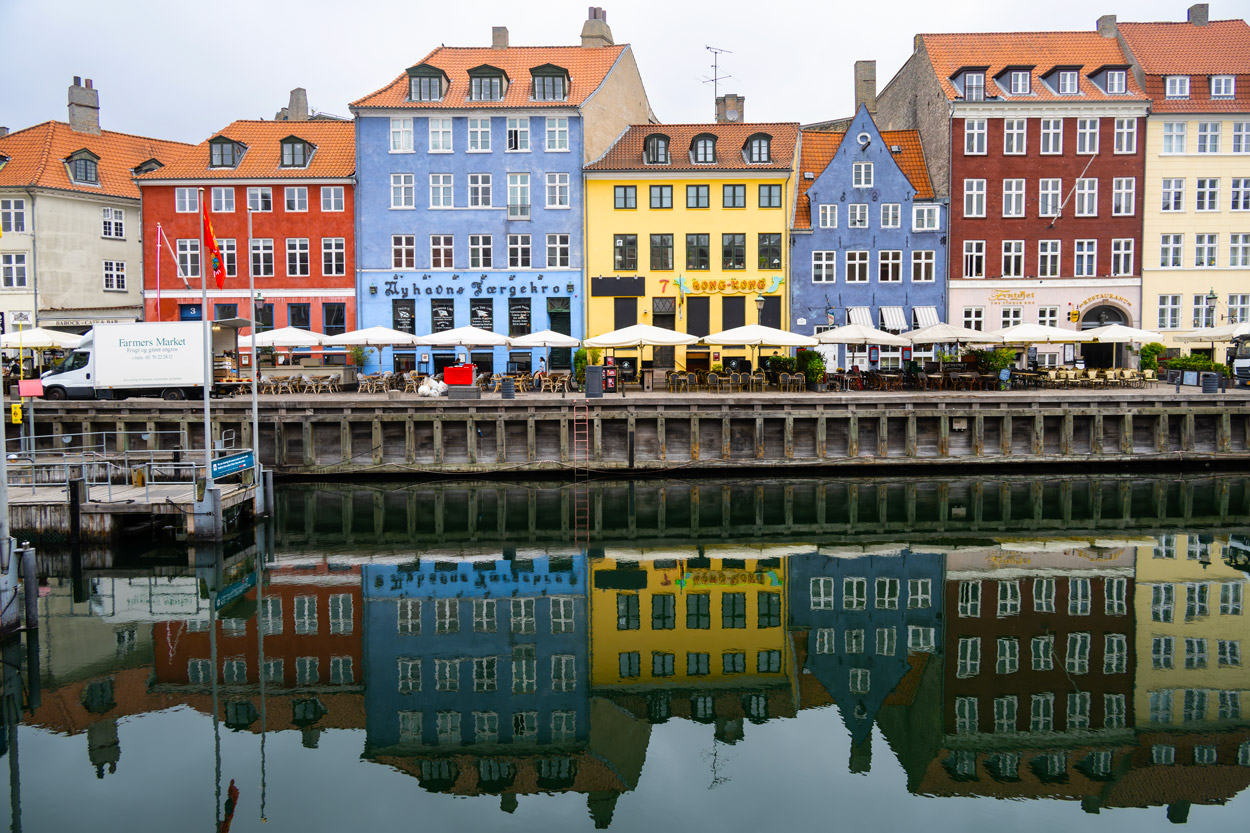
The iconic – or cliche – it’s your choice – photo of Copenhagen invariably shows a row colorful buildings along the Nyhavn. I had always assumed that Nyhvan was a Copenhagen neighborhood featuring a lot of colorful architecture. As usual, on this trip, I did not do enough homework about the places I would visit before showing up at the scene. In fact Nyhvan is a canal commissioned by the Danish King Christian V and completed in 1675. The Nyhvan let ships unload trade goods and fish in Kongens Nytrov (Kings Square), an area at the end of the canal also developed by Christian V, who did a great deal to expand Copenhagen during his reign. In any event, it is only the roughly 300m waterfront of the Nyhvan Canal that is lined with colored buildings and this appears to be the only place such buildings are to be found in Copenhagen.

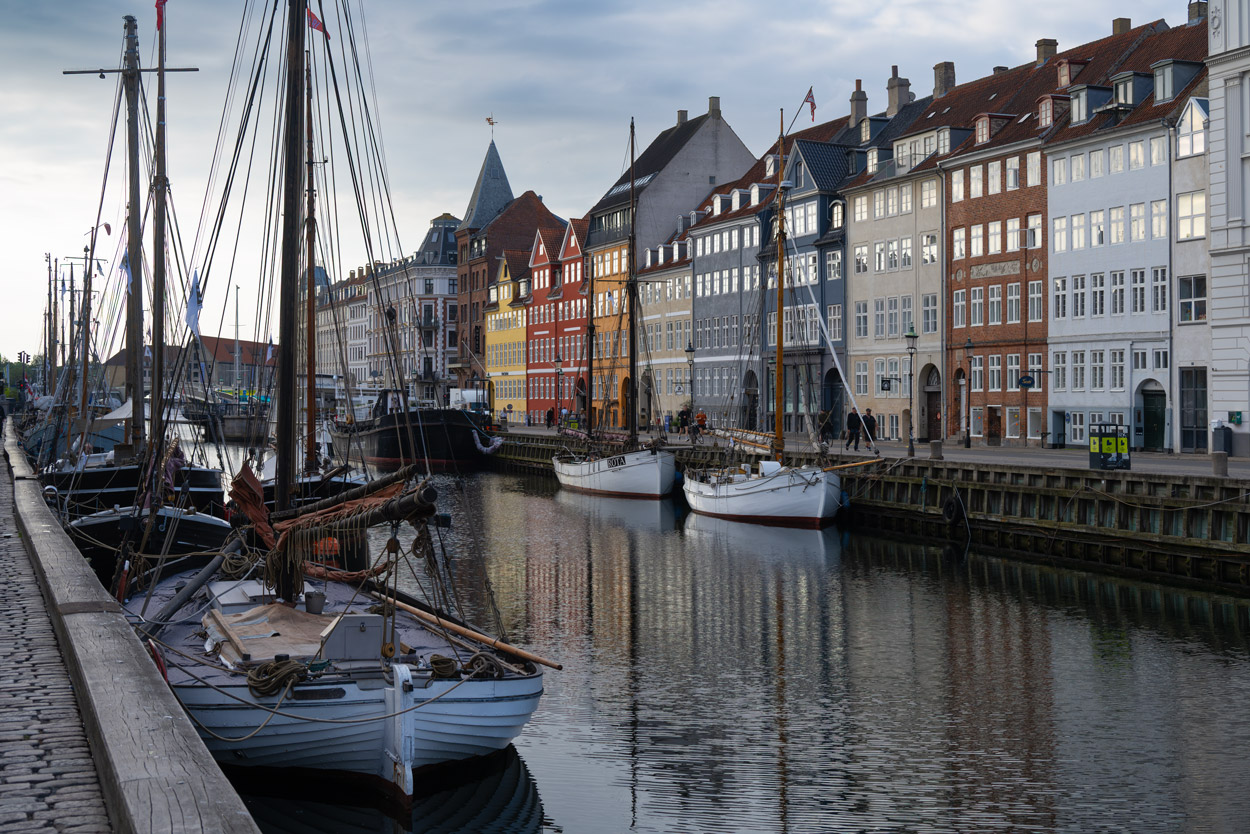
Over time, as ocean-going ships became larger, only smaller ships engaged in local trade came into the canal. By the mid-20th century even this trade had declined and there were no ships visiting Nyhavn. Efforts to revitalize the canal began in the 1960s and 1970s. Today, in addition to traditional buildings of many colors, there are several old sailing vessels moored to the piers along the waterway. The entire Nyhavn canal area serves as a sort of outdoor museum for Copenhagen.

My own Nyhavn colorful buildings cliche photo was taken on a gray, overcast morning; the light was very flat. If I had been paying more attention to content and less to exposure and color in the flat light, I probably would have chosen a group of buildings that did not include a Chinese restaurant. The place seems a little incongruous in a photo that is supposed to be representative of traditional Copenhagen.

I took the photo below with my back to the buildings in the photo above. It shows some of the sailing ships docked in the canal, and gives more sense of the overall look of the Nyhavn area. This was taken on the day after my first visit to Nyhavn. I stopped briefly on my way to another part of Copenhagen to get a photo of the old boats docked along the canal. The morning offered up some hazy sunlight that gives the entire scene a bit of a glow.

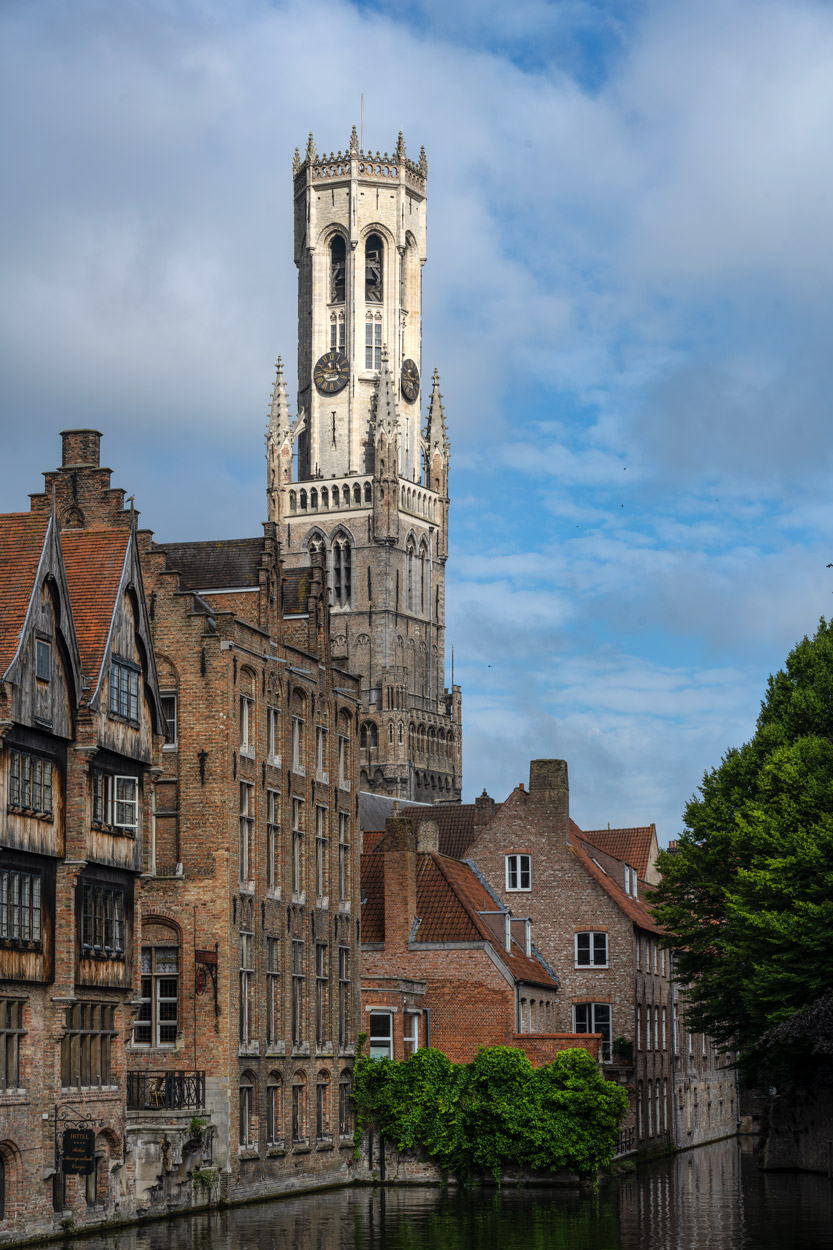
The Belfry of Bruges, Belgium

Belgium just happens to be on my mind right about now, so I decided to take a break from Denmark and the Danes today.

Bruges was the first city in northern Europe visited by merchant vessels from Genoa in the 13th century, becoming the endpoint of seaborne trade going through the Straits of Gibraltar, along the eastern Atlantic coastline, and through the English Channel to the low countries in the north. Today much of the center of old Bruges is a beautifully preserved UNESCO World Heritage site drawing tourists from all over Europe. The Belfry, visible from everywhere in the old city, stands in the Grote Markt in the center of Bruges.

As for Belgium being on my mind, I just finished watching that country’s national team defeat the US team 4 to 1 in a World Cup football match. While I sympathize with the US players who now have to come to terms with being beaten and knocked out of the World Cup competition, I can’t say I am put out or upset that the US lost. Given the performance of the garbage representing our country right now, the US does not deserve to win any accolades these days. It is as simple as that.

Belgium moves on to a Quarterfinal match with Spain on 11 July.

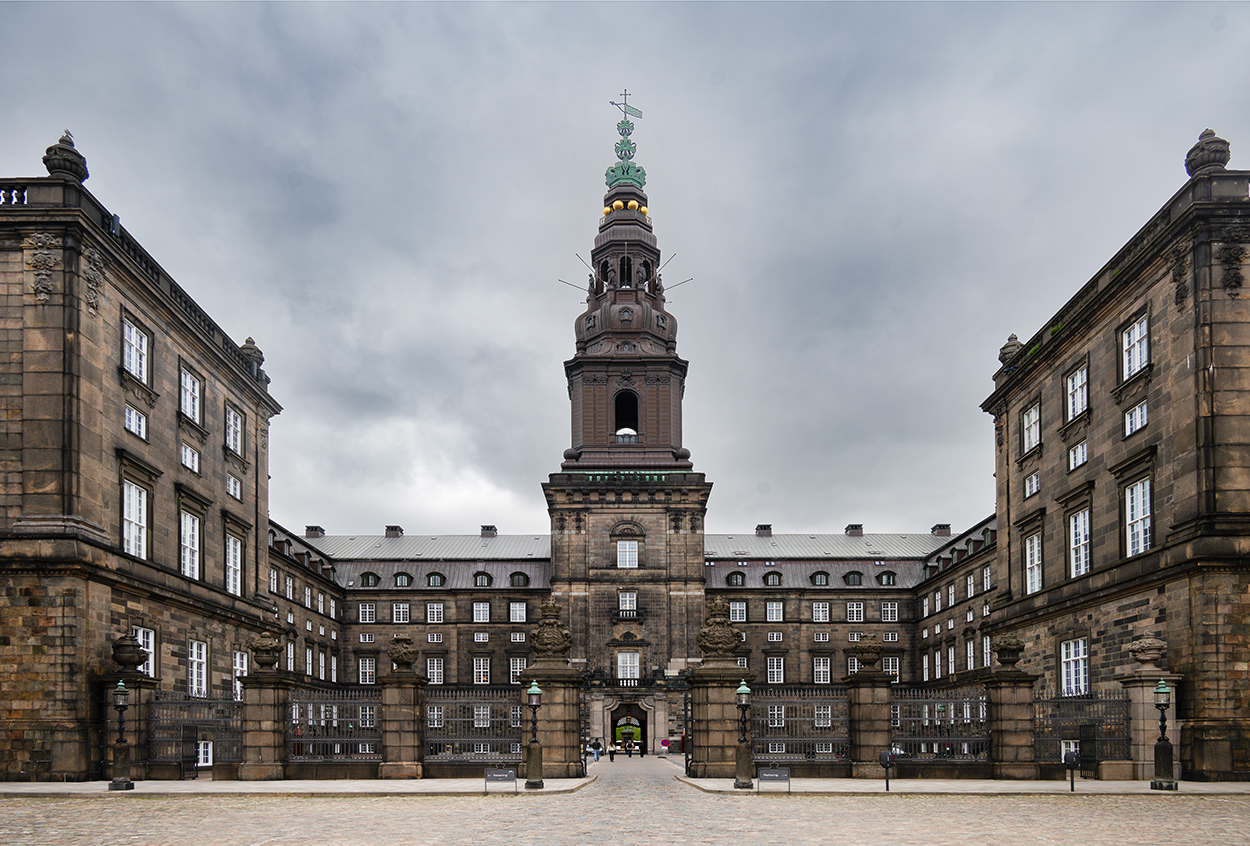
Christiansborg Palace, Copenhagen

Originally, Copenhagen was to be the European starting point of a trip to Iceland I was planning for late summer in 2025. When, in the spring of 2025, Minh and I decided to buy a parcel of land and build a house, that trip was put on hold. In February 2026 the house was finally – well, mostly – finished and we were able to move in.

At that point I got back to trip planning. First, although it had been the center of my earlier travel idea, I scratched Iceland from my itinerary. I decided that renting a car and driving solo around the island, stopping to see scenic wonders along the way, might be a bit too much to handle for my going-on 77 years old physical equipment. As much as it annoys me to acknowledge this, I am simply not as physically capable today as I was even 10 years ago.

I am, however, still capable of travel somewhat less strenuous than a solo drive around Iceland.

Instead of a way point on a journey to Iceland, Copenhagen became the starting point of a European trip that, in addition to Denmark, included visits to Netherlands, Belgium and the UK. The fact that Vietnam Airlines introduced a direct flight from Ho Chi Minh City to Copenhagen sometime in 2025 encouraged me to keep Copenhagen on my itinerary. Although Denmark had never been on my Europe must-see list, I decided it would be an interesting place to begin my travels.

After the long haul from Vietnam, I arrived at Copenhagen Airport on 30 May 2026 at 07:30 in the morning. Fitful sleep is the best I ever manage on long distance flights, and I did not even achieve that level of “rest” on this particular flight. So I was especially fuzzy around the edges as I emerged from the plane. I was relieved that the pleasant looking, graying women at the Passport Control window did not become frigid when I handed her a US passport. Not that A Dane would have any reason to be fed up with Americans. Right? Whatever, entry to the Schengen Area took no more than a couple of minutes (and as I write this I cannot help but think of the hour it took to make my way in a massive line through Passport Control in Hanoi when I returned to Vietnam a couple of days ago). Unfortunately, entering the Schengen Area no longer results in a physical stamp in one’s passport – it is all a digital transaction with data encoded in the passport entered into a computerized database. Nowadays it is virtually impossible to fill up a passport with the visas and entry-exit stamps that document travels. My old passports have become a sort of collector’s item.

When I emerged into the airport, I was struck by the fact that the arrivals area was relatively small, far removed from the cavernous terminals that are so common in airports today. And there was no information kiosk. Virtually all airport services were automated – it was difficult to find anybody to give me information about anything. I did find an ATM from which I hoped to draw around $100 worth of Danish Krone. Alas, muddled as I was, I was mistaken about the exchange rate and drew DKK 5,000 thinking that would cost me USD 80 or 90. Wrong. The transaction cost me almost USD 800. Suffice it to say, I had no shortage of cash during my 8 days in Denmark.

Purchasing a metro ticket that would get me into the city of Copenhagen required the use of a ticket machine with instructions that I found impenetrable. Maybe if I had slept more on the plane… Eventually, I spied two Metro employees standing near the ticket machines – an impromptu information kiosk? – and one of them helped me buy a ticket. He worked so quickly that I had on idea what he did and had to start over the next time I wanted to ride the Metro. On the good news front, the train I boarded at the airport ran directly to the stop for my hotel; I did not need to change trains.

I arrived at the hotel well ahead of the 14:00 check-in time, so I ended up walking around the neighborhood for a couple of hours while the hotel worked on making up rooms. First impressions: Copenhagen – at least the area in which I found myself – was quiet, uncrowded, and affluent. It was a rather blustery, cool, overcast day, not raining, but hardly very welcoming to a tired, first-time visitor. There were several small (man made?) lakes near the hotel and the paths around these were crowded with joggers and bicyclists. Young, svelte, fit looking, Nordic type joggers for the most part. Lots of blond hair. I cannot remember ever seeing so many people out jogging in a reasonably small area. I eventually walked in to a place to get some lunch, lots of whole grains, vegetables and nuts on the menu, and found the place took only cards. Not encouraging, considering my recent ATM misadventure. I ate something that was tasty and, no doubt, good for me before heading back to my hotel where I finally got into my room and a rest at around 12 noon.

To be continued…

The Christiansborg Palace pictured here is the third iteration of a building of this name on this site. The previous two palaces, the first of which was completed in 1745, were destroyed by fire. The palace pictured here was completed in 1928, and in the process of excavations for the building, buried ruins of castles from as early as the 13th century were discovered. The Palace was intended to be the home of Denmark’s monarch, though it seems the royal family has never resided in this building. Today, Christiansborg Palace houses all three branches of Denmark’s government: the Prime Minister’s office, the Danish Parliament, and the country’s Supreme Court.