
Bãi biển Mỹ Khê – My Khe Beach: Beautiful sunrise, magnificent sky, tranquil waters. But only 5:30 in the morning and already 85 degrees. The clouds are likely to break up and by 10:00 it will be 95° pushing 100°. And feel like 110°. Another scorcher.
Author: Steve Barru
Photographer, bookworm, traveler, born in the United States in 1949, left the United States in 1987, spent years in China, settled in Vietnam in 2016.
Summer Morning, Da Nang

Taking in the Nets, Da Nang

Curbside Seafood Market, Da Nang

Early Evening, Da Nang, Vietnam

Chinese Students, Beijing, 1988
 I can’t say what got me started, but I was rummaging around my attic full of memories of China and came across this image, which I really love. This group of students is getting ready for the Spring Festival holiday – the lunar new year – dateline January, 1988. They’re ready to head back to their homes in the rural counties surrounding the city of Beijing. They are part way through a two year teacher training program offered at the Beijing Foreign Languages Normal College (北京外国语师范学院). In fact it has been so long, I am not sure I have the Chinese name of the institution right, not that it matters, the program has morphed and been absorbed by some enormous university level entity that is part of the Beijing Municipality. I was there as an exchange Chinese student / language teacher in an afterthought of a program connected with University of Massachusetts at Boston. I had been in China for several months and would be heading for my first trip to Hong Kong in several days. At the time this college was far from being a prestigious school and none of these students were particularly looking forward to becoming poorly paid teachers in rural public schools. Of course even a two year teacher training program from a low end college gave these young people considerably more education than the vast majority of Chinese their age. These were exciting times in Beijing 1988 – China was opening up and for these students, the sky was the limit, or so most of them believed. A year and several months later, the excitement and optimism came to an end on June 4, 1989. I have not seen or kept in touch with any of these people. They’re all around 50 now – I wonder how life in China has treated them over the years. For those of you old enough to remember, this is from a scan of a Kodachrome slide shot with a fully manual Nikon FM2.
Morning in Da Nang

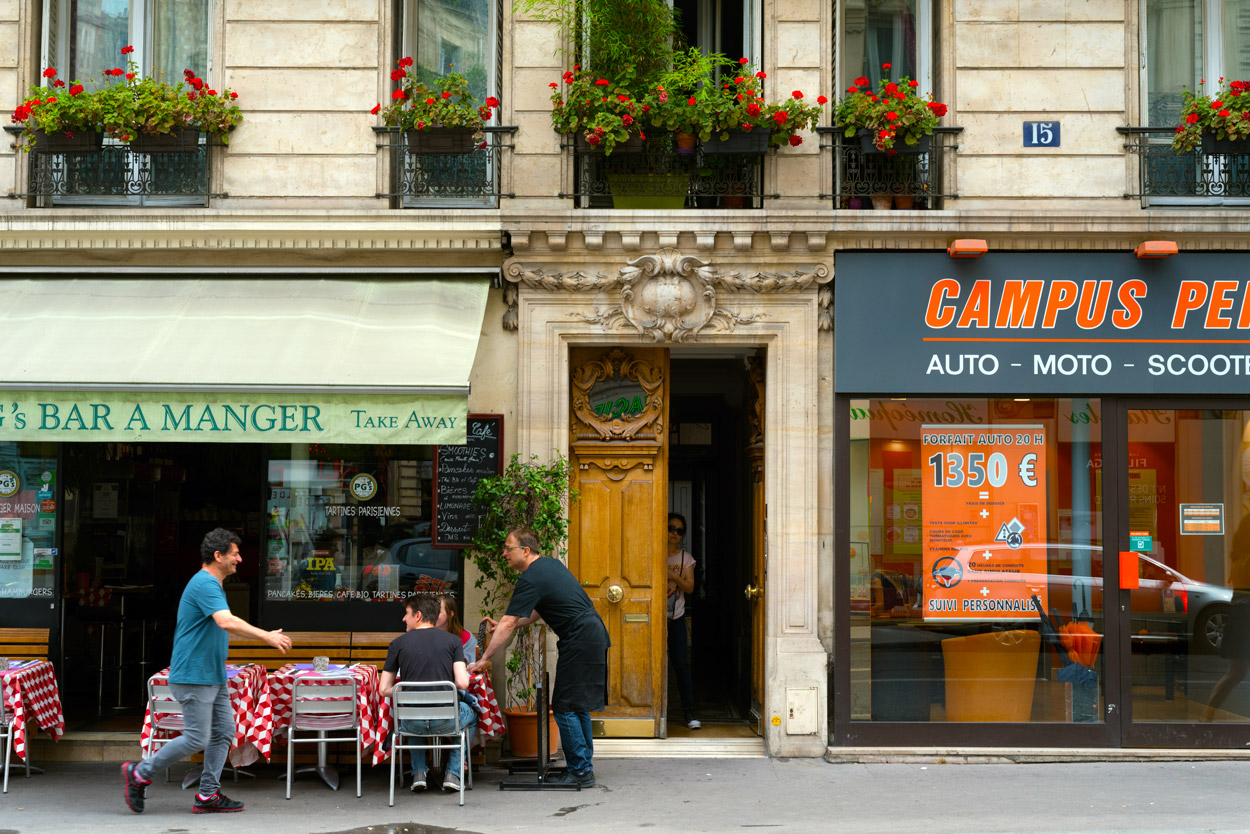
15 Rue d’Assas, Paris
Archidamas, Luxembourg Gardens, Paris

The Burghers of Calais, Auguste Rodin
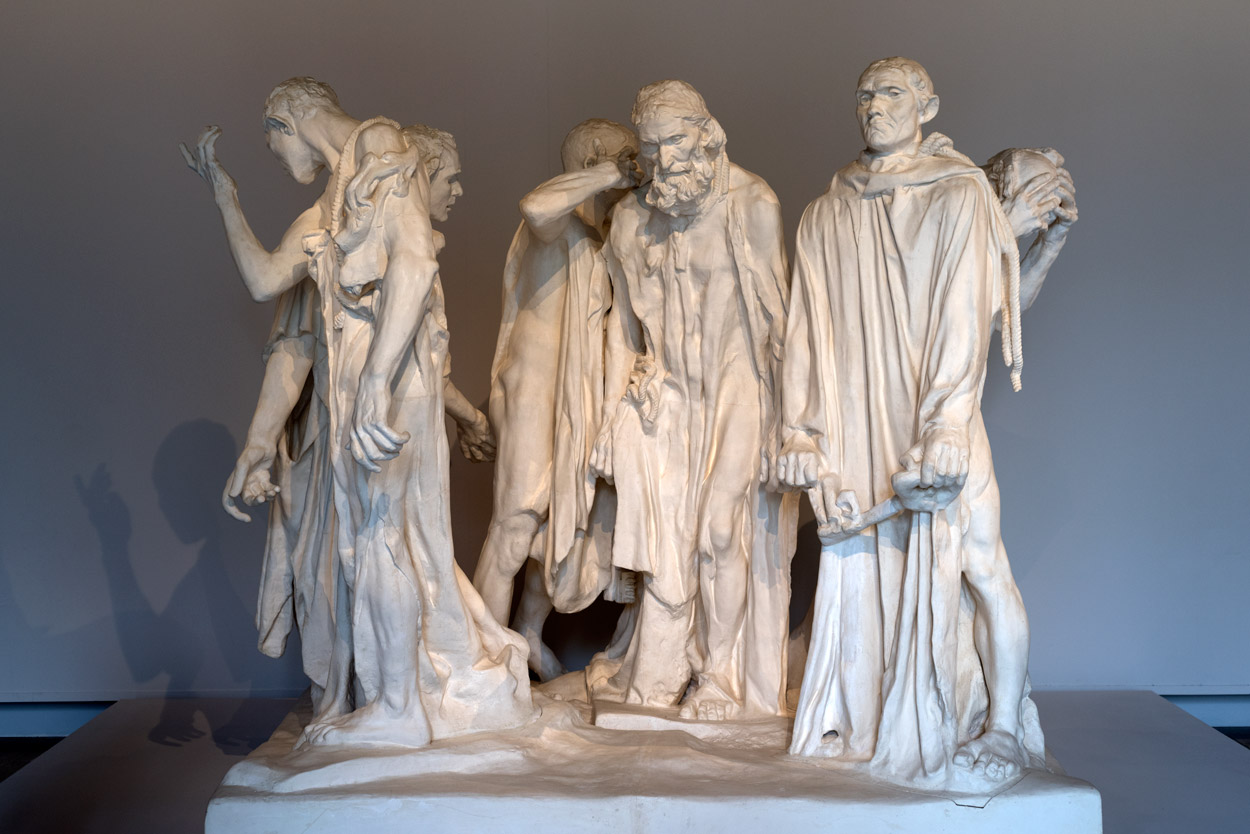 A visit to the Rodin Museum in Paris was not on my list of things to do. But I walked by, needed a break from the hot day, there was no line, and in I went. Talk about a voyage of discovery. My exposure to Rodin prior to this visit amounted to The Thinker and in the case of that work, I learned during my museum visit that there are multiple castings and different versions of the statue. I found The Burghers of Calais pictured here awe-inspiring. The work was commissioned by the city of Calais to commemorate the city’s role in an event during the Hundred Years’ War. Rodin’s design was chosen from among several submissions. The final work caused considerable controversy when it was unveiled in 1889 – it was not the larger-than-life heroic allegory the city had had in mind. Instead it is a very engaging study of the six very human burghers who were central characters in the historical event commemorated. Like many of the works in the Paris Rodin Museum, this is a plaster cast of Rodin’s design.