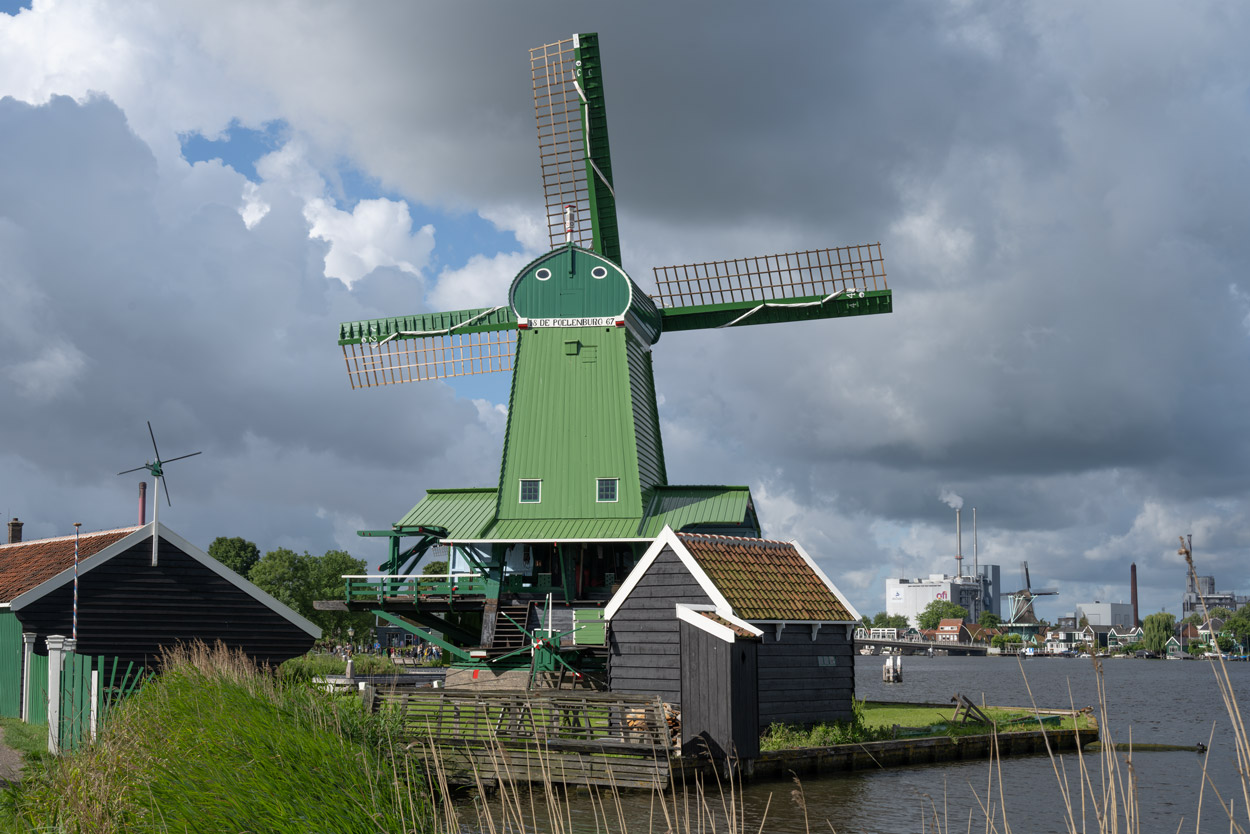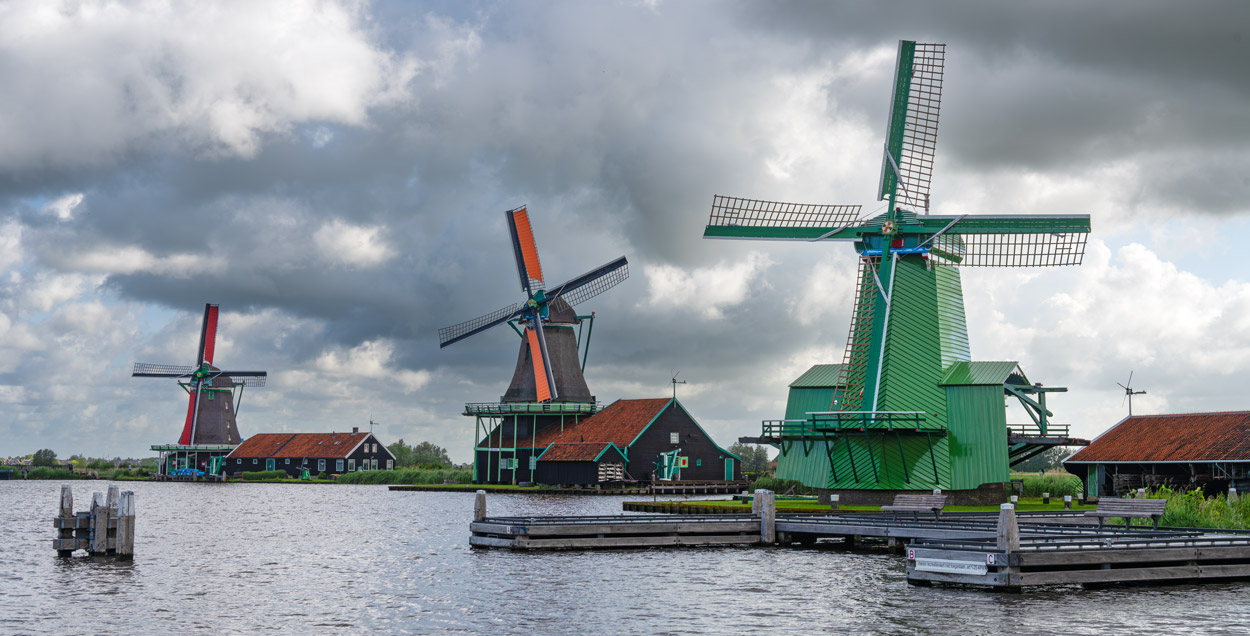
On its website, Zaanse Schans urges tourists to “experience historic Holland” by visiting “this windmill village on the Zaan River … just 20 minutes from Amsterdam.” Friends whom I visited in Amsterdam recommended Zaanse Schans, so I boarded a public bus at Centraal Station early on a cloudless, sunny morning and headed for the village.
The ride took a bit longer than 20 minutes, but that was because I boarded a bus that did not go all the way to my destination, and had to change to a second bus midway in the ride. The trip was interesting as it gave me a chance to see some of Amsterdam away from the renowned historical center of the city. Unfortunately, during the trip, clouds rolled in and quickly hid the sun. Patches of blue remained, but the ominous gray clouds were accompanied by a blustery, rather chilly wind and a definite threat of rain. With no umbrella and a windbreaker that would not keep me dry in anything more than a light drizzle, I set off rather nervously from the bus stop on my walk to and around Zaanse Schans.
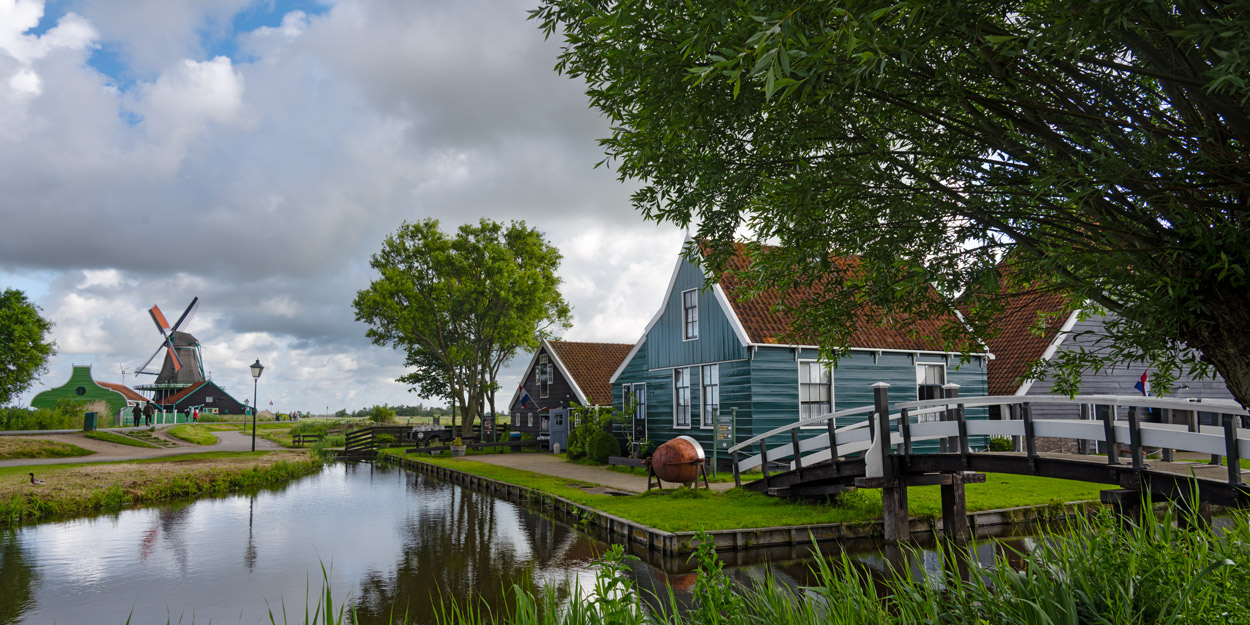
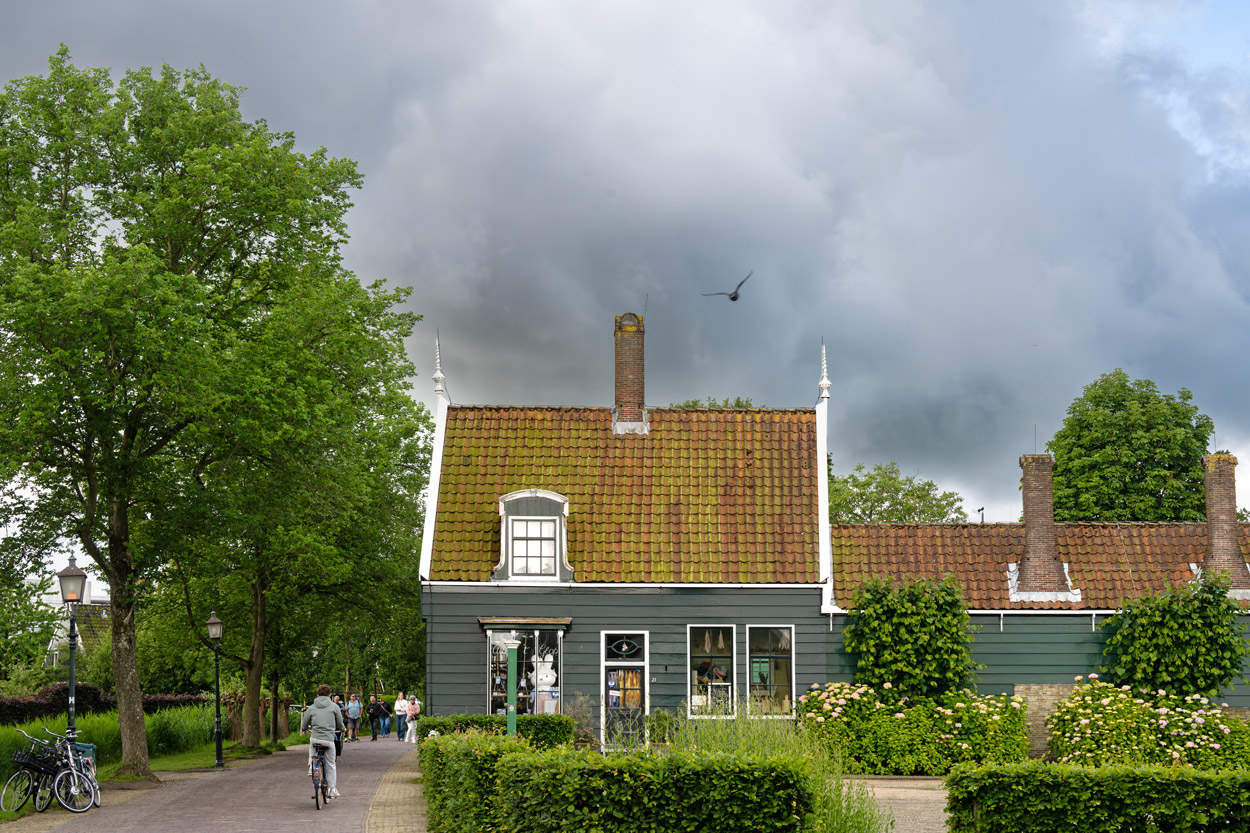
The village is beautiful, and the old windmills and other examples of traditional architecture are fascinating to look at up close. That said, the area has something of the feel of a village “manufactured” for tourists, of the sort you can see near, for instance, Sapa in northern Vietnam. In fact in an effort to preserve examples of historical Dutch architecture and construction, the homes, shops and some of the windmills (two are in their original locations) that make up Zaanse Shanse were moved from other parts of northern Holland to create the village. This preservation effort occurred in the 1960s and 70s, and eventually the protected area that makes up Zaanse Schans was developed into a tourist destination that nowadays attracts more than two million visitors per year. Some of the buildings are occupied by shops catering to tourists, and there are tours of windmills and a cheese making workshop. The homes in the village are, however, occupied by residents and not open to visitors.
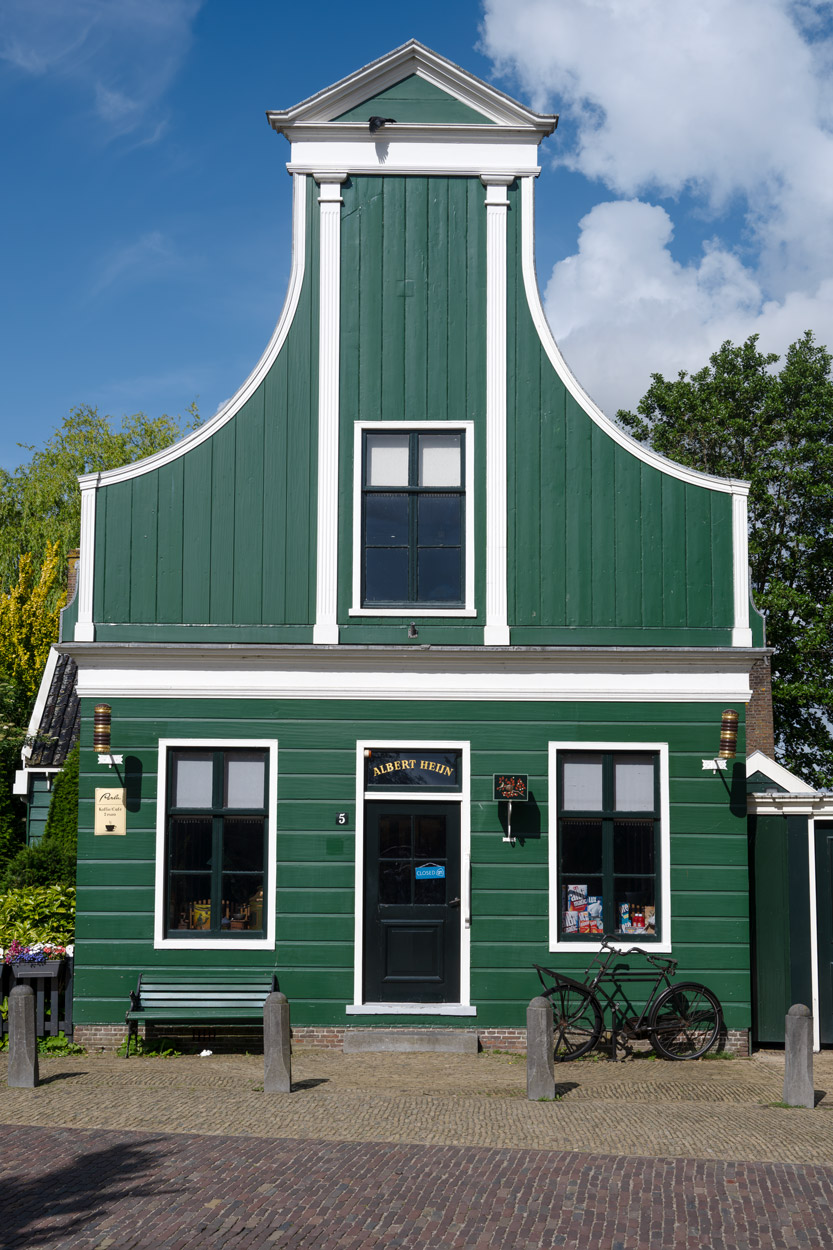
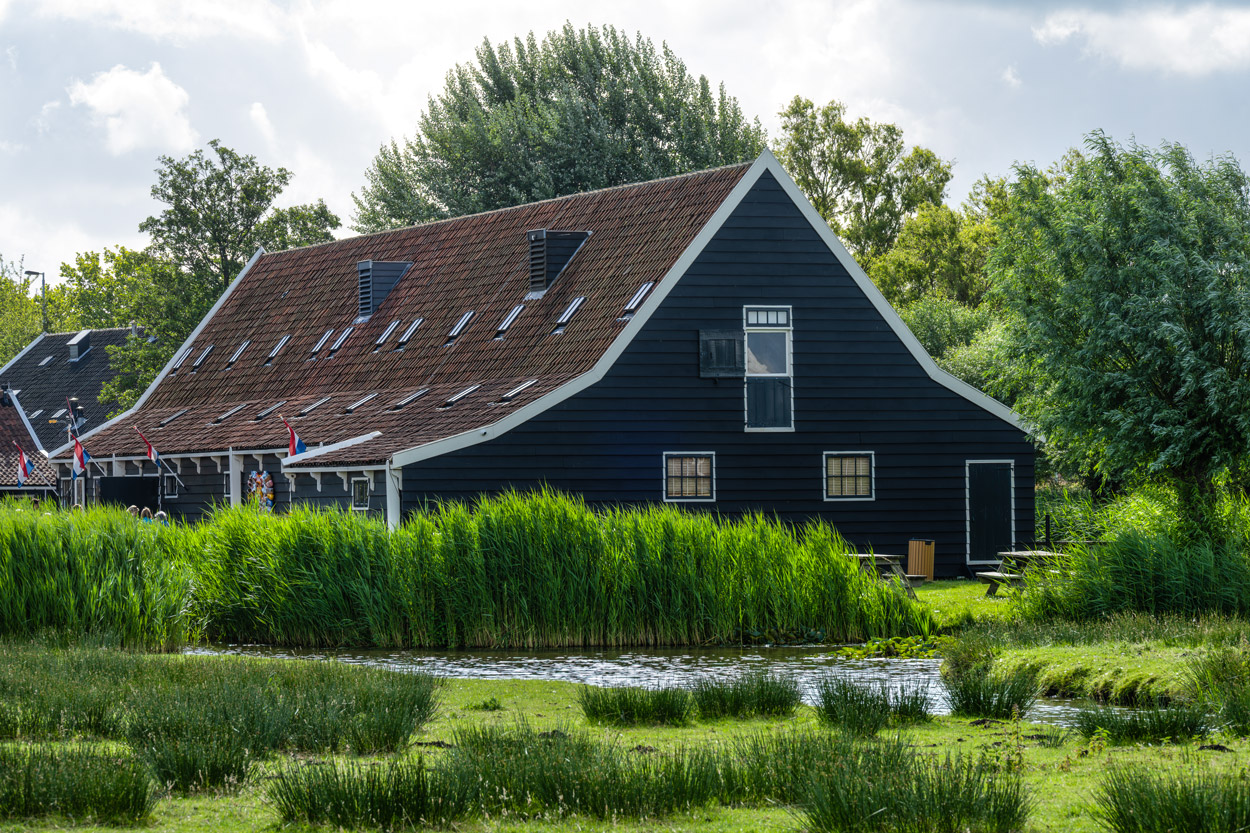
I walked around exploring and taking photos of the relatively small area for about an hour and a half. I even saw a man in yellow wooden shoes. He went through a door too quickly for me to get a photo, but not fast enough to prevent me from wondering why anyone would walk around in footwear that looks so uncomfortable.
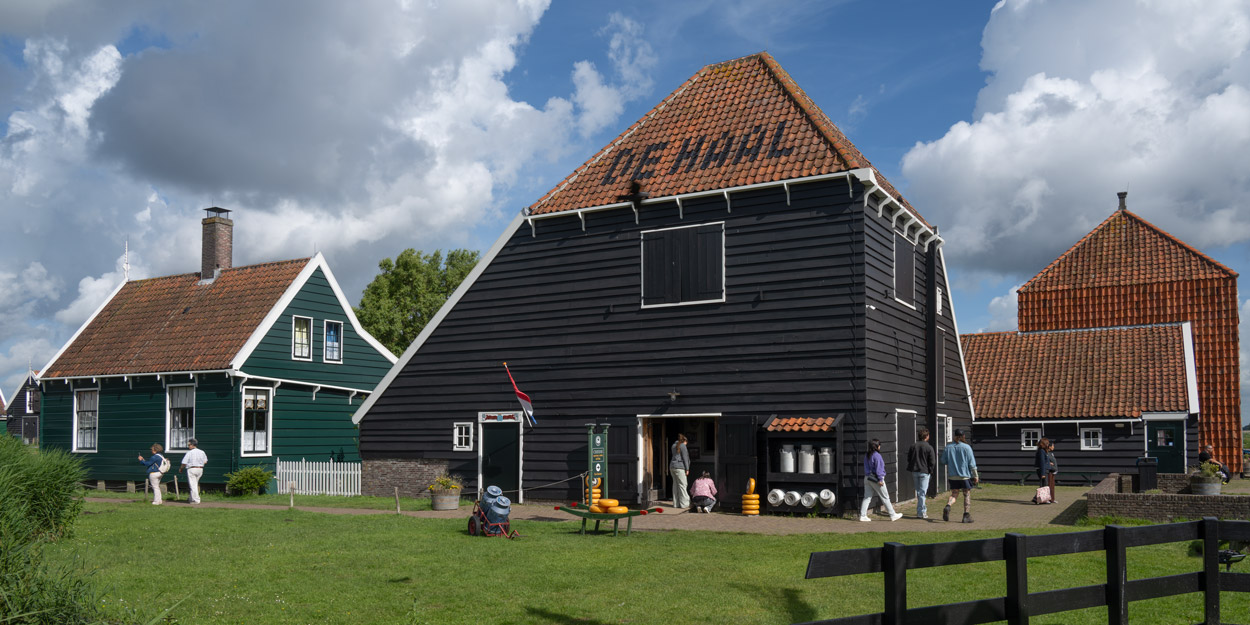
When I began my walk just before 8:30, there were still not many visitors and the places offering tours were not open. I had planned to look inside a windmill and visit the Zaanse Schans museum next to the village before heading back to Amsterdam. In the end I went into a cheese making workshop, but that was it. Once inside I did not pay much attention the cheese making process, instead spending my time eying the huge wheels of Gouda and trying to convince myself I could fit one in my carry-on suitcase for the trip home. Keep in mind, that carry-on was my only suitcase for the three and a half week trip; I learned long ago to travel light. Be that as it may, reason prevailed and I did not return home with several thousand calories of cheese that my waist line absolutely does not need.
As for going in to a windmill or the Zaanse Schans museum, it turned out I was still subject to a fickle weather day. When I first arrived there was a gray, threatening sky and blustery wind, which gave way to warm sunshine and puffy white clouds, then finally to more clouds and the threat of rain again around 10:00. Unprepared for rain as I was, I decided not to take a chance, and headed to the bus stop and a bus back to Centraal and lunch. It did finally rain for awhile in the late afternoon of that day, and I did get a little wet before escaping to my hotel room. But, all in all, it was an excellent travel day.